

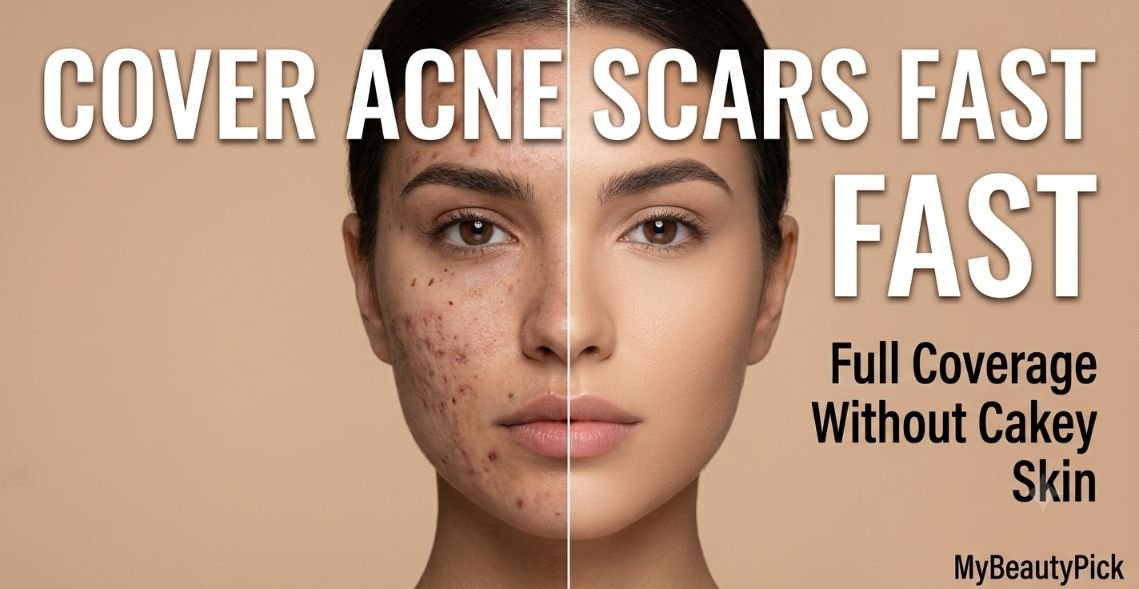
Covering acne scars and dark spots with foundation is more complicated than covering active breakouts. Active blemishes are raised and textured; post-inflammatory hyperpigmentation (PIH) is flat but deeply pigmented; atrophic scars are indented and require texture management before coverage can even reach the base. Each of these needs a different approach, and most foundation guides treat them as interchangeable. This one doesn’t.
Acne Scars vs Dark Spots vs Active Breakouts: Why the Distinction Matters
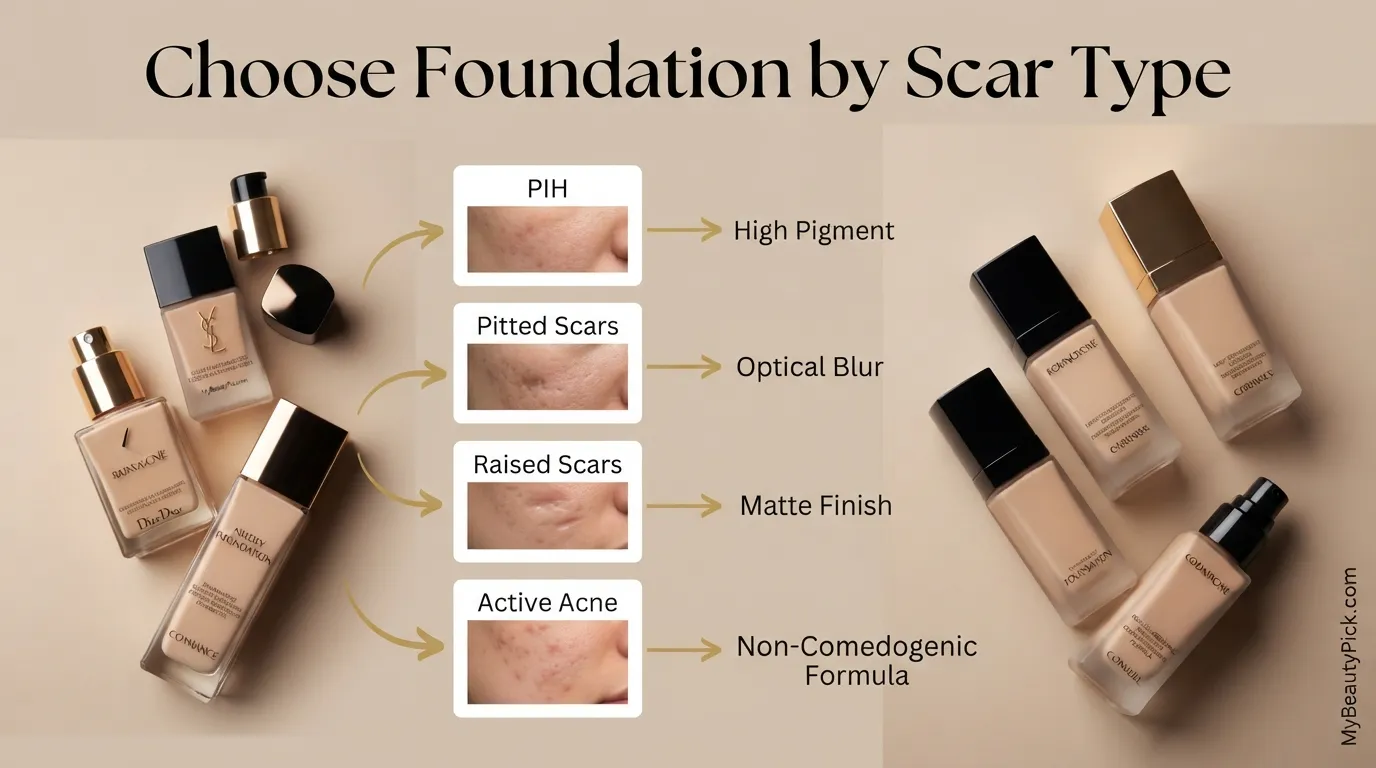
The most common mistake when choosing foundation to cover “acne scars” is treating different types of post-acne marks as the same problem. They aren’t, and foundation that works for one type can make another look worse.
| Type | What It Looks Like | Foundation Challenge | What Helps Most |
|---|---|---|---|
| Post-inflammatory hyperpigmentation (PIH) | Flat dark spots or patches left after acne heals; brown, red, or purple in tone depending on skin tone | Requires opaque, high-pigment coverage; colour correction underneath in darker marks; SPF essential to prevent darkening | Full coverage, colour corrector, non-comedogenic formula, mineral or clear SPF |
| Atrophic (pitted) scars | Indented, textured marks where the skin surface is depressed; ice pick, boxcar, or rolling scar patterns | Foundation settles into indentations and emphasises them; texture-filling primer needed before coverage; full coverage will look cakey without proper prep | Pore-filling primer, thin layering, silicone-free formulas that don’t sink |
| Hypertrophic or raised scars | Raised, firm scar tissue above the skin surface; less common from acne than PIH or atrophic | Coverage without adding more height or texture to an already raised surface; smooth application critical | Colour-matching concealer pressed flat; matte finish prevents light from catching raised edges |
| Active breakouts with redness | Raised, inflamed, and red — still healing | Coverage without irritating active skin; non-comedogenic formula that doesn’t worsen the underlying spot | Non-comedogenic medium-to-full coverage; salicylic acid formulas; pressing application only |
What to Look for in the Best Foundation for Acne Scars
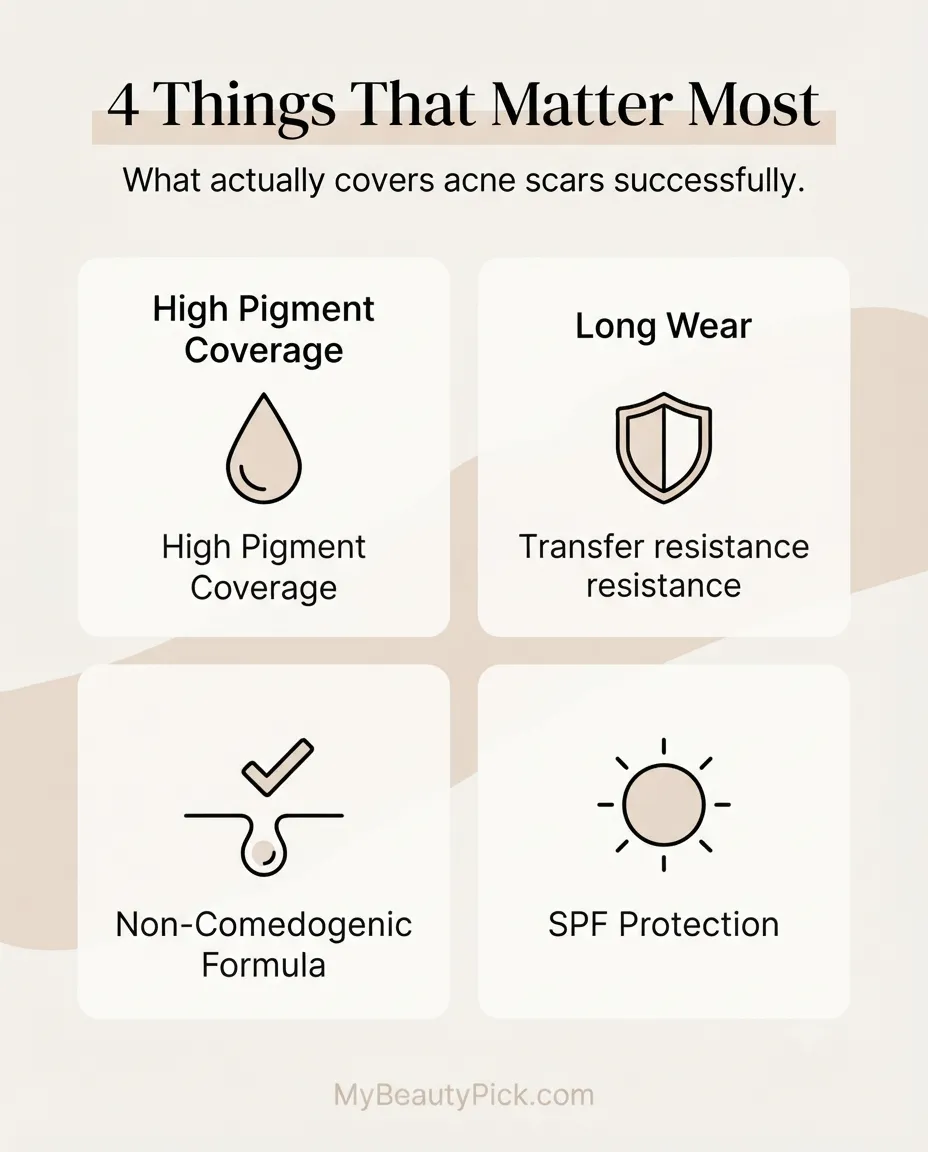
The criteria for covering scars and dark spots are more demanding than standard full-coverage requirements. Four things matter above everything else:
- Pigment density. Full coverage for scarring or dark spots requires genuinely high pigment concentration — the kind that conceals in one or two layers without requiring five. Buildable medium coverage can sometimes reach the same end point, but not always, and layering too heavily over textured or pitted scars creates cakiness in the indentations.
- Formula stability (non-transfer, long wear). Coverage that rubs off within two hours means constant reapplication over potentially sensitive, healing skin. Long-wear polymer systems that bind pigment to the skin surface maintain coverage without requiring midday rebuilding.
- Non-comedogenic, oil-free formulation. Acne-scarring skin often means acne-prone skin is still present. A foundation that covers well but clogs pores extends the cycle of breakouts that cause new scarring. No coverage benefit justifies using a comedogenic formula on skin still producing acne.
- SPF or compatible with SPF underneath. UV exposure darkens PIH significantly, extending how long dark spots remain visible. For any skin dealing with post-inflammatory hyperpigmentation, daily UV protection is not optional — it directly determines how quickly existing dark spots fade and whether newly healed breakouts leave permanent marks.
The Colour Correction Step Most Guides Skip
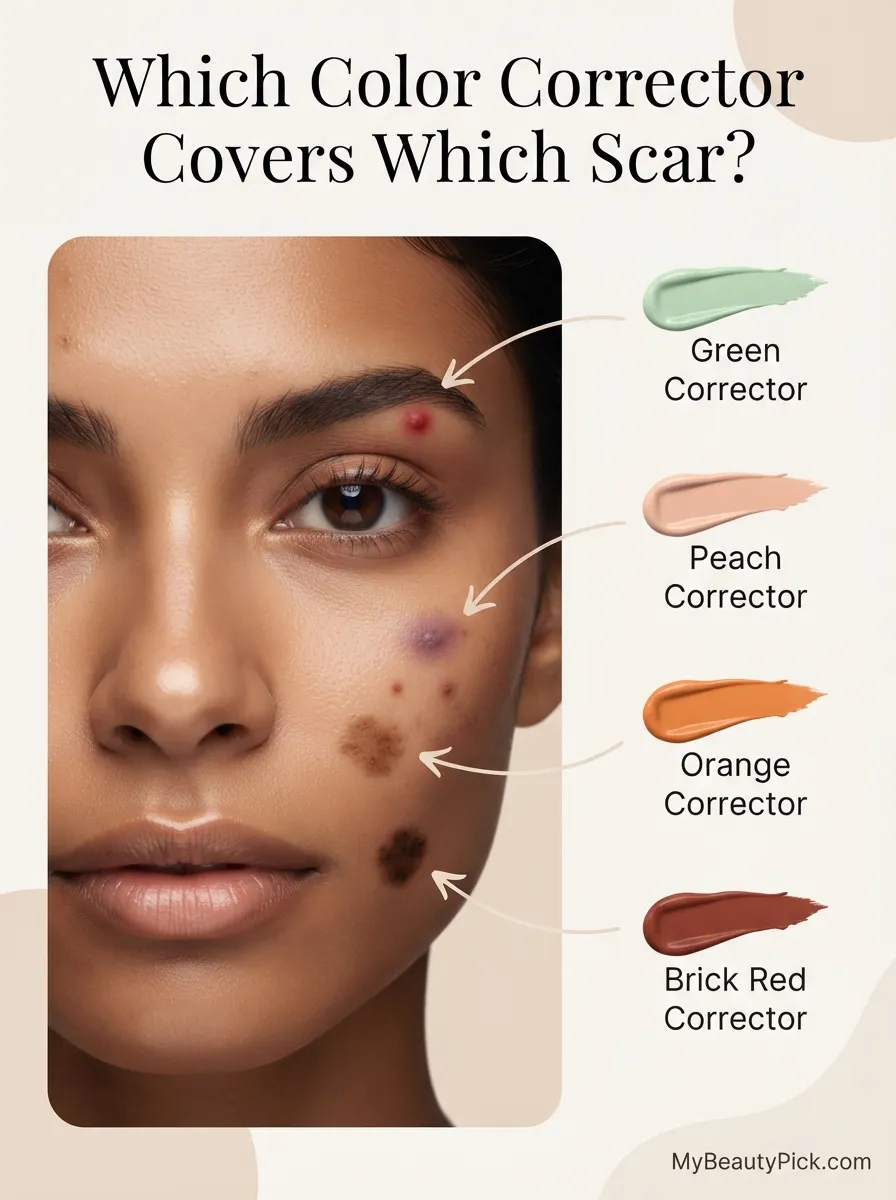
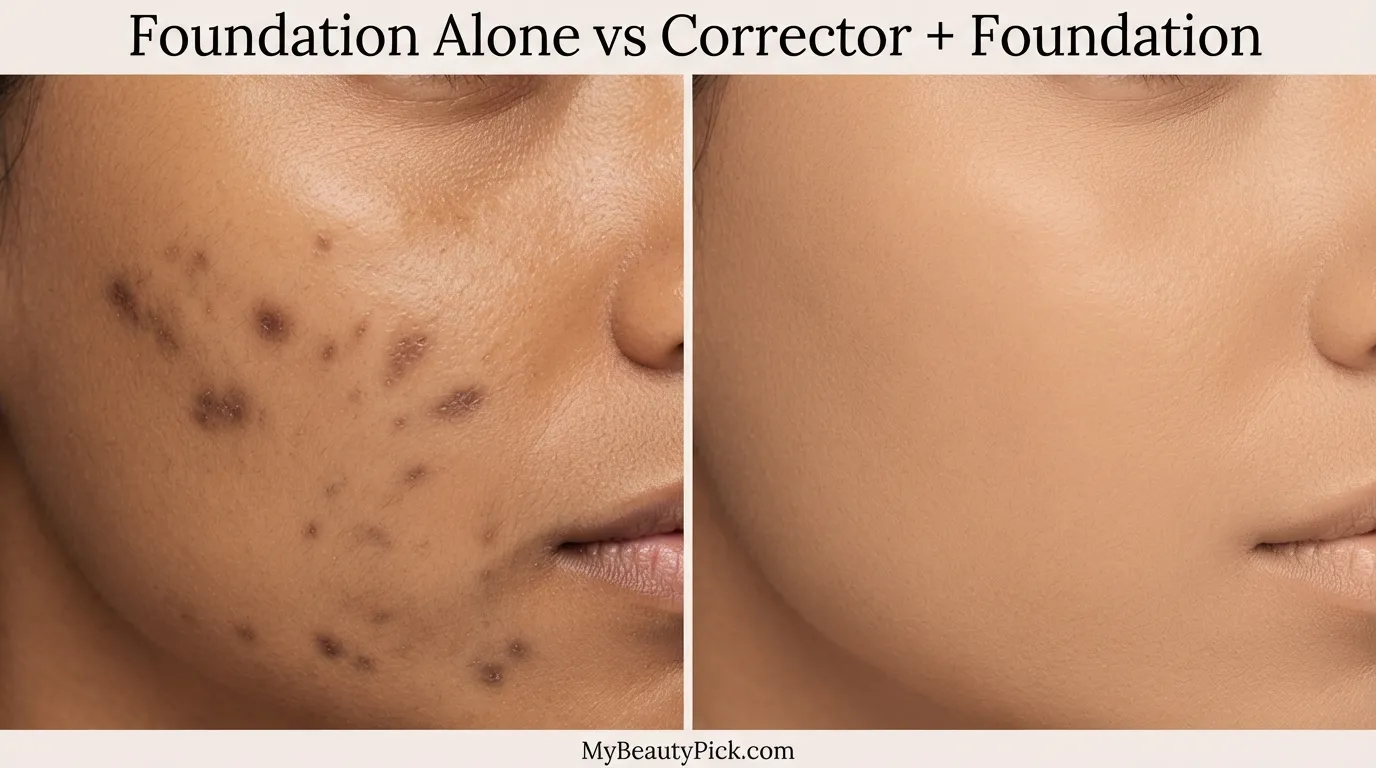
Foundation alone, even full-coverage, will not conceal deep or highly pigmented dark spots without colour correction underneath. This is why some marks still show through even after a thick layer of opaque foundation: the foundation is depositing colour on top of an opposing colour, and the deeper pigment wins.
Colour correction neutralises the underlying tone before foundation is applied, so the foundation only has to match skin tone rather than fight the scar colour. The correct corrector depends on the colour of the mark:
| Scar / Mark Colour | Corrector Needed | Application |
|---|---|---|
| Red or pink marks (common in fair skin, active redness) | Green corrector — neutralises red tones | Press a small amount directly onto the red mark; blend edges only, not the centre. Apply before foundation. |
| Purple or blue-toned marks (common in medium skin tones) | Peach or orange corrector — neutralises cool purple/blue | Press and stipple onto the mark; a small amount goes further than expected here |
| Deep brown PIH (common on medium-to-deep skin tones) | Orange or red-orange corrector — counteracts deep brown pigment | Apply sparingly and blend edges; too much orange reads through even full-coverage foundation |
| Dark brown or near-black marks (deep skin tones with severe PIH) | Brick red or deep orange corrector; some MUAs use a shade 2-3 tones lighter than skin tone as a brightening base | Press directly on the mark, pat flat, allow to set before foundation |
The amount of corrector matters as much as the colour. Too little and the opposing colour wins; too much and the corrector reads through the foundation as an obvious orange or green patch. Start with a tiny amount on the tip of your ring finger and press it directly onto the centre of the mark. It should neutralise the colour without being visible once blended. If it’s visible after blending, you’ve used too much — remove some before applying foundation on top.
Let the corrector set for 30-60 seconds before applying foundation. Pressing foundation over wet corrector mixes the two layers and you lose the neutralising effect.
Best Foundation for Acne Scars: Full-Coverage Picks
“Covers tattoos. Covers vitiligo. Covers surgical scars. For acne scarring and PIH, this is the most thoroughly tested corrective coverage foundation available at mid-range price.”
- Coverage: Full; concentrate formula — one layer delivers more than most formulas at two
- Key actives: Clear SPF 50 (avoids white cast on deeper skin tones), hyaluronic acid, titanium dioxide
- Shade range: 30 shades with clear SPF — important for deeper skin tones
- Non-comedogenic: Yes; dermatologist-tested
- Best for: Significant PIH, acne scarring, rosacea, or any concern needing high-opacity coverage with daily SPF
Why it leads for scarring: The concentrate formula delivers extraordinary pigment density in a small amount — a pea-sized amount covers the full face. This high pigment-to-formula ratio means the coverage is genuinely corrective rather than just buildable, and it sets to a transfer-resistant finish that holds through a full day without requiring midday reapplication. The clear SPF 50 is specifically significant: standard mineral SPF creates white cast on medium-to-deep skin tones, which Dermablend eliminates with a clear filter system.
“The only medium-to-full coverage foundation that treats active acne while covering existing scarring — salicylic acid in the base means you’re not just concealing the problem but addressing it.”
- Coverage: Medium-to-full buildable; soft matte finish
- Key actives: 0.5% salicylic acid, glycerin, laminaria saccharina extract (redness reduction)
- Shade range: 24 shades
- Non-comedogenic: Yes; allergy-tested; oil-free
- Best for: Active breakouts alongside PIH; oily acne-prone skin; combination of coverage and treatment in one product
Why salicylic acid in the formula matters for scarring skin: Skin producing active acne will continue to create new PIH marks regardless of how well you cover existing ones. Clinique Acne Solutions addresses both simultaneously — the 0.5% salicylic acid works through pores throughout wear, reducing the congestion that triggers new breakouts, while the coverage handles existing scarring and redness. It’s the most practically useful pick for anyone dealing with acne and post-acne marks at the same time rather than one or the other.
“Formulated specifically for deep and rich skin tones — full coverage, vitamin C brightening actives, and a shade range that actually reaches the depths where PIH on dark skin needs real coverage.”
- Coverage: Full; natural finish
- Key actives: Vitamin C, SPF 17, skin-brightening complex
- Shade range: 16 shades concentrated in medium-deep to deep tones
- Non-comedogenic: Yes; oil-free
- Best for: Medium-deep to deep skin tones with PIH; those whose dark spots need a shade range that actually goes there
Why shade range is a coverage issue for dark spots: PIH on deeper skin tones produces marks that require very precise shade matching to conceal — a foundation even half a shade off reads obviously on deep skin, and most mainstream brands stop adding truly deep shades before they reach the tones where PIH is most persistent. Black Opal’s concentrated focus on deeper tones means shade accuracy is higher in the range where it matters most, and the vitamin C actively brightens PIH marks over consistent daily use.
“Medium-to-full coverage with a micro-fil complex that fills the appearance of texture — the best choice when the concern is pitted, atrophic scarring rather than flat pigmentation.”
- Coverage: Medium buildable to full; luminous silk finish
- Key actives: Micro-fil complex (optical diffusing pigments), glycerin; oil-free
- Shade range: 40 shades
- Best for: Atrophic (pitted) acne scars; textured skin requiring soft-focus coverage rather than just pigment opacity
Why optical diffusion matters for pitted scars: Pitted scars can’t be covered the same way flat PIH can. Pigment poured over an indented surface just settles into the indentation and darkens it, making the texture more visible rather than less. What pitted scars need is optical diffusion — light-reflecting micro-particles that scatter light at the skin surface and reduce the visible contrast between the scar depth and the surrounding skin. The micro-fil complex in Luminous Silk is specifically designed for this mechanism, making it more effective for textured scarring than formulas with higher raw pigment density but no diffusion technology.
“The most dependable full-coverage drugstore foundation for acne-scarring skin — 24-hour wear, salicylic acid, non-comedogenic, 43 shades.”
- Coverage: Full; true matte finish
- Key actives: Salicylic acid, SPF 15, oil-free long-wear polymers
- Shade range: 43 shades — exceptional for a drugstore full-coverage formula
- Non-comedogenic: Yes; transfer-resistant; waterproof
- Best for: Oily-to-combination acne-prone skin with PIH or active marks; budget-conscious shoppers needing genuine full coverage
Why the 43-shade range matters here: At the drugstore tier, most high-coverage foundations either sacrifice shade depth or coverage quality. ColorStay maintains both. The 24-hour wear time reduces the need for touch-ups over scar coverage, and the salicylic acid prevents new breakouts forming underneath a full-coverage base — the biggest practical concern when applying heavy coverage over still-active acne skin.
How to Apply Foundation to Cover Acne Scars: Step by Step
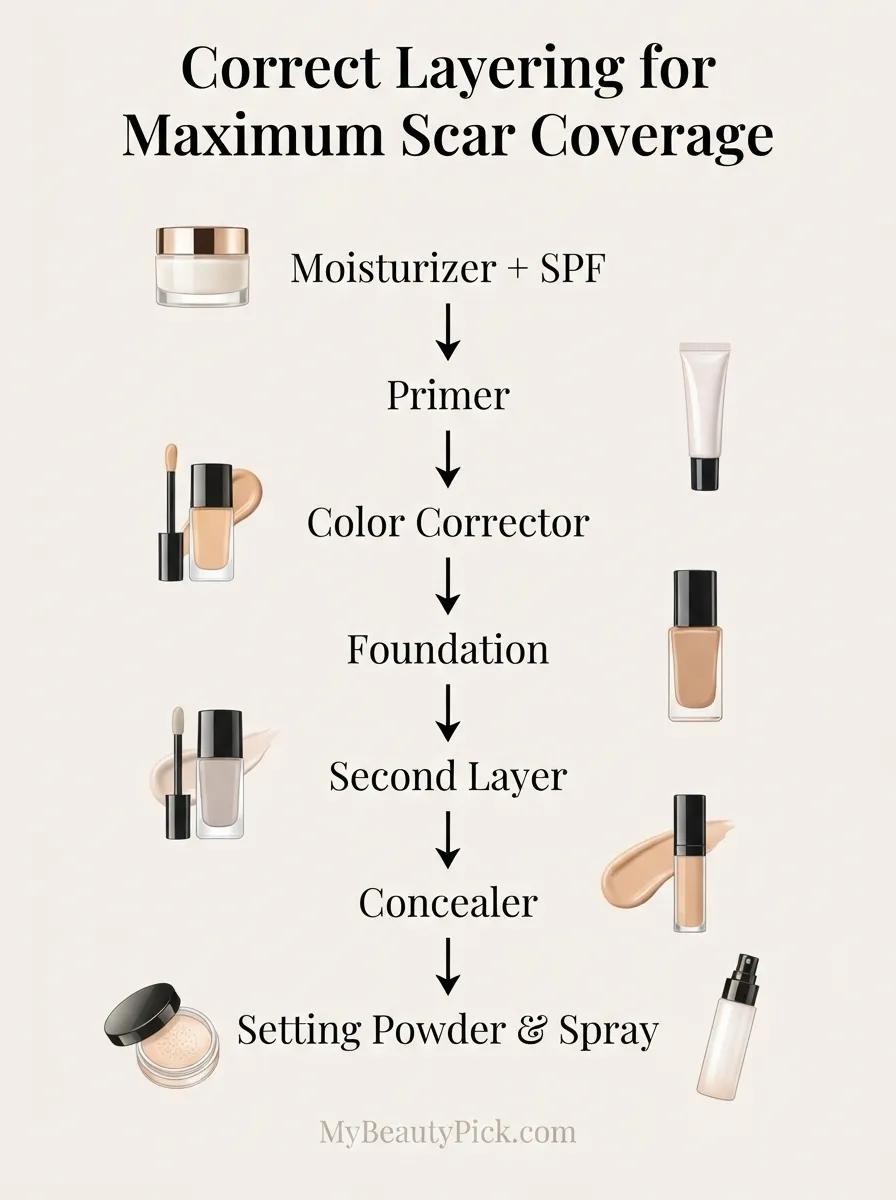
-
1Skincare, SPF, and full absorption Apply a non-comedogenic moisturiser and a broad-spectrum SPF 30+ sunscreen. Allow everything to absorb completely — at least 5 minutes — before touching a brush. Foundation applied over wet sunscreen or moisturiser mixes with these layers and both coverage and SPF are compromised. On very oily skin, a light mattifying gel rather than a cream moisturiser reduces the slip that causes full-coverage foundations to slide.
-
2Pore-filling primer on pitted scar areas only If your concerns include atrophic or pitted scars, press a small amount of silicone-based pore-filling primer specifically into those areas — not all over the face. Working it into the textured area with your fingertip smooths the surface so foundation sits across the skin rather than settling into each depression. Do not apply pore-filling primer all over; it creates a too-slippery surface that makes long-wear foundations slide.
-
3Colour corrector on dark spots or red marks Apply corrector in the correct colour for the mark type (see the colour correction guide above). Use a small synthetic brush or the tip of your ring finger. Press directly onto the mark; do not blend outward aggressively. Allow to set for 45-60 seconds before the next step. A corrector that hasn’t set will mix with foundation and lose its neutralising effect.
-
4Foundation: thin first layer all over, pressing motion only Load a damp beauty sponge with a small amount of foundation — less than you think you need. Press and roll across the face in sections rather than sweeping. A pressing motion deposits an even layer without disturbing the corrector underneath. Work the first layer across the entire face and allow 30-60 seconds to begin setting before assessing.
-
5Build a second layer on scar and dark spot areas only After the first layer, apply a targeted second layer specifically over marks that still show. Do not apply a second layer all over — this is where cakey results come from. Use the tip of the sponge or a small dense brush to press additional coverage precisely where it’s needed. For pitted scars, press in a stippling motion rather than sweeping, which deposits coverage across the raised edges without pushing product further into the indentations.
-
6Concealer for any remaining spots If a specific mark still shows after two foundation layers, a targeted non-comedogenic concealer pressed directly on that area is more effective than adding more foundation across the whole face. Use a shade matched to your skin tone rather than a brightening concealer, which can make dark marks look grey or ashy. Pat with your ring finger; never rub.
-
7Set with minimal, pressed translucent powder on oily zones only Press a fine layer of translucent setting powder on the T-zone and any areas prone to oiliness. Do not powder over scar areas with significant texture — powder settles into indentations and makes them more visible in photographs and certain lighting. A setting spray at the end melds all layers, prevents the powdery surface look, and adds transfer resistance across the whole base.
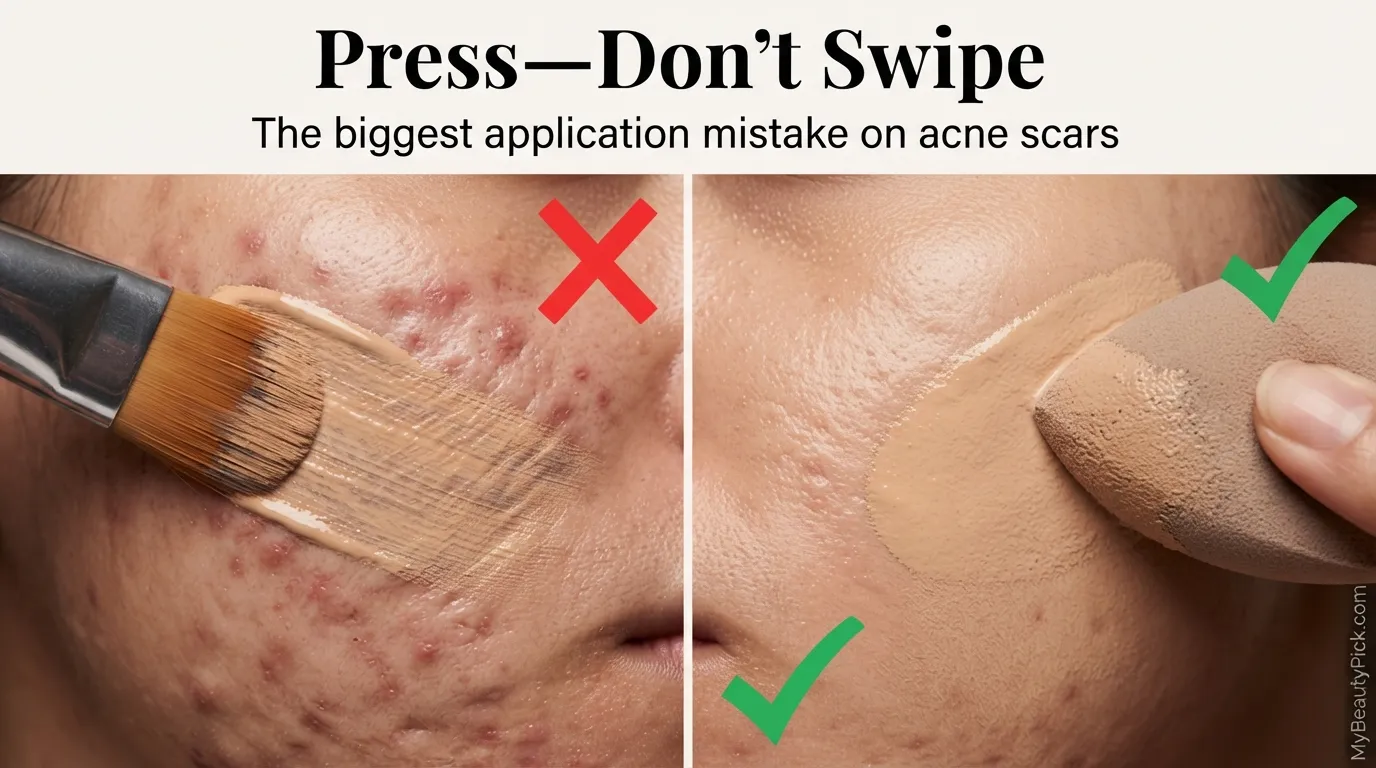
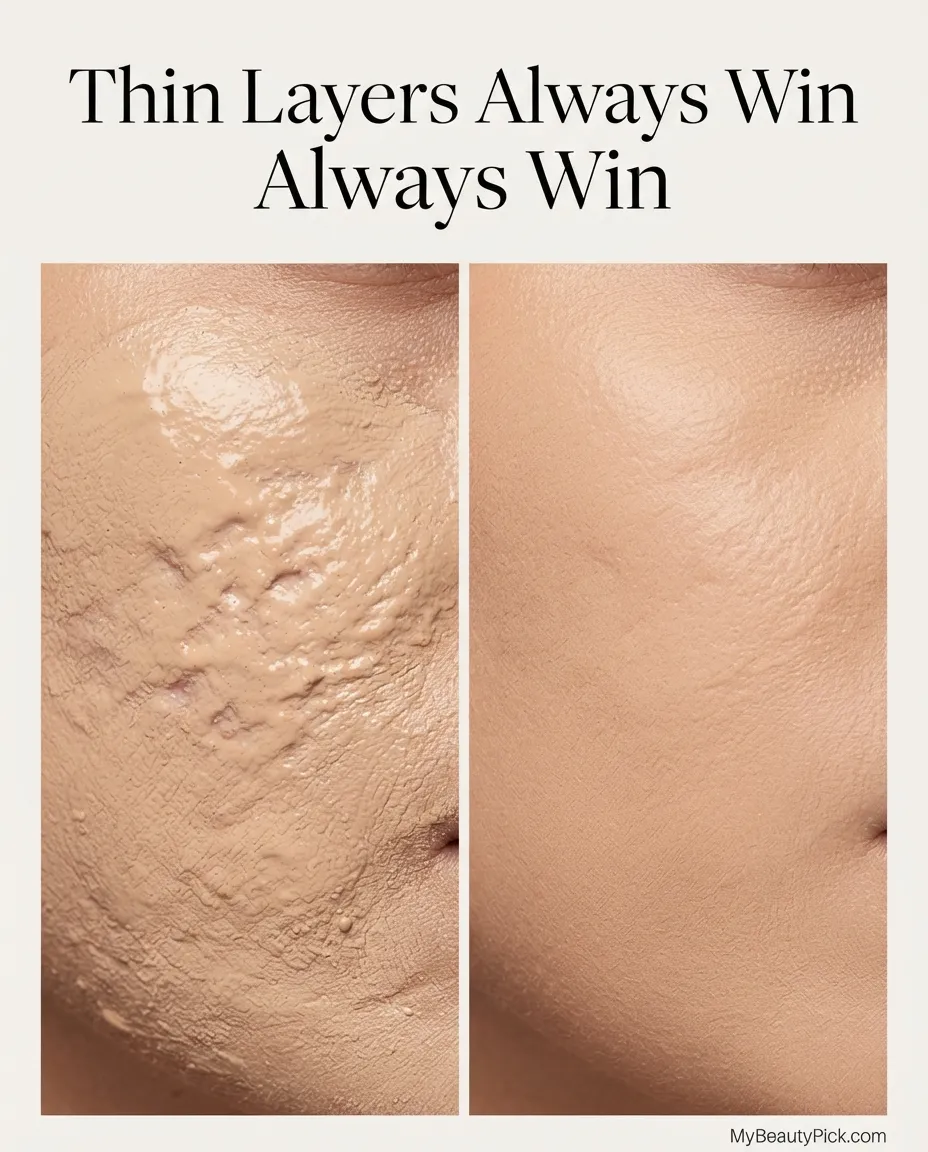
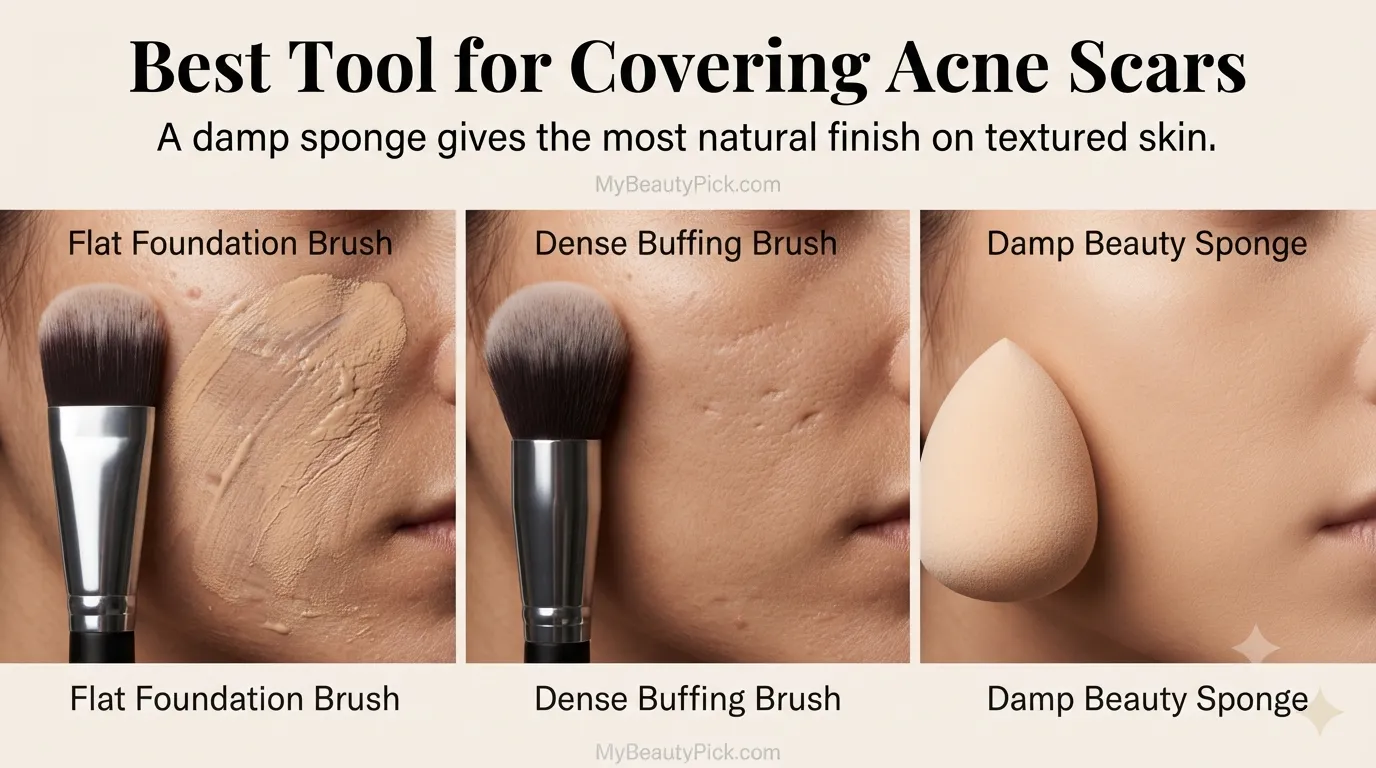
Applying foundation directly with a flat brush in long sweeping strokes over pitted acne scars drags foundation across the raised edges of each scar and deposits it in lines that emphasise the texture. A damp sponge with a pressing motion is the only tool that deposits coverage relatively evenly across textured scar surfaces. No formula, however good, overcomes the wrong application tool and motion on significantly pitted skin.
Frequently Asked Questions
What is the best foundation to cover dark spots?
Dermablend Continuous Correction CC Cream SPF 50 is the most reliably recommended foundation for covering dark spots and PIH across all skin tones. Its high-concentrate pigment formula covers in fewer layers than conventional foundations, the clear SPF 50 avoids white cast on deeper skin tones, and the dermatologist-tested formulation is non-comedogenic. For darker skin tones specifically, Black Opal True Color Foundation provides the shade depth and vitamin C brightening that most mainstream brands don’t.
Dark spots that persist through full-coverage foundation usually need a colour corrector underneath. Green corrects red marks; peach or orange neutralises purple tones; orange or brick red addresses deep brown PIH. Foundation on top of the corrector then only has to match skin tone, not fight the mark colour.
Can foundation actually cover acne scars?
For flat acne scars — which are primarily post-inflammatory hyperpigmentation (dark spots left after breakouts heal) — yes, full-coverage foundation can conceal them effectively, particularly with colour correction underneath for deeply pigmented marks.
For pitted or atrophic acne scars, foundation covers the colour but not the texture. The indentations remain visible, especially in raking light or photographs, because no product genuinely fills a depression in the skin surface. A silicone primer helps minimise the appearance by creating a smoother surface before foundation is applied, and optical-diffusion formulas like Giorgio Armani Luminous Silk reduce the visual contrast of the texture. For significant pitting, topical treatments and dermatological procedures are more effective long-term than any makeup approach.
Should I use concealer or foundation to cover acne scars?
Both, in a specific order. Foundation creates the base and provides the majority of coverage across the whole face. Concealer handles any individual marks that still show through the foundation, applied precisely and pressed in — not blended broadly. Using concealer alone over large areas of PIH or widespread scarring creates an obviously patchy, heavy look because concealer formula is denser and doesn’t spread or blend the way foundation does. Foundation first, targeted concealer second, is the sequence that produces the most natural result.
What coverage level do I need to cover acne scars?
For moderate PIH and occasional dark spots: medium buildable coverage is usually sufficient, particularly when paired with colour correction on the most pigmented marks.
For severe PIH, widespread scarring, or rosacea-level redness: full coverage is the more practical choice. Trying to build medium coverage to a corrective level through many layers creates more cakiness and a less natural result than a high-pigment full-coverage formula applied in two thin layers with correct technique.
Why does my foundation not cover my dark spots?
Three possible causes. First, the coverage level is insufficient — a medium or light formula without colour correction underneath cannot fully conceal deep or highly pigmented dark spots regardless of layers applied.
Second, the shade is slightly off. A foundation that is even half a shade too light or too dark reads differently over a dark spot than over surrounding clear skin, making the mark visible despite coverage.
Third, the mark needs colour correction before foundation. Dark spots that remain visible through full-coverage foundation almost always have an opposing pigment — red, purple, or brown — that the foundation pigment is fighting rather than covering. A correctly chosen colour corrector applied before foundation neutralises that opposing tone and the foundation then conceals cleanly.
Is full coverage foundation safe to use on acne-prone skin with scarring?
Yes, provided the formula is non-comedogenic and oil-free. Coverage level does not cause breakouts — formula composition does. A non-comedogenic, oil-free full-coverage foundation applied daily and removed thoroughly each evening will not worsen acne-prone skin. The practical risks are insufficient removal (foundation residue in pores overnight) and using a formula that isn’t non-comedogenic despite its coverage claims. Check the ingredient list for known pore-blockers (coconut oil, lanolin, isopropyl myristate, petrolatum) rather than relying on the label alone.
- Best foundation for acne-prone skin: non-comedogenic picks by coverage
- Best foundation for hyperpigmentation, dark spots, and melasma
- Hyperpigmentation vs post-inflammatory marks: what’s the difference?
- Concealer vs foundation: when to use each and when to use both
- Should your concealer be lighter or darker than your foundation?