

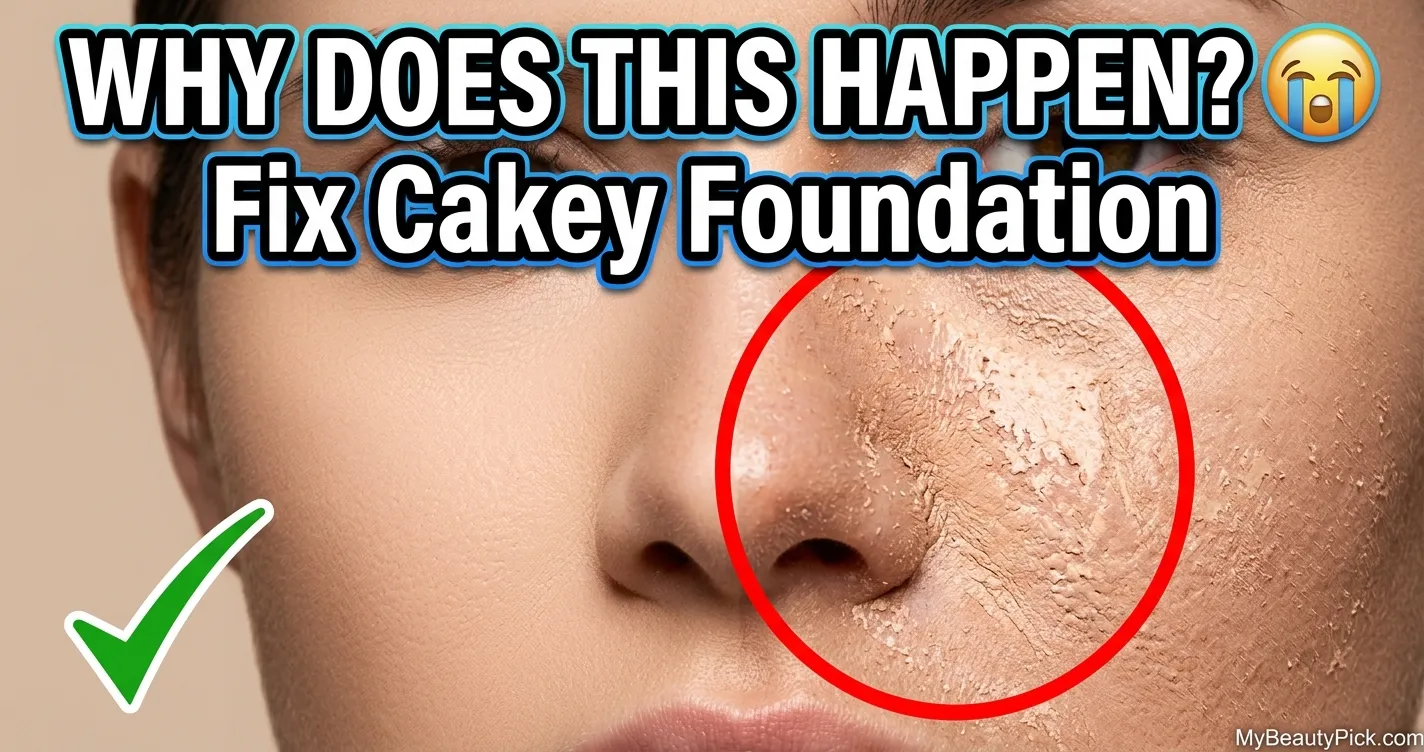
Foundation pilling, caking, and going patchy look similar in the mirror but come from different root causes. Treating them as the same problem is why most fixes only work some of the time. Pilling is a chemistry failure between product layers. Caking is an application volume problem. Patchiness is almost always a skin condition problem that starts before foundation is ever opened. Fix the right cause and the problem stops for good.
The Three Failures Are Different Problems
- Pilling happens when incompatible product bases or undried layers create polymer-on-polymer friction that rolls formula off the skin instead of blending it in.
- Caking happens when too much product accumulates, particularly when powder layers on top of powder on top of sebum. It gets worse through the day, not just at application.
- Patchiness is almost always a skin preparation problem: dehydration, dry texture, dead cell buildup, or a disrupted moisture barrier beneath the foundation.
- SPF is the single most overlooked cause of foundation pilling. Most mineral SPF formulas contain talc, mica, and zinc oxide that prevent foundation adhesion if given insufficient time to dry.
- Tan skin faces an additional variable: higher sebum output in the T-zone combined with natural surface warmth makes caking and oxidation-driven patchiness more visible and more common.
The Three Foundation Failures: What Each One Actually Is
Before fixing any of these, it is worth being clear on what you are actually dealing with. Pilling, caking, and patchiness have different appearances, happen at different moments in the routine, and need different solutions.
Pilling
Small balls or rolls of product forming on the skin during or immediately after foundation application. The product does not blend — it balls up and moves around on the surface rather than sinking in.
When it happens: During application, within the first two minutes.
- Product layers are chemically incompatible
- Underlying skincare has not dried down
- Too much product applied at once
- Wrong application tool creating friction
Caking
Foundation appears heavy, thick, and mask-like. It settles into pores and lines, looks dry and textured, and often worsens as the day progresses rather than improving. Powder touch-ups make it worse.
When it happens: After application and progressively through the day.
- Too much foundation applied in total
- Powder layered on top of sebum-mixed foundation
- Wrong formula for skin type
- No setting spray to meld layers
Patchiness
Foundation looks uneven — blotchy in some areas, missing in others, clinging to dry spots, and sitting on top of the skin rather than into it. The result varies across different zones of the face.
When it happens: Immediately at application. Does not improve with more blending.
- Dehydrated or dry skin beneath the foundation
- Dead cell buildup blocking even adhesion
- Wrong moisturiser for skin type
- Skin barrier damage from over-exfoliation or irritants
Why Foundation Pills Over Serum and Skincare
Pilling is a chemistry problem. Every product in your morning routine has a base — water, silicone, oil, or a wax blend. When incompatible bases are layered on top of each other before proper absorption, they do not bond. Instead, they resist each other, and the friction of applying foundation rolls the top layer into little balls and off the skin.
The second mechanism is polymer incompatibility. Many serums, moisturisers, and SPF products contain film-forming polymers: carbomers, polyacrylates, and cellulose derivatives that create a thin film on the skin surface as they dry. Foundation also contains polymers. Two dry polymer films applied against each other create the same resistance as rubbing two pieces of cling film together — they grab and roll rather than blend. This is the cause of pilling that waiting alone does not fix.
The Ingredients That Cause Pilling
Carbomers and Polyacrylates
Film-formers in serums and moisturisers
These thickening and film-forming polymers are in almost every serum and gel moisturiser. They dry to a surface film that resists bonding with a second polymer layer. Hyaluronic acid serums are particularly prone to this — the HA film stays on the surface and is incompatible with silicone-heavy foundation applied too soon.
Dimethicone and Cyclomethicone
Silicones in primers, serums, and foundations
Silicone sits on the skin surface without absorbing. One silicone layer over another is generally fine — they are compatible. But silicone primer or serum under a water-based foundation is not. The silicone surface repels the water phase of the foundation, causing it to ball up during blending rather than spread evenly.
Talc, Mica, and Zinc Oxide
Physical particles in mineral SPF and powder products
These particles are common in mineral sunscreens and pressed powders. Applied under liquid foundation, they create a dry particulate surface that foundation cannot adhere to properly. The foundation slides over the particles rather than bonding to skin, producing pilling or patchy areas — especially over the cheekbones and nose where SPF application tends to be heaviest.
Cetyl Alcohol and Stearic Acid
Emollients in thick moisturisers and creams
Fatty alcohols and fatty acids in richer moisturisers create a surface film that is slow to absorb. When foundation is applied over a cream that still contains active fatty alcohol on the surface, the foundation struggles to adhere and begins to separate. This is one of the reasons a rich night cream left on from the previous evening causes pilling — the fatty acids are still sitting on the surface.
Niacinamide at High Concentration
Active in serums (5–20%)
High-concentration niacinamide serums occasionally cause pilling not because of the niacinamide itself, but because of the carbomer or polymer base they are suspended in. The fix is waiting at least 60 seconds after the serum feels dry before applying the next layer. The serum base needs to fully cross-link before anything goes over it.
Chemical SPF Filters (Avobenzone, Octinoxate)
UV filters in chemical sunscreens
Chemical SPF formulas take longer to dry than most people allow. Avobenzone and similar filters require two to three minutes to form a stable film. Foundation applied before this film is set slides over it rather than adhering to skin. This is the most common SPF-related pilling cause and is solved by simply waiting longer — not by changing products.
The SPF Problem — The Most Overlooked Cause of Pilling
Sunscreen sits between skincare and foundation in almost every morning routine, which puts it in the highest-risk position for pilling. It is usually the last thing applied before foundation, it has had the least time to absorb, and it contains ingredients — mineral particles, polymers, UV filters — that are particularly prone to reacting poorly with foundation bases.
Most SPF guidance says “apply SPF as the last step of skincare.” What it rarely says is “wait at least three to five minutes after SPF before applying any makeup.” That waiting gap is not optional. Mineral SPF needs time for the zinc oxide and titanium dioxide particles to settle and for the carrier formula to dry. Chemical SPF needs time for the UV filters to form their active film. Apply foundation too soon after either type, and you are blending foundation over an undried SPF layer, which creates pilling almost every time.
The tacky test: after applying SPF (or any skincare step), press the back of one finger lightly against your cheek and lift it off. If the skin feels tacky, sticky, or you feel any pulling resistance, the product has not dried. Wait until there is no resistance at all before applying the next layer. This single test eliminates the most common cause of pilling without changing any products.
How to Prevent Foundation Pilling: The Full Routine Fix
Start with a genuinely clean base
Non-negotiable
Residual night cream, overnight oil, and sebum from the previous day all sit on the skin surface in the morning. Any of these create an unstable surface for new product layers. Cleanse in the morning — even if you cleansed the night before. A gentle gel or foam cleanser removes surface residue without stripping. On oily and tan skin, this step also removes excess overnight sebum that would otherwise accelerate foundation oxidation and caking later.
Apply skincare in thin layers, thinnest to thickest
Order affects adhesion
Toner or essence first (water-thin), then serum, then moisturiser, then SPF. Each layer needs to be lighter than the previous one. Applying a heavy cream before a serum means the serum cannot penetrate — it sits on top of the cream and creates a double film layer that pilled the moment foundation touches it. If you use a facial oil, it goes after moisturiser and before SPF only if it is a very light dry oil. Heavy facial oils go in the PM routine, not under makeup.
Wait between each skincare layer — actually wait
45–60 seconds minimum per layer; 3–5 min after SPF
Most people consider a product “absorbed” when it no longer feels wet. That is not absorbed — that is dried on the surface. True absorption means the formula has penetrated into the upper skin layers and the surface is genuinely dry. Press the back of your finger lightly to your cheek. No tackiness, no resistance: the layer is ready. For SPF specifically, the wait is longer — three to five minutes minimum, not 60 seconds. SPF is the layer most commonly rushed, and it is the one that causes the most pilling.
Match your primer base to your foundation base
Silicone primer + silicone foundation. Water primer + water foundation.
Check the first two to three ingredients in your primer and your foundation. If your primer lists dimethicone or cyclopentasiloxane first, it is a silicone primer. If your foundation lists water (aqua) first, it is water-based. These two do not mix — the silicone repels the water phase of the foundation and you get pilling during blending. Silicone primer needs a silicone-based foundation. Water-based primer needs a water-based foundation. This is not a preference — it is a chemistry rule with no workaround.
Press a tissue lightly over the face before foundation
Removes the surface excess without disrupting layers
After all skincare and primer have dried, press a clean tissue very lightly against your face and lift off. Do not rub or drag. This removes any surface excess — the last trace of skincare that has not fully penetrated — without disrupting the absorbed layers beneath. It sounds minor. On oily skin and tan skin where the T-zone produces more sebum, the surface excess is meaningful enough to cause both pilling and premature caking. This step takes three seconds and is worth it every time.
Use less product and a pressing tool, not a dragging one
Bouncing prevents pilling; dragging causes it
A damp sponge bouncing and pressing foundation into the skin creates far less friction than a brush dragging across it. Less friction means less opportunity for undried product layers beneath to be disturbed and rolled into pills. Use less foundation than you think you need — one pump for a medium coverage application is usually enough. Dragging a brush across an undried surface is the fastest way to pill even a well-prepped base.
Why Foundation Cakes — and Why Tan Skin Is More Vulnerable
Caking is a volume problem with a sebum multiplier. The basic cause is too much product: too much foundation, too much powder, or both layered repeatedly without any of it being removed. But on oily skin and tan skin with a naturally active T-zone, the sebum produced throughout the day mixes with the foundation and begins to break it down. The standard fix — apply powder — then deposits a new layer of product on top of partially broken-down foundation. Repeat this two or three times and you have the “thick mask” effect that characterises severe caking.
Tan skin has an additional factor. Higher melanin concentration produces a naturally warmer surface that can make product buildup appear more obvious as a colour shift — the layered product begins to look heavier and slightly off against the natural skin surface. Caking on tan skin also tends to look more like a visible coating rather than a subtle heaviness, because the contrast between the product layers and the skin beneath is more defined.
How to Prevent Foundation from Caking
Apply foundation in thinner layers than you think are necessary
The single most effective thing you can do to prevent caking is apply less. One pump of a full-coverage foundation, worked in with a damp sponge, covers more effectively and more naturally than two pumps applied heavily. Build only where you need more — over individual blemishes or hyperpigmentation spots — rather than layering all over. A thin all-over layer, then precise targeted coverage on specific areas, almost never cakes. Heavy all-over coverage almost always does.
Set with powder strategically, not all over
T-zone and under-eyes only for oily and tan skin
Setting the entire face with powder is one of the fastest routes to caking, especially through the day when powder accumulates on top of sebum. Set only the areas that produce the most oil: the T-zone, around the nose, and under the eyes. Leave the cheeks and outer face without powder or with the lightest possible dusting. A pressing motion deposits powder; a sweeping motion applies too much. Use a clean puff or dense brush and press — do not sweep.
Seal with setting spray, not a second powder layer
Setting spray melds the foundation, primer, and powder layers together into a single unified finish. It reduces the appearance of powder and prevents layers from separating throughout the day. Use it immediately after the first powder application — before any caking begins — rather than waiting until the makeup has already broken down. A light mist from 25 to 30 centimetres, three to four sprays in a cross pattern, is enough. Do not drown the face.
Touch up with blotting paper, not powder, through the day
Especially on oily and tan skin
Blotting paper removes the sebum that drives caking without depositing any new product. Press and hold the paper against oily areas for five seconds rather than sliding it across the face. Once the excess oil is removed, the existing foundation layer beneath is exposed and looks fresh again. If coverage has genuinely faded, apply one very light layer of foundation with a sponge over just that area — not powder — before setting again. Adding powder to a sebum-saturated area creates the visible cake layer immediately.
The most common caking pattern: foundation starts breaking down mid-morning, powder is applied to fix the shine. By afternoon, the powder has mixed with sebum to form a second layer of cake. More powder is applied. By evening, there are three or four layers of accumulated product sitting on the skin’s surface, and the face looks heavy and textured. The fix is not more powder — it is removing sebum first (blotting paper), then optionally re-applying the thinnest possible layer of foundation before setting spray. Never add powder to actively shiny, sebum-saturated skin.
Why Foundation Goes Patchy — and Why Skin Prep Fixes It
Patchy foundation is almost never caused by the foundation. Nine times in ten, a foundation that looks uneven, blotchy, or like it is sitting on top of the skin rather than blending into it is reacting to the skin surface beneath it. The foundation is doing exactly what it is supposed to do — adhering to the surface. If the surface is uneven, it will adhere unevenly.
Two different conditions cause patchiness and need different fixes. Dry skin lacks oil — the skin surface is rough, flaky, and cracked. Dehydrated skin lacks water — the surface feels tight, looks dull, and fine lines are more visible. A rich cream fixes dry skin but does not fix dehydrated skin (dehydrated skin needs a water-based humectant, primarily hyaluronic acid, before a moisturiser seals it in). Applying the wrong fix makes patchiness worse.
| Root Cause | How It Looks Under Foundation | The Fix |
|---|---|---|
| Dehydrated skin (lacks water) | Fine lines look exaggerated, foundation creases quickly, skin looks dull and flat | Hyaluronic acid serum on damp skin before moisturiser; hydrating primer; avoid matte foundations |
| Dry skin (lacks oil) | Foundation clings to flaky patches, pulls off skin during blending, looks cracked and flaky | Rich ceramide or squalane moisturiser; oil-based or serum foundation; damp sponge application |
| Dead cell buildup | Foundation looks uneven and bumpy, texture is visible through makeup, blending does not help | Gentle chemical exfoliant (AHA or PHA) 2–3 times per week; enzyme cleanser; no physical scrub |
| Damaged skin barrier | Foundation separates quickly, skin looks reactive, redness or irritation patches show through | Pause actives (retinol, high-strength AHA), use barrier-repair moisturiser (ceramides, glycerin, panthenol), wait 2–3 weeks |
| Wrong foundation formula | Matte foundation on dry skin: clings and cracks. Heavy formula on textured skin: settles into pores | Match formula finish to skin type: dewy or satin for dry/combo, matte for oily, lightweight buildable for textured skin |
| Excess moisturiser on surface | Foundation slides around, does not set, looks uneven after blending | Press tissue after moisturiser; wait fully before foundation; reduce product amount |
The Prep Routine That Prevents Patchiness
Skin prep is not optional for tan or medium-deep skin. The foundation problems that read most obviously on deeper skin tones — uneven adhesion, patchy coverage, visible dry spots — all respond directly to skin condition. Tan skin with PIH from breakouts, natural surface texture, and an active sebum pattern needs a specifically designed prep sequence, not a generic “moisturise and prime.”
Exfoliate 2 to 3 times per week with a chemical exfoliant
Dead cell buildup prevents foundation from adhering to the actual skin surface and creates the bumpy, uneven texture that no amount of blending can fix. A gentle AHA (glycolic or lactic acid at 5 to 10%) or PHA (gluconolactone) removes dead cells without disrupting the barrier. Use it in the evening only, not before foundation. The improvement appears the following morning as a smoother, more even surface that foundation glides across rather than clinging to. Physical scrubs are not suitable for tan skin — they cause micro-tears and worsen PIH.
Apply hyaluronic acid serum to damp skin if dehydration is present
Damp, not wet — hyaluronic acid draws water to where it finds it
Hyaluronic acid is a humectant that draws water into the skin. Applied to dry skin in a dry environment, it can actually pull water out of the dermis and worsen surface dryness. Apply it within 30 seconds of washing or misting the face while the skin is slightly damp. This gives the HA a water source to draw from and pulls moisture into the upper skin layers rather than away from them. A hydrated upper dermis means foundation sits into the skin rather than on top of it.
Choose a primer that addresses your specific skin texture issue
A hydrating primer fills surface dryness and extends moisture time, giving foundation a smooth base to adhere to on dry or combination-dry skin. A silicone-based pore-filling primer physically fills the pore edges that cause textured foundation on oily or pore-prone skin. A mattifying primer reduces surface sebum output and extends wear on oily skin. The primer needs to match the texture problem, not just the skin type category. Pore-prone tan skin often needs a pore-filling silicone primer even when sebum production is not high, because the pore texture itself creates uneven adhesion.
Foundation Problems by Skin Type
Oily Skin
Primary risk: caking through the day as sebum mixes with foundation and powder. Blot before touching up — never add powder to a shiny surface. Use a silicone-based primer to create a sebum barrier. Avoid applying powder all over; T-zone setting only. A setting spray after the initial application significantly extends the time before breakdown begins.
Dry Skin
Primary risk: patchiness and cracking at dry patches. The foundation is not the problem — the surface beneath is. Prioritise a ceramide-rich moisturiser, wait fully for absorption, use a damp sponge for application, and choose a satin or hydrating foundation formula. Avoid matte formulas entirely. Minimal powder, mostly avoided on the cheeks and dry zones.
Combination Skin
Two problems in one face: oily zones cake, dry zones go patchy. Use different primers for different zones if needed: silicone-mattifying on the T-zone, hydrating on the dry areas. Apply foundation in thinner coverage and set each zone differently. Setting spray over the whole face melds everything together without adding product weight to either zone.
Dehydrated Skin
Dehydration and dryness are different. Dehydrated skin can be oily on the surface but water-depleted underneath — foundation creases, looks flat, and goes patchy in lines and around the nose. Fix is water-based humectants (hyaluronic acid, glycerin serums) applied to damp skin, not richer creams. A hydrating primer bridges the gap between skincare and foundation effectively.
Tan and Medium-Deep Skin
All three failure types are more visible on tan skin. Pilling looks more obvious against a deeper surface. Caking shows as a heavier coating that reads as a colour shift. Patchiness at dry spots is more defined because the foundation-to-skin contrast at unblended edges is sharper. The solutions are the same as for other skin types, but shade precision and primer-formula matching matter more because errors show more clearly.
Mature Skin
Caking in fine lines and creasing in smile lines are the dominant complaints. Both come from too much product, too much powder on texture, and dehydration beneath the foundation. A hydrating serum foundation or skin tint, no powder on textured areas, setting spray only, and a damp sponge application technique produces a far better result than a full-coverage formula applied heavily.
Mid-Day Fixes When Foundation Has Already Failed
What to Do When Each Failure Has Already Happened
Foundation has pilled during application
Stop blending immediately. Further blending makes pilling worse by spreading the balled-up product across a wider area. Press a clean damp sponge over the area with zero product — the moisture softens the pilled formula and allows it to re-blend. If pilling is severe, use a cotton pad with micellar water to gently lift the area clean, allow it to dry fully, then re-apply a thin layer of foundation with a pressing-only motion.
Foundation looks cakey and heavy mid-morning
Do not add more powder. Press a blotting sheet against the caked areas for five to eight seconds and lift off — this removes sebum and surface excess. Then press a very lightly damp sponge (no product) over the area to soften the remaining layers and restore a skin-like finish. If coverage has visibly faded, apply the thinnest possible layer of foundation with a sponge to that specific area only, then finish with one very light mist of setting spray from distance.
Foundation has cracked at dry patches
Spritz a hydrating face mist from 20 to 25 centimetres and allow it to settle for ten seconds. Press a clean damp sponge over the cracked area to re-meld the formula with any residual moisture. Do not rub or drag. If cracking is severe, a tiny drop of facial oil pressed over the cracked area with a fingertip, then a damp sponge pressed over it, softens and re-blends without disturbing the surrounding coverage.
Foundation looks patchy and uneven after initial application
More blending will not fix an uneven skin surface. A damp sponge pressed and re-pressed across the patchy areas redistributes the existing product more evenly. For dry patch areas that are clinging: a drop of moisturiser on a fingertip pressed very gently over the patch, then a damp sponge over the top, can re-integrate the formula. If the patchiness is severe, it is usually faster to cleanse the area, moisturise, wait two minutes, and re-apply a thin layer than to try to fix the existing application.
Foundation is creasing in fine lines or smile lines
Gently press a clean fingertip into the crease and then lift — the warmth from your finger softens the product and allows it to settle more smoothly. A very light tap with a damp sponge tip over the line can help. The key is less product in these areas from the beginning: do not apply foundation directly over deep lines, and if using concealer there, apply in the absolute thinnest layer with a pressing motion, not a dragging one.
Common Foundation Prep Mistakes
9 Mistakes That Cause Pilling, Caking, and Patchiness
- Not waiting after SPF. SPF is the most commonly rushed step in the morning routine. Three to five minutes minimum after applying sunscreen is not excessive — it is the minimum. Apply SPF, then do your hair or get dressed, then come back to foundation. Not ten seconds later.
- Using a silicone primer under a water-based foundation. This is the single most reliable way to produce pilling on application. Check the first two ingredients in both products before layering them. If one is silicone-based and the other is water-based, they need to be the same or you need to switch one of them.
- Applying foundation before skincare has fully absorbed. “It doesn’t feel wet anymore” is not the same as absorbed. Use the tacky test — press and lift with a finger — before each new layer. No resistance means ready. Any tackiness means not ready.
- Over-applying foundation to compensate for patchiness. Patchy foundation is a skin texture problem. Adding more foundation over a rough surface makes the patchiness more visible, not less. Fix the skin surface with prep and exfoliation; do not fix it with product volume.
- Setting the entire face with powder on oily skin. An all-over powder layer creates the foundation for caking by adding product everywhere, including zones that do not need it. Setting spray is almost always a better finishing product for oily and tan skin than an all-over powder layer.
- Adding powder for a touch-up without blotting first. Powder applied directly to sebum-saturated skin mixes with the oil and creates a cement-like layer that looks thick and grey. Blot the sebum off first, always, before any touch-up product touches the skin.
- Using too many skincare layers before foundation. Every additional product layer increases the pilling risk, especially if any of those layers are undried. A complete morning routine of six to eight skincare steps needs to be fully dry before foundation — and most people do not have time for that. Two to three well-chosen products that genuinely address your skin’s needs are more effective under makeup than a comprehensive ten-step routine.
- Exfoliating on the morning of a makeup application. Freshly exfoliated skin has a slightly disrupted surface barrier. Foundation applied over a freshly exfoliated face can look uneven, react to formula acids, and go patchy faster. Exfoliate the evening before, not the morning of.
- Applying hyaluronic acid to completely dry skin. HA pulls water to where it finds it. On a fully dry face in a low-humidity environment, it draws water out of the dermis rather than in from the environment, which can worsen surface dryness and cause patchiness. Apply HA serum while the face is still slightly damp from cleansing or misting.
Frequently Asked Questions
Why does my foundation pill over serum?
Foundation pills over serum because of one of three causes: the serum has not fully dried before foundation was applied; the serum contains carbomers or film-forming polymers that create a surface film incompatible with the foundation’s polymer system; or the serum is silicone-based and the foundation is water-based (or vice versa), creating a base incompatibility. The fix is: wait for each skincare layer to pass the tacky test before applying the next, use less serum, and confirm your serum and foundation share a compatible base.
Why does my foundation sit on top of my skin instead of blending in?
Foundation sits on top of the skin when the skin surface is dehydrated, has dead cell buildup, or has excess skincare product sitting on it. Foundation adheres to whatever surface it contacts first. If that surface is dry, rough, or coated in undried moisturiser, the foundation cannot bond to the skin itself and simply sits on top. Fix: incorporate a gentle AHA exfoliant two to three nights per week, apply hyaluronic acid to damp skin, allow all skincare to fully absorb before foundation, and press a tissue lightly over the face before applying foundation to remove surface excess.
Why does my foundation crack and go patchy on dry skin?
Foundation cracks on dry skin because the foundation formula cannot flex with the skin’s surface movement, and the skin surface lacks the moisture and oil cushion that allows foundation to blend smoothly. Matte and full-coverage formulas crack fastest on dry skin because they have a rigid dry-down finish. The solution is a satin or hydrating foundation formula over a ceramide-rich moisturiser that has fully absorbed. Apply with a damp sponge rather than a brush, use minimal powder, and finish with a hydrating setting spray.
How do I stop my foundation from looking cakey?
Use less foundation and build only where you need coverage, rather than applying a heavy layer all over. Set only the T-zone and oily areas with a pressed translucent powder — not the full face. Finish with setting spray to meld all layers together. For touch-ups, blot with paper first to remove sebum, then re-apply the thinnest possible layer of foundation to faded areas if needed. Never add powder to a shiny, sebum-saturated area — this is the most direct route to caking.
How long should I wait after SPF before applying foundation?
At least three to five minutes for chemical SPF. Mineral SPF also benefits from a three-minute wait, though some mineral formulas dry faster. The practical test is the same as for any skincare layer: press the back of a finger lightly to the cheek and lift. If there is any tackiness or resistance, the SPF is not ready. No resistance at all means the surface is ready for foundation. Rushing this step is one of the most common causes of foundation pilling, and it is entirely preventable.
Why does my foundation look worse as the day goes on?
Foundation that degrades through the day is almost always breaking down due to sebum mixing with the formula and separating the layers. On oily skin, this process starts within two to three hours without a proper silicone primer and setting spray. The fix is: silicone primer before foundation to create a sebum barrier, setting spray immediately after application, and blotting paper for touch-ups rather than additional powder. A mattifying setting spray over the initial application significantly slows the breakdown process.
Does SPF cause foundation to pill?
Yes. SPF is the most common cause of foundation pilling in a morning routine. Mineral SPF formulas containing zinc oxide, titanium dioxide, talc, and mica create a particulate surface that liquid foundation cannot adhere to properly. Chemical SPF formulas need time to form their active film. In both cases, applying foundation before the SPF layer has fully set causes pilling on contact. Wait at least three to five minutes after SPF application, use the tacky test to confirm the surface is ready, and apply foundation with a damp sponge pressing motion rather than a brush dragging motion.
Why does my foundation look patchy on tan skin?
Foundation patchiness on tan skin usually comes from one of three things: an uneven skin surface from dead cell buildup or dry patches, a shade or undertone mismatch that makes colour variation more visible, or too much product applied over areas where the skin surface is uneven. The fixes: gentle chemical exfoliation twice weekly to smooth the surface, hyaluronic acid serum before moisturiser for dehydration, and a damp sponge for application that distributes product more evenly than a brush. Check the shade match at the jawline in natural daylight — a mismatched shade reads as patchiness at the edges on tan skin more than on lighter tones.
Should I use primer to prevent foundation pilling?
Primer can prevent or cause pilling depending on whether the primer and foundation bases are compatible. A silicone primer under a silicone foundation creates a smooth, unified base that extends wear and reduces pilling. A silicone primer under a water-based foundation causes pilling. A hydrating water-based primer under a water-based foundation works well. Primer is most useful for filling texture, extending wear, and acting as a compatible bridge between skincare and foundation — but only when the bases match.
More From MyBeautyPick
- How to Prep Tan Skin for a Flawless Foundation Finish
- Why Your Foundation Oxidises on Tan Skin
- Sebum Production and Oily Skin on Tan Complexions
- Best Foundation for Oily Tan Skin
- Best Foundation for Dry Skin
- Foundation Brush vs Sponge: Which One to Use
- Hyperpigmentation vs Post-Inflammatory Marks on Tan Skin
- Best Drugstore Full Coverage Foundation Under $20