

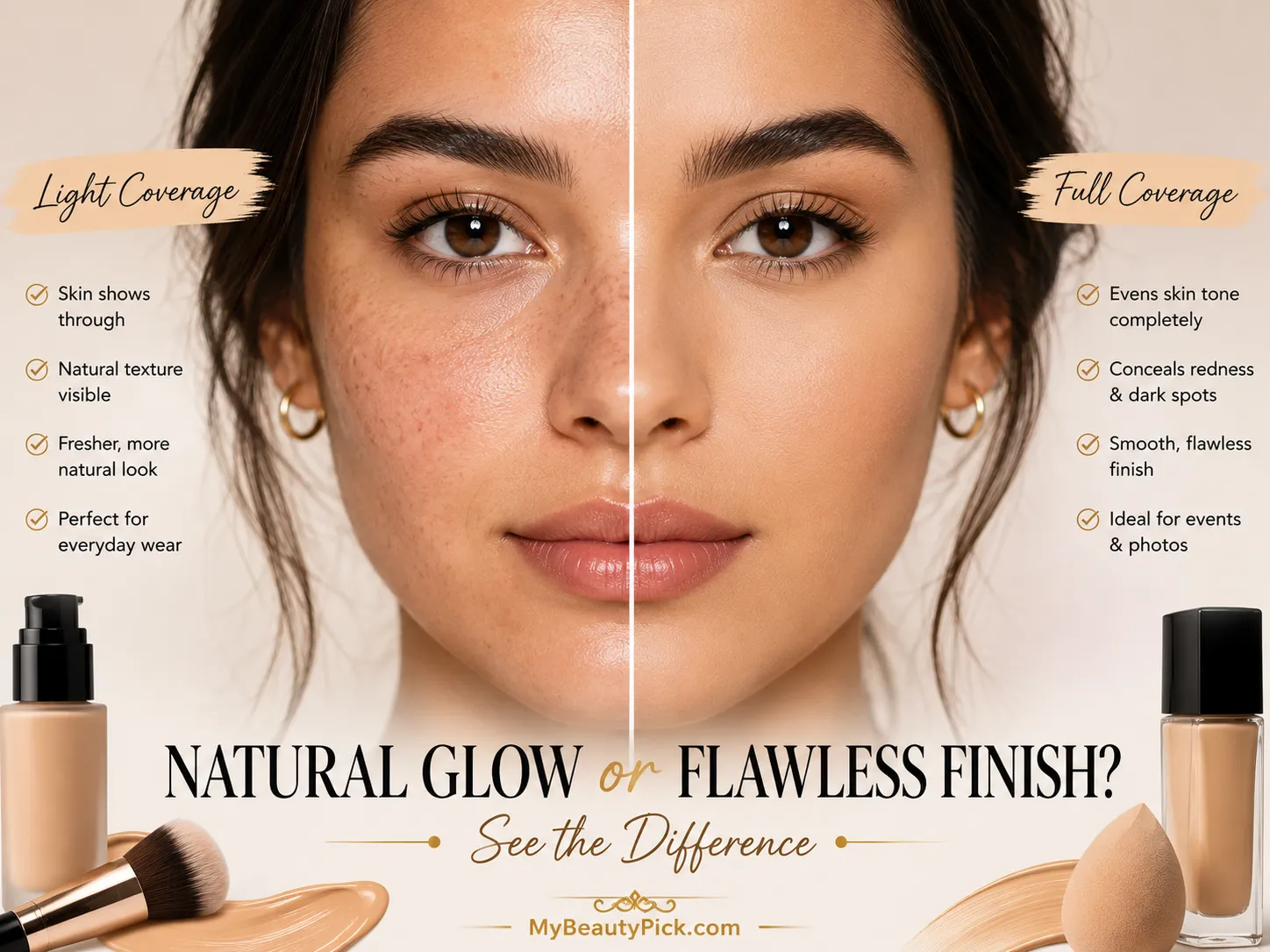
Light coverage or full coverage is one of the most common foundation questions — and also one of the most personal. There is no objectively correct answer. Light coverage on clear, even skin looks natural and healthy. Full coverage on the same skin looks polished and finished. Light coverage on skin with significant hyperpigmentation highlights rather than conceals. Full coverage on dry, lined skin can read as heavy. The right choice depends on what your skin currently looks like, what the occasion demands, and how you want to feel wearing it.
- Light coverage lets skin show through — natural tone variation, freckles, surface texture. Best when your skin doesn’t need significant correction.
- Full coverage creates a uniform, even base. Best when specific concerns need concealing — dark spots, hyperpigmentation, significant redness.
- The most flexible approach for most people is a buildable medium-coverage formula with concealer on specific areas — gives you both options in one product.
- Neither is inherently better. Coverage choice is a function of your skin today, not a permanent commitment.
- On tan skin, full coverage shows undertone errors more clearly. Shade precision is more important at higher coverage levels.
What Light and Full Coverage Actually Mean
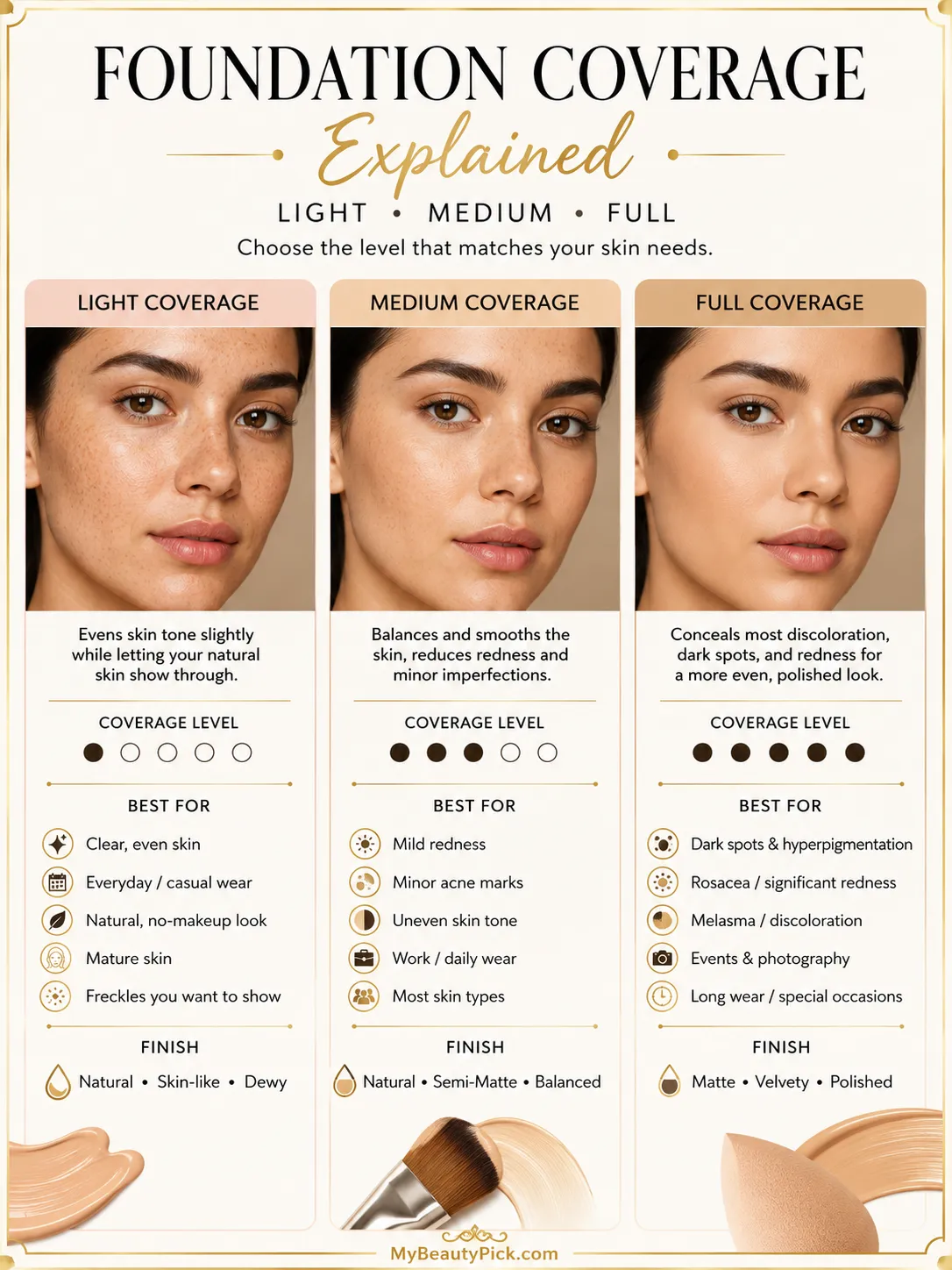
Coverage describes how much of the skin’s natural tone variation the foundation masks. It’s not about how thick the formula feels or how long it lasts — those are different variables.
Light coverage (also: sheer coverage) evens tone slightly and reduces visible redness, but skin characteristics — freckles, natural variation, subtle differences in tone — remain visible. The skin’s surface texture is not masked. The formula is often thinner in consistency and gives a more skin-like finish.
Full coverage creates a more uniform base where most discolouration, dark spots, and redness are concealed by the foundation alone. Surface texture may still be visible, but tone variation is largely corrected.
Between the two: medium coverage (covers mild redness and minor marks), buildable coverage (starts light, builds with layers), and the specific category of full coverage that’s lightweight in formula despite high pigment concentration.
When Light Coverage Works
- Your skin is in good condition without significant discolouration
- You want to even tone without masking natural skin character
- Everyday wear — morning, work, casual
- Skin tints, tinted moisturisers, serum foundations
- Natural and no-makeup-makeup aesthetics
- Mature skin where heavy coverage settles into lines
- Freckled skin where you want freckles to show
- Combination with targeted concealer on specific spots
When Full Coverage Works
- Significant hyperpigmentation, dark spots, or melasma
- Redness or rosacea that light formulas don’t cover
- Events, photography, and occasions requiring polished finish
- Post-inflammatory hyperpigmentation from acne
- Tan skin where undertone variation needs evening
- Occasions when you want clearly done makeup
- Long wear requirements where coverage must hold
The Case for Medium Coverage (and Why Most People Land Here)
Most people — when they’re honest about what they actually want — don’t want light coverage or full coverage. They want medium coverage: enough to even out tone and reduce visible redness, but not so much that the skin looks masked or the formula feels heavy.
Medium coverage foundations give more flexibility than either extreme. They can be sheered down with less product for lighter days, built with concealer on specific areas for more coverage where needed, or occasionally layered for a fuller result on events. They’re also more forgiving with undertone matching — at medium coverage, minor shade imprecision is less visible than at full coverage where the formula is more opaque.
The practical difference between a well-chosen medium-coverage foundation with targeted concealer and a full-coverage foundation applied uniformly: the medium coverage approach looks more like skin. The concealer handles the specific concerns; the foundation handles the overall tone. The result is coverage where it’s needed and natural skin where it isn’t.
Light Coverage vs Full Coverage by Skin Concern
| Skin Concern | Coverage Recommendation | Why |
|---|---|---|
| Clear, even skin | Light or sheer | No correction needed — light coverage looks most natural |
| Mild redness | Medium | Light coverage doesn’t fully conceal redness; full is more than needed |
| Mild acne marks | Medium + targeted concealer | Concealer on marks; medium foundation everywhere else |
| Significant hyperpigmentation | Full coverage or medium + full-coverage concealer | Light and medium leave dark spots visible |
| Melasma | Full coverage or speciality coverage (Dermablend) | Significant discolouration needs high pigment concentration |
| Rosacea / diffuse redness | Medium-full | Large area — concealer impractical; needs overall coverage |
| Freckled skin | Light — if freckles are something you want to show | Full coverage obscures freckles entirely |
| Mature skin | Light to medium | Heavy coverage settles into fine lines; targeted concealer more flattering |
| Tan skin with uneven tone | Medium-full with precise shade match | Undertone errors show more at full coverage; precision required |
Coverage and Skin Type: How They Interact
Oily Skin
Any coverage level can work on oily skin, but the formula type matters more than coverage level. A light-coverage formula with strong oil-control polymers often lasts longer than a full-coverage formula with weaker binders. If you want full coverage on oily skin, the formula needs long-wear polymers alongside the high pigmentation — not just high pigment in a standard base.
Dry Skin
Full-coverage formulas on very dry skin can cling to dry patches and create a patchy result that light coverage avoids. A hydrating medium-coverage formula with targeted full-coverage concealer on specific dry patches typically gives a more even and comfortable result than a full-coverage formula applied uniformly over dry texture.
Combination Skin
Medium-coverage, buildable foundation works well for combination skin. It provides enough coverage for slightly uneven zones without being heavy enough to over-dry the drier areas. Build with concealer on the T-zone blemishes or spots without adding a full second layer everywhere.
Mature Skin
Light to medium coverage is typically more flattering. Full-coverage formula on mature skin settles into fine lines and can make the skin look more lined than it does without foundation. A light or medium formula applied with a damp sponge, followed by concealer on specific spots, looks significantly younger than uniform high coverage.
The Hybrid Approach That Works for Most People
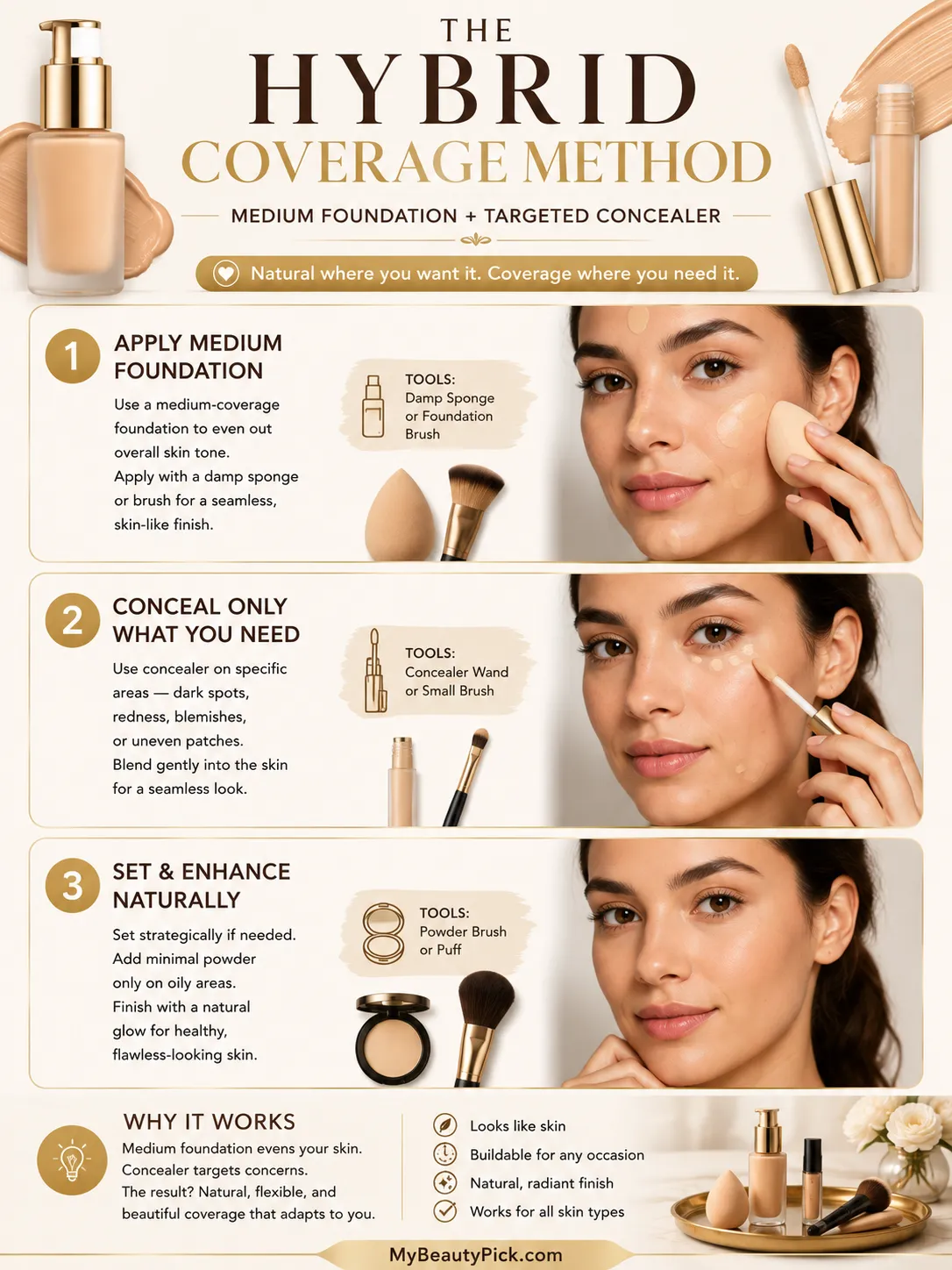
The most practically effective approach to coverage for most skin types isn’t choosing between light and full. It’s using a medium-coverage buildable foundation all over and applying targeted concealer only on the specific areas that need more coverage.
This gives you: the natural-skin quality of lighter coverage everywhere the skin is reasonably even; the coverage of a full-coverage product in the areas that specifically need it; and the flexibility to vary the coverage level day to day without switching products.
On tan and warm skin tones, the hybrid approach (medium foundation plus targeted concealer) tends to look significantly more flattering than full coverage all over. Full-coverage foundation on warm melanin-rich skin creates an even, opaque surface that can look flat and remove the natural warmth and dimension the skin has. A medium foundation that allows some of the skin’s own warmth to show through, with concealer on specific dark spots, maintains that natural warmth while addressing the coverage concerns.
Budget Full-Coverage Foundation Options
If full coverage is what you need, it doesn’t require a premium price. The most reliable affordable full-coverage foundations:
- NYX Can’t Stop Won’t Stop Foundation (~£12) — genuine full coverage in one thin layer, 45 shades. Flat matte finish works on oily skin; can look heavy on dry skin.
- L’Oréal Infallible 24H Fresh Wear (~£12) — builds to full coverage with a second targeted layer, natural matte finish, holds well in heat. 28 shades.
- Maybelline Fit Me Matte + Poreless (~£8) — medium-full coverage with strong pore-blurring. 40 shades with undertone variety. The most accessible price in the group for the shade range.
Frequently Asked Questions
Should I use light or full coverage foundation?
Light coverage works best when your skin is in good condition and you want to even tone without masking its natural character. Full coverage works best when you have specific concerns to conceal — significant hyperpigmentation, redness, dark spots. The most practical approach for most people is a medium or buildable coverage foundation with targeted concealer on specific areas rather than committing to either extreme. This gives coverage where it’s needed while looking natural everywhere else.
Is light coverage better for aging skin?
Generally yes. Full-coverage formulas on mature skin can settle into fine lines and emphasise texture, particularly when applied heavily. A light or medium satin-finish foundation applied thinly with a damp sponge, followed by targeted concealer only where needed, looks more natural and more flattering on mature skin. The exception is specific concerns that need coverage — targeted concealer on those areas is still appropriate, just not full coverage applied uniformly all over.
Can I build light coverage foundation to full coverage?
Some formulas build well; others don’t. A foundation labelled buildable typically allows multiple layers without caking significantly. A formula labelled light coverage or sheer usually has a lower pigment concentration that doesn’t reach full coverage regardless of layers. If you need both light everyday wear and occasional full coverage, a buildable medium-coverage formula with a separate full-coverage concealer gives the most flexibility in one routine.
What is the best cheap full coverage foundation?
NYX Professional Can’t Stop Won’t Stop Foundation provides genuine full coverage in one thin layer at a budget price and is consistently the strongest cheap full-coverage option. L’Oréal Infallible 24H Fresh Wear builds to full coverage with a second layer and holds well in heat and humidity. Maybelline Fit Me Matte + Poreless provides medium-full coverage with a strong pore-blurring effect at an even lower price point.