

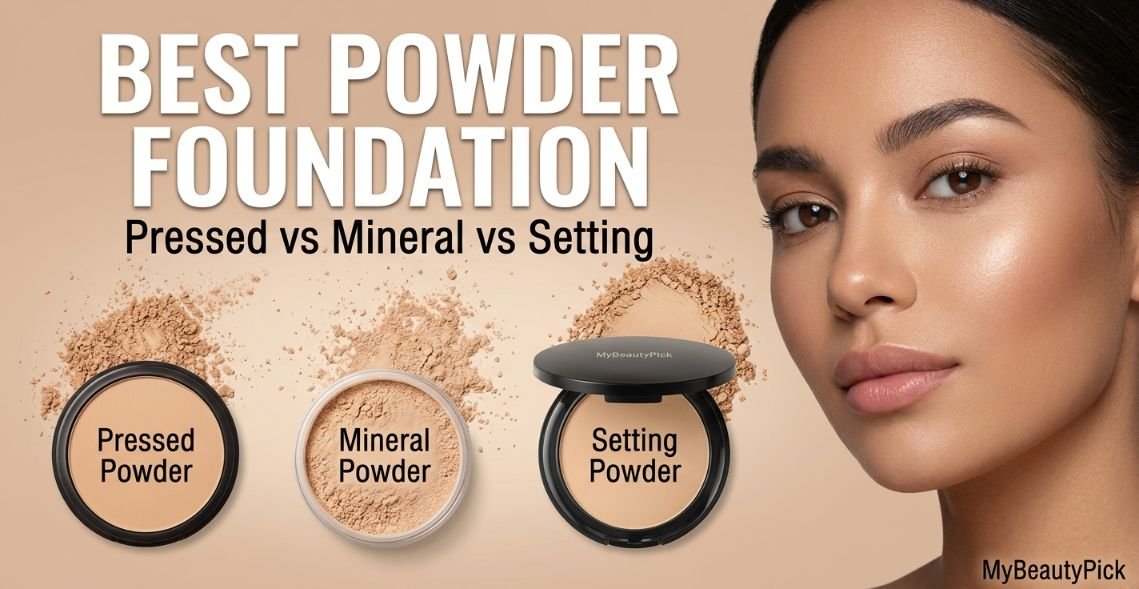
Powder foundation gets written off as old-fashioned in a skincare-infused, dewy-finish era — but the right powder formula on the right skin type gives results that liquid can’t match for ease, speed, and oil control. A well-formulated pressed or mineral powder foundation covers quickly, controls shine without layering multiple products, and is easier to touch up cleanly throughout the day than most liquid formulas. The issue isn’t powder versus liquid as a category. It’s knowing which powder formula suits which skin type and which situations.
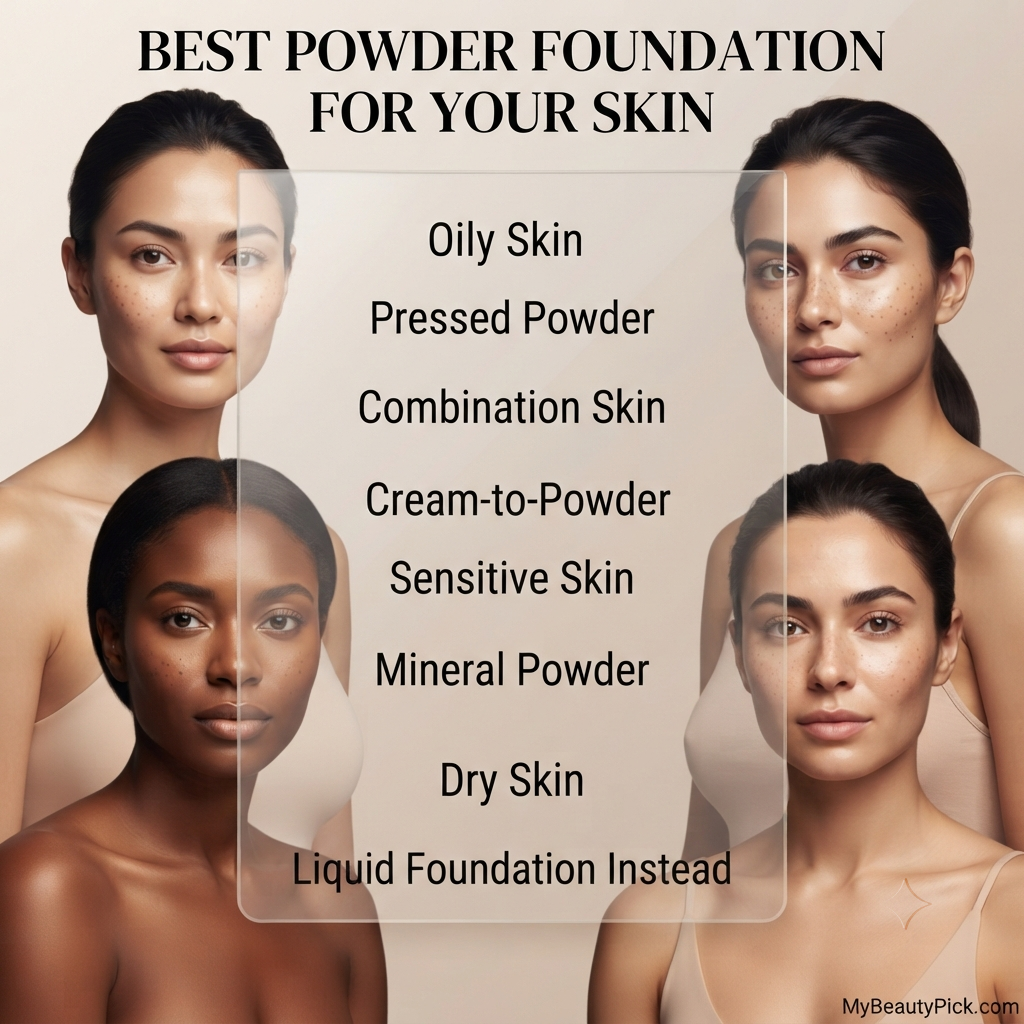
- Powder foundation works best on oily and combination skin. On dry skin, it clings to texture and fine lines in a way liquid formulas smooth over.
- Cream-to-powder foundation (creme to powder) applies wet for better blending and dries to a smooth powder finish — the most practical middle ground for combination skin.
- Mineral powder foundation uses natural mineral pigments and suits sensitive and acne-prone skin that reacts to synthetic binders and fragrances.
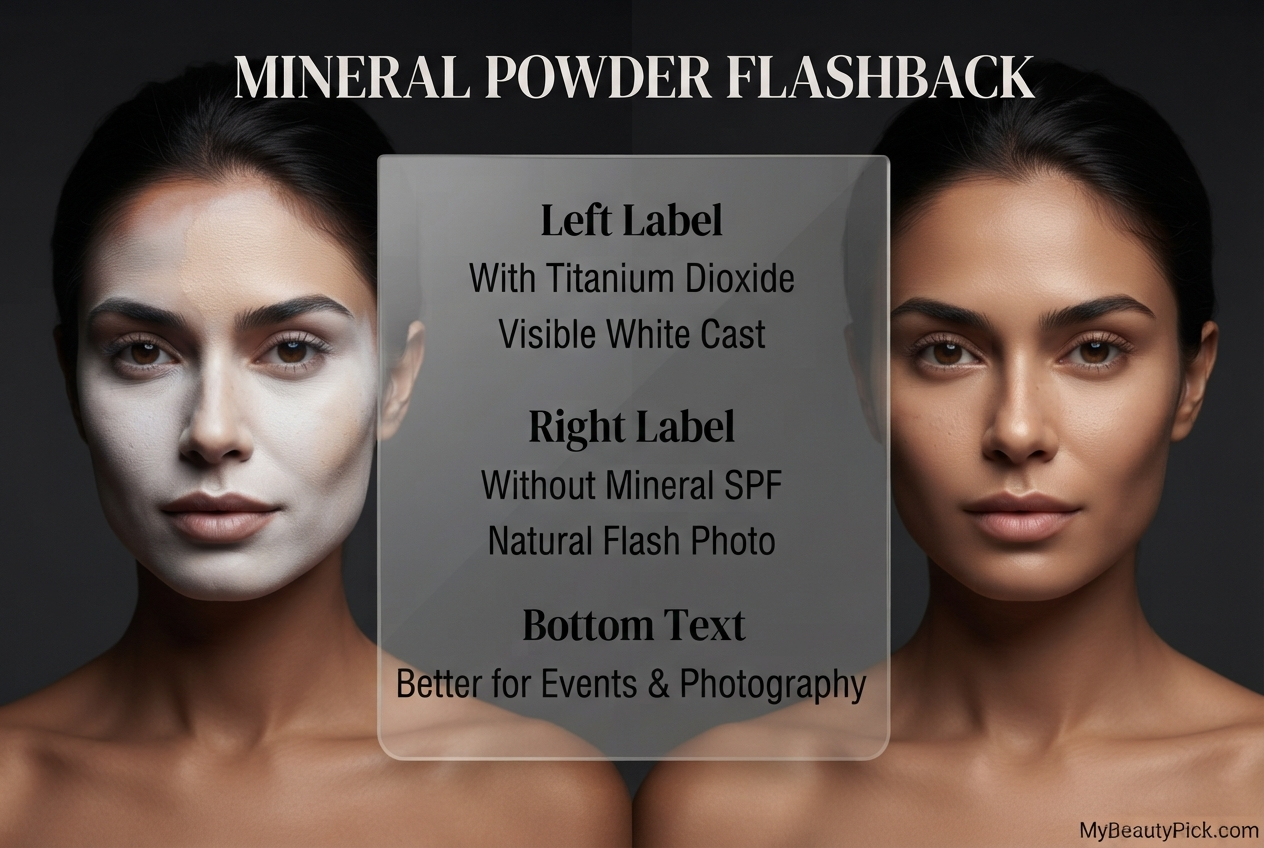
- On tan skin: mineral powder with zinc oxide and titanium dioxide causes flash photography flashback. The same ingredients that provide SPF in mineral foundation cause the grey cast in photos.
- Powder foundation over dry skin or over dry patches creates the powdery, aged appearance that gives this formula type its bad reputation — it’s a skin type match problem, not a formula quality problem.
Types of Powder Foundation
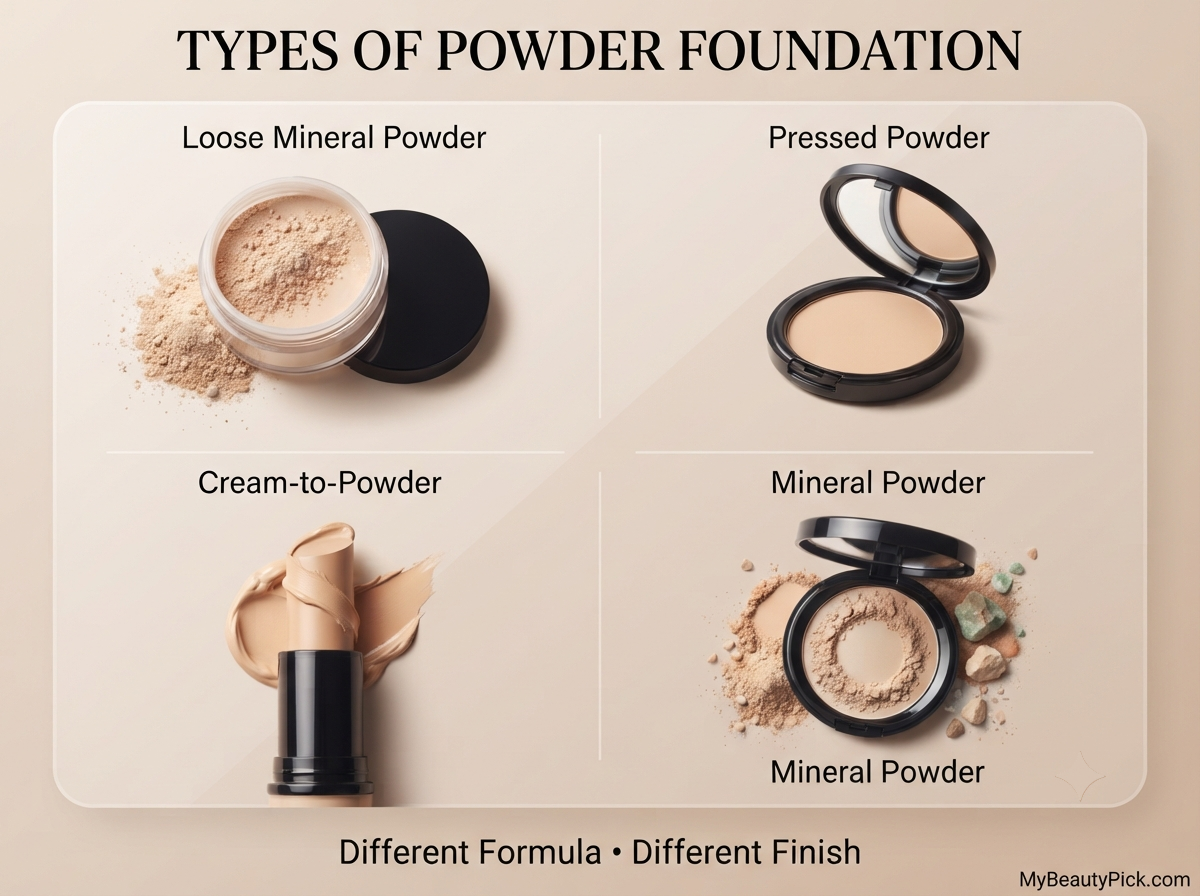
Powder foundation isn’t a single category. Several distinct formula types all fall under the label, with different textures, application methods, and performance characteristics:
Loose Mineral Powder Foundation
Finely milled loose powder in a jar or shaker bottle. Applied with a dome brush or kabuki using swirling motions. Provides the lightest, most buildable coverage of the powder formats. Mineral formulas (titanium dioxide, zinc oxide, mica, iron oxides) are non-comedogenic and fragrance-free — the most skin-friendly powder option. The formula suits sensitive and acne-prone skin particularly well. The limitation: loose powder is messy, unpredictable to apply evenly for beginners, and the SPF-providing minerals cause photography flashback on tan skin.
Pressed Powder Foundation
Compacted powder in a compact, applied with a flat-top kabuki or dense pressed powder brush. More portable and more controlled in application than loose. Provides more consistent, even coverage than loose powder. Works well as both a standalone base and a setting product over liquid primer. Coverage ranges from light to medium-full depending on the formula’s pigment concentration and how much product is picked up.
Cream-to-Powder Foundation
Applies with a cream or gel-like texture that blends easily, then dries down to a smooth matte powder finish. The cream texture allows more blending time than pressed powder and better coverage than loose powder. The powder finish sets immediately after application, providing the oil-control benefits of powder without the uneven application risk. Best suited to combination and slightly oily skin.
Mineral Powder Foundation
Can be loose or pressed. Defined by the use of mineral pigments (titanium dioxide, zinc oxide, mica) rather than synthetic dyes and binders. Often non-comedogenic, fragrance-free, and free of preservatives. The SPF from the zinc oxide and titanium dioxide is a benefit — but it’s the same photography flashback issue that affects any product with these ingredients on tan skin.
Powder vs Liquid Foundation: The Honest Comparison
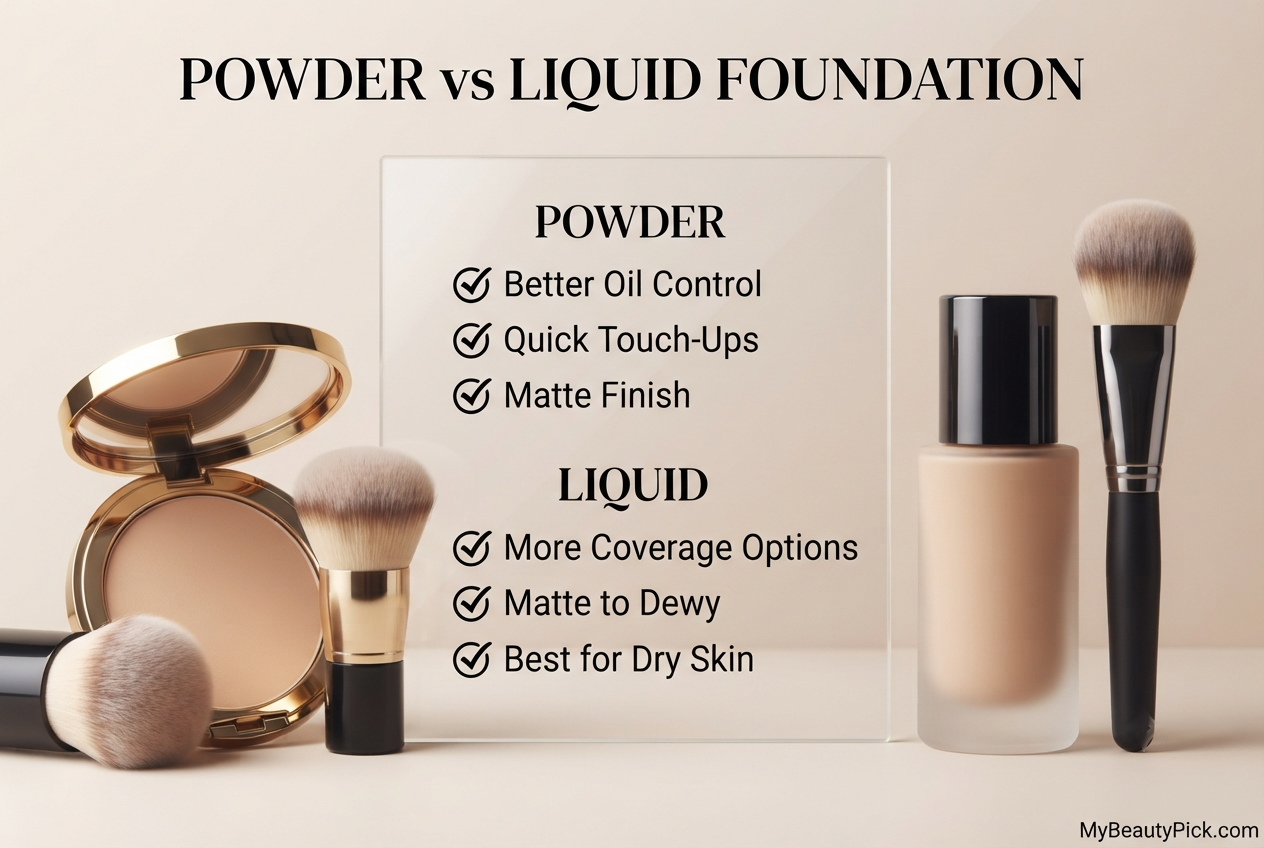
| Factor | Powder Foundation | Liquid Foundation |
|---|---|---|
| Best skin type | Oily, combination | All skin types in appropriate formulas |
| Dry skin | Emphasises dry patches and fine lines | Hydrating formulas sit comfortably |
| Coverage level | Light to medium typically | Light through maximum coverage available |
| Finish | Matte or natural matte | Any finish — matte to dewy |
| Application speed | Faster for everyday wear | Requires more steps typically |
| Touch-up ease | Easy — blot and re-press | More complex touch-up |
| Photography | Mineral formulas cause flashback | Depends on SPF type in formula |
| Skincare actives | Typically minimal | Wide range available |
| Longevity on oily skin | Good for basic hold | Better for 8+ hour hold with proper prep |
Best Powder Foundation Picks
bareMinerals Original Loose Powder Mineral Foundation SPF 15
The original mineral powder foundation that created the modern mineral makeup category. The bareMinerals formula uses titanium dioxide, zinc oxide, bismuth oxychloride, iron oxides, and mica — no synthetic binders, fragrances, or preservatives. For sensitive and acne-prone skin that reacts to conventional foundation binders, this is frequently the first formula that doesn’t cause a reaction.
The coverage is light to medium and genuinely buildable — three passes with the dome brush builds coverage without the formula looking heavy. The finish is skin-like and natural rather than powdery. The SPF 15 from the zinc oxide and titanium dioxide is a benefit for everyday use.
The limitation on tan skin: those same zinc oxide and titanium dioxide minerals cause flash photography flashback. For events with significant photography on tan and deeper skin, a liquid foundation without physical SPF is the better choice. For everyday non-photography use on sensitive or reactive skin, bareMinerals is one of the most reliably comfortable formulas available.
- Non-comedogenic, fragrance-free, preservative-free
- SPF 15 included
- Suits sensitive and acne-prone skin
- Buildable from light to medium coverage
- Causes flash photography flashback — physical SPF minerals
- Messy application — loose powder travels
- Not for dry skin
- Limited shade range at deeper depths
Laura Mercier Smooth Finish Pressed Setting Powder Foundation
The Laura Mercier Smooth Finish occupies the space between setting powder and coverage powder most effectively. Applied with a flat-top kabuki, it sets while providing noticeable coverage — more than a pure setting powder, with a smoother finish than most coverage powders. The finely milled formula doesn’t read as dry or powdery on the skin the way heavier pressed powders can.
On combination skin, it works beautifully as a standalone base: one compact, one brush, coverage and setting in a single step. The limitation is coverage level — light to medium suits most combination skin needs, but for significant skin concerns a liquid foundation underneath is still more effective.
- Sets and covers simultaneously
- Smooth, non-powdery finish
- Easy portable single-product routine
- Good for combination skin
- Light-medium coverage only
- Premium price for a powder
- Not for dry skin
Bobbi Brown Skin Foundation Stick
The Bobbi Brown Foundation Stick is technically a cream formula applied with a stick applicator, but it sets to a smooth, natural powder finish that behaves in wear like a powder foundation. The cream texture allows far better blending than pressed powder — you have 60–90 seconds to blend before it sets, which is enough for precise application around the nose and under-eye. The coverage is medium, consistent, and holds well on combination skin without the need for additional setting powder in most conditions.
On tan skin, the 36-shade range includes reasonable warm-undertone options in the medium-tan range. The natural finish is neither flat nor luminous — it reads as very even, healthy skin.
- Cream texture allows better blending than pressed powder
- Sets to smooth natural finish
- Medium coverage without heavy feel
- 36 shades with warm-undertone options
- Sets within 90 seconds — needs quick blending
- Not for dry skin — the powder finish can look tight on very dry skin
- Not the right choice for very oily skin in humidity
NARS All Day Luminous Powder Foundation
One of the few powder foundations that produces a genuinely luminous rather than matte finish. On normal and slightly combination skin, the result reads as polished, healthy coverage rather than the flat, opaque finish that most powder foundations produce. The medium coverage holds through a typical day on combination skin.
The limitation is clear: the luminous finish isn’t appropriate for oily skin (amplifies shine) or for the scenario where you specifically want the oil-control benefit of a powder formula. It’s powder in format for convenience and skin-type suitability, but the aesthetic is closer to a satin liquid foundation than a standard powder. Best for normal-combination skin types who want a powder’s ease with a less matte result.
- Luminous finish unlike most powder formulas
- Medium coverage without flat appearance
- 34 shades
- Single-step routine for normal skin
- Not appropriate for oily skin — amplifies shine
- Less suited to humid conditions
- Not the choice if matte finish is the goal
How to Apply Powder Foundation for the Best Result
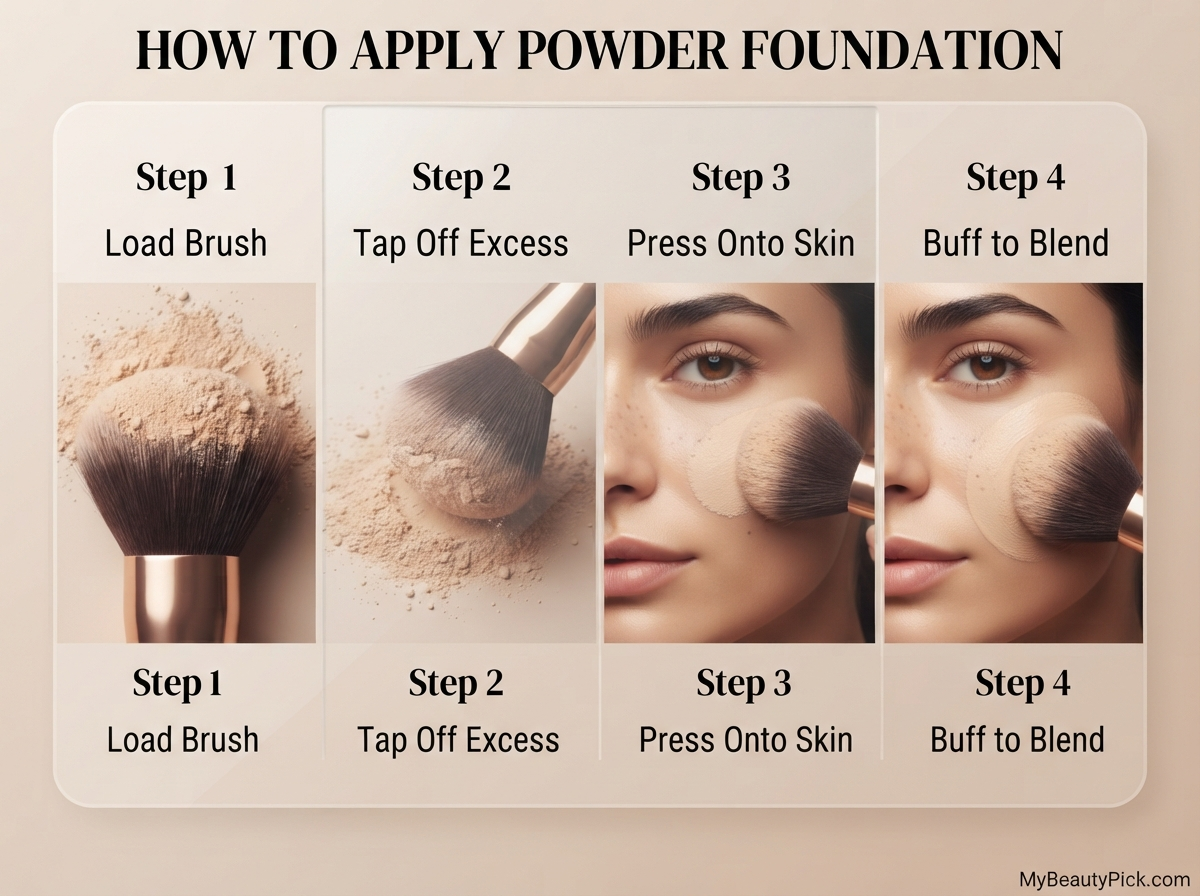
Application method determines whether powder foundation looks smooth and even or patchy and obvious. A few specifics:
- For pressed powder as a standalone base: tap the brush into the compact, tap off excess on the back of the hand, press onto the skin starting from the centre of the face. Circular buffing motions after pressing blend the product without disrupting the even deposit.
- For loose mineral powder: tap the brush into the lid, swirl in the powder to load the brush, then tap off excess over the lid before applying to the face. Too much product in one pass with loose powder is the most common cause of patchy, heavy-looking result.
- For cream-to-powder: apply directly from the stick or use a flat brush to pick up and apply. Blend quickly with a sponge or fingertips before the formula starts to set. Don’t over-blend once it begins to dry — you’ll disturb the coverage.
- Over dry skin specifically: if you want to try powder foundation on dry skin, apply a hydrating primer or light moisturiser first and let it absorb completely. The primer gives the powder something to adhere to and reduces the dry-patch catching that makes powder look patchy on dry skin.
Mineral powder foundation and mineral setting powders both contain titanium dioxide and zinc oxide — the same ingredients that cause flash photography flashback. On tan and deeper skin, the grey-white cast these minerals create under flash is more visible and more problematic than on fairer skin. If photography (events, weddings, professional shoots) is part of the equation, avoid all mineral formulas and check every powder product for titanium dioxide or zinc oxide.
Frequently Asked Questions
What is the difference between powder and liquid foundation?
Liquid foundation is applied wet and sets on the skin, giving a range of finishes from dewy to matte. Powder foundation is applied dry and immediately produces a matte or natural finish. Liquid generally gives more buildable coverage and suits more skin types. Powder works well on oily and combination skin, is faster to apply, and easier to touch up. Dry skin doesn’t suit powder foundation well — the formula emphasises dry patches and lines that liquid can smooth over.
What is cream-to-powder foundation?
Cream-to-powder foundation (creme to powder) is a dual-textured formula that applies with a creamy, blendable consistency and dries down to a smooth matte powder finish. The cream texture allows more blending time and more even application than pressed powder, while the powder finish provides oil control. It suits combination and slightly oily skin best and typically provides medium coverage — more than loose powder, less than most liquid foundations.
Is powder or liquid foundation better for oily skin?
Both can work on oily skin, but a liquid foundation with a strong matte formula and mattifying primer underneath typically provides better long-wear on very oily skin. Powder is better for quick daily application and easier touch-ups. Cream to powder is a useful middle ground — more blendable than pressed powder with the oil-control finish benefits of powder. For all-day longevity on very oily skin in warm or humid conditions, a liquid long-wear formula outperforms powder in most tests.
Can you wear powder foundation without liquid foundation underneath?
Yes — powder foundation is designed as a standalone base product. Applied with a brush to clean, moisturised skin, it provides coverage and a finished look without any liquid foundation underneath. This is particularly practical for oily skin, quick applications, and touch-ups. On dry skin, a moisturising primer or light liquid foundation underneath gives powder a better base to adhere to without emphasising dry patches.
What is mineral foundation and is it better for sensitive skin?
Mineral foundation uses naturally-derived mineral pigments (titanium dioxide, zinc oxide, iron oxides, mica) as its base rather than synthetic pigments and binders. For sensitive or reactive skin, a pure mineral foundation without added binders, fragrances, or preservatives is often more comfortable than conventional formulas. The limitation on tan and deeper skin: the zinc oxide and titanium dioxide that provide SPF also cause flash photography flashback. Choose based on your primary concern — sensitivity vs photography performance.