

Setting powder matters more than most people give it credit for — it’s not just a finishing step, it’s one of the main things controlling how long liquid foundation holds and whether the finish looks polished or overdone. The type of powder, the application method, and the amount used all affect the outcome significantly. Using the wrong type is one of the most common reasons foundation looks chalky, settles into fine lines, or looks ashy on tan skin by midday.
- Loose translucent powder gives the best hold for oily skin — finer particles than pressed, more even deposit.
- Banana powder is the correct choice for tan, warm, and medium-to-deep complexions. White translucent powders leave ashiness.
- Dry skin: powder the T-zone only, or skip powder entirely and use setting spray.
- Press powder — don’t sweep it. Pressing gives hold; sweeping just moves product around.
- Powder foundation can be used as a setting step but adds pigment, shifting the shade. Translucent powder sets without coverage change.
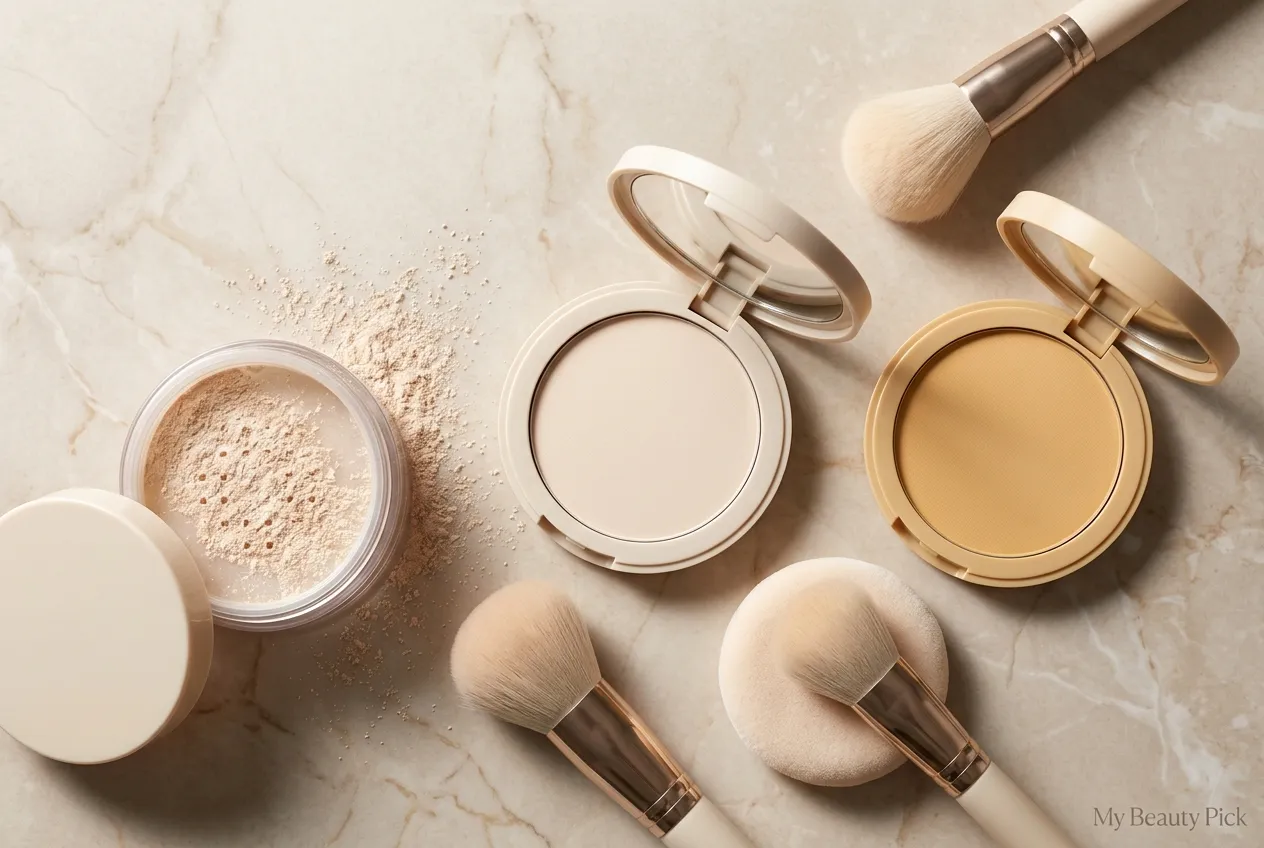
The Three Types of Setting Powder
Loose Translucent Powder
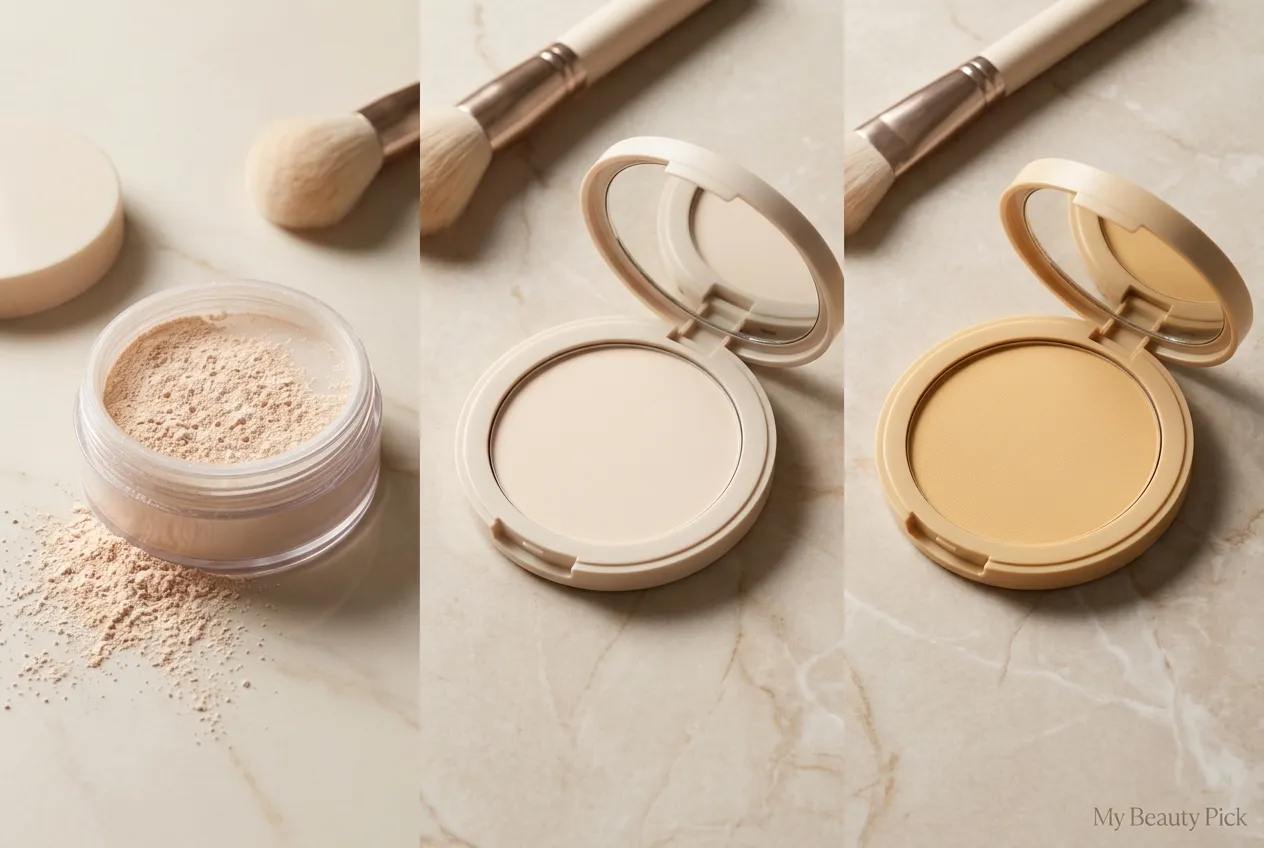
The professional standard for setting liquid foundation on oily and combination skin. The loose particle size is finer than most pressed powders, which means it deposits more evenly and provides better oil absorption per gram of product. Translucent means it adds no visible coverage or shade shift — it sets the foundation that’s already there without changing its colour.
The limitation: loose powder travels messily and takes a moment to apply correctly. For at-home application it’s ideal; for travel or touch-ups, pressed is more practical.
Pressed Translucent Powder
The more convenient format — same function as loose, more manageable to carry and apply on the go. Slightly less fine in particle size than the best loose powders, which means marginally less hold on very oily skin, but the difference is minor for most people. The format that makes sense for most everyday users who aren’t doing professional-level oily skin management.
Banana Powder
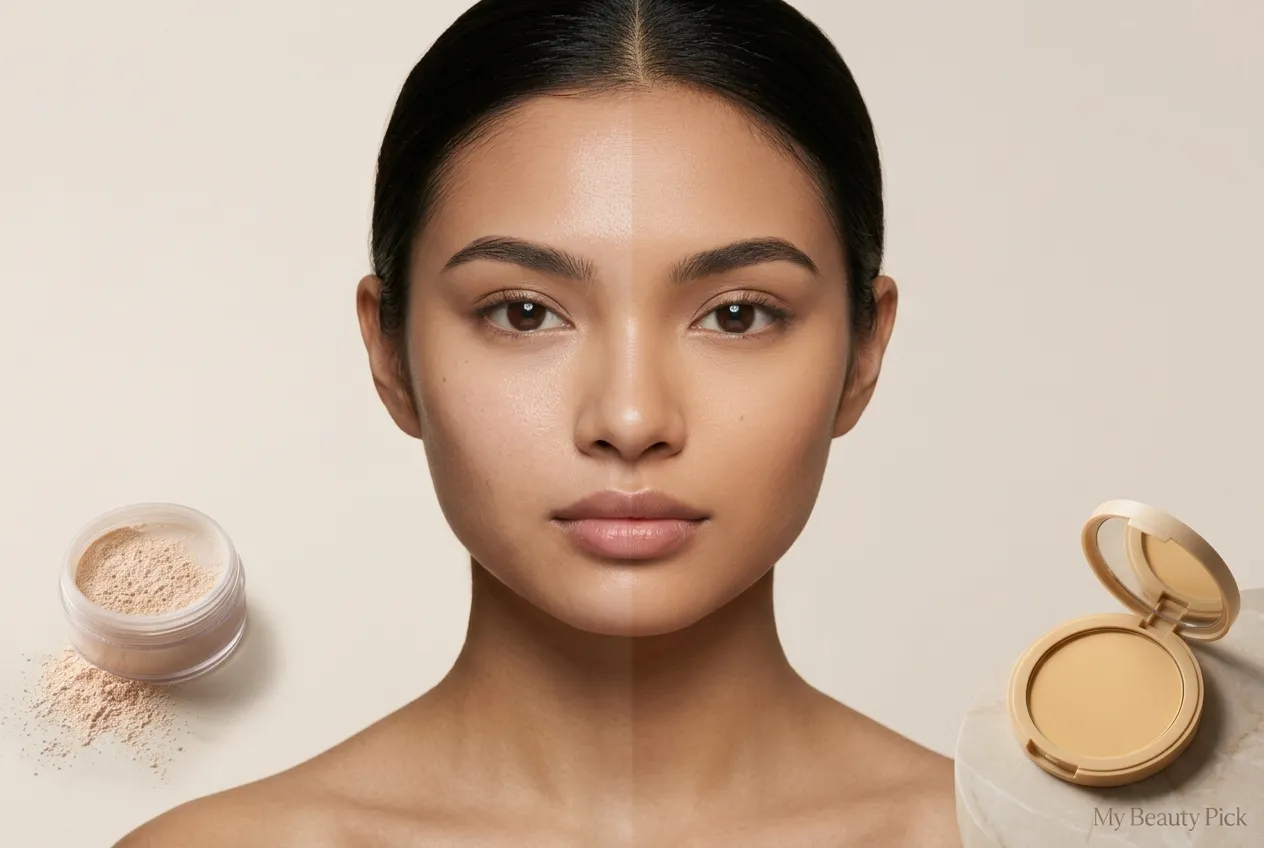
A yellow-toned setting powder used specifically for warm, tan, golden, and medium-to-deep complexions where white translucent powder creates ashiness. The name comes from the colour — a warm yellow-beige that complements rather than cools warm skin tones. It sets foundation, controls shine, and photographs without the flashback or ashiness that white powders create on melanin-rich skin.
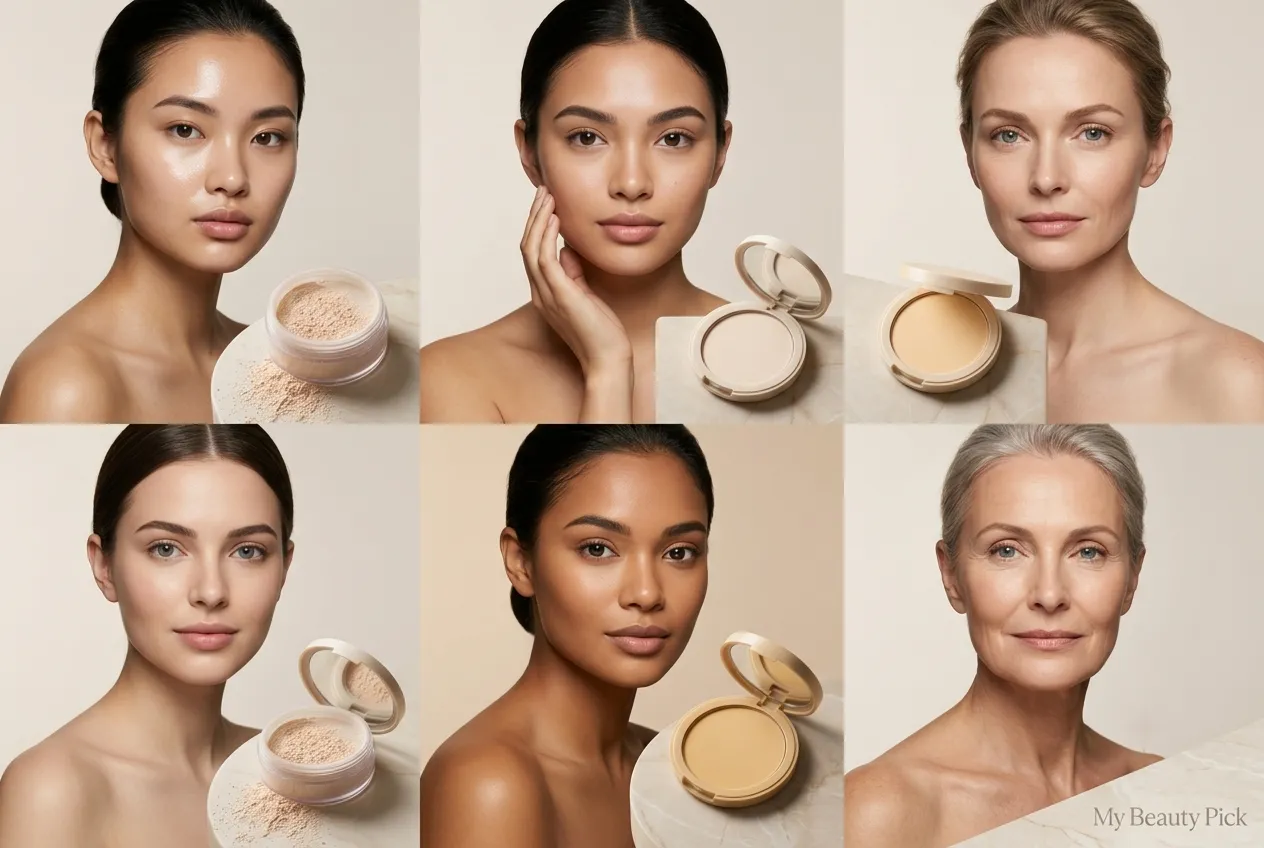
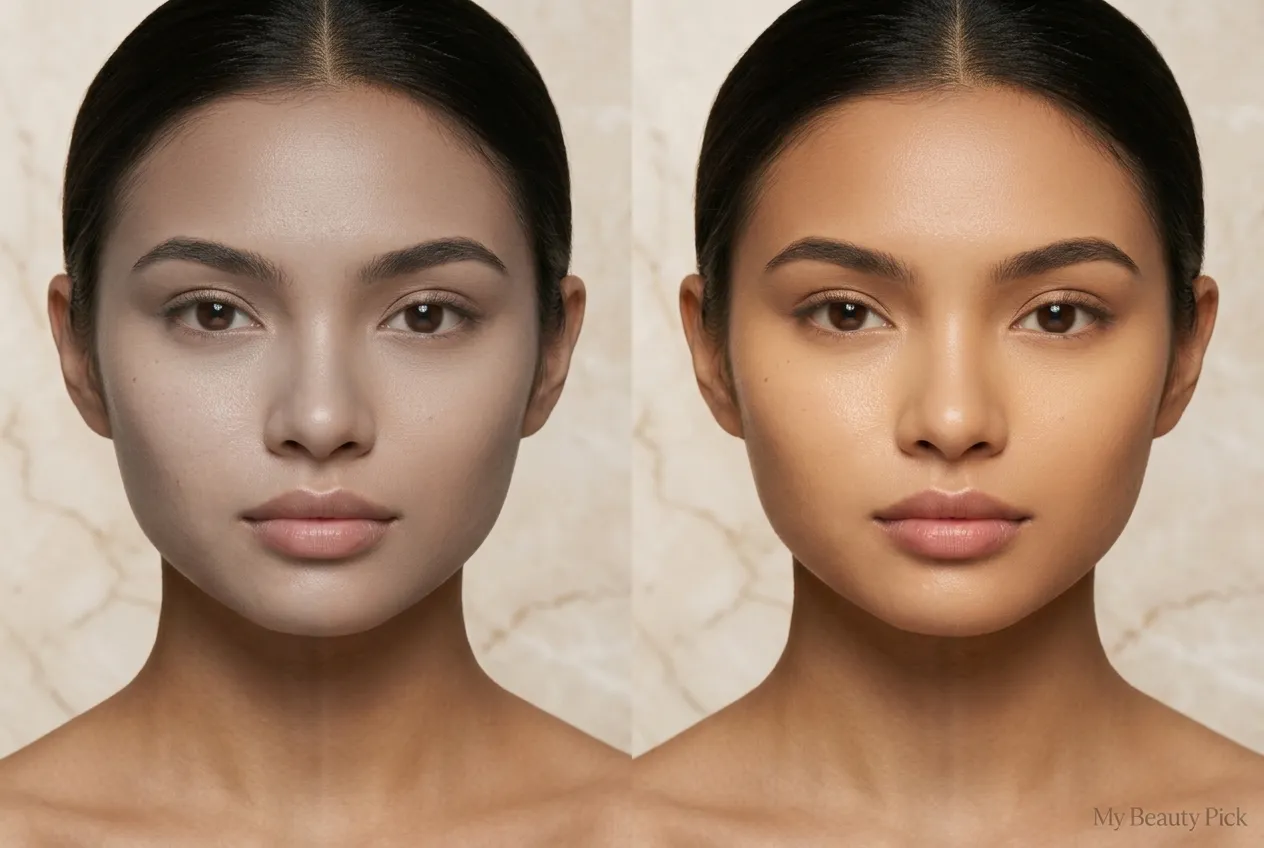
This is the go-to for tan and warm Indian, South Asian, Latinx, and mixed-heritage complexions. It’s not just a preference — white translucent on warm tan skin creates a visibly grey or ashy cast in real life and a white cast in flash photography.
Which Setting Powder for Which Skin Type
| Skin Type | Best Powder Type | Where to Apply | Application Method |
|---|---|---|---|
| Oily | Loose banana or translucent | T-zone + anywhere foundation breaks down | Press with dense puff |
| Combination | Loose or pressed banana/translucent | T-zone only | Press on T-zone; setting spray on cheeks |
| Dry | Minimal or none | T-zone only if needed | Light press; setting spray everywhere else |
| Normal | Pressed translucent or banana | T-zone or all over lightly | Light press or fluffy brush sweep |
| Tan/warm skin | Banana powder always | T-zone primary | Press; not sweep — sweeping drags too much product |
| Mature skin | Very light pressed or none | T-zone only | Minimal — powder settles into fine lines |
Can Powder Foundation Be Used as Setting Powder?
Yes — with one specific trade-off to understand. Powder foundation adds pigment on top of your liquid foundation, which means it can shift the shade slightly and add a visible layer of coverage. Applied very lightly with a fluffy brush, the effect is minimal. Applied more heavily, it can look noticeably layered.
For setting a liquid foundation at home, translucent powder is the cleaner choice — it adds hold without changing the shade. For touch-ups during the day when you don’t want to carry both a translucent powder and a compact, powder foundation in your shade does the job adequately.
What to avoid: using a powder foundation in a significantly lighter or darker shade than your liquid foundation as a setting step. The shade difference will be visible, particularly on tan skin where undertone mismatches are immediately apparent.
Application: Press, Don’t Sweep
The application method determines how well the powder sets rather than just sitting on top of the foundation. Sweeping a fluffy brush across the face moves product around and dislodges some of the foundation underneath — particularly problematic with long-wear formulas that haven’t fully set. Pressing deposits the powder firmly into the skin surface, where it can absorb oil and lock the foundation layer properly.
The professional technique: load a dense velour puff or a dense flat brush with powder, press off the excess on the back of your hand or a tissue, then press (not swipe) the puff onto the T-zone. Hold it there for 2–3 seconds per section. The warmth from the pressing motion helps the powder adhere.
On tan skin, the most common powder mistake is using too much. Over-powdering removes the natural warmth and depth of warm melanin-rich skin, leaving a flat, ashy, uniformly matte result that reads nothing like real skin. Banana powder pressed only on the T-zone, with setting spray on the cheeks, maintains the skin’s natural luminosity while controlling the areas that actually need it.
White Translucent Powder on Tan Skin: Why It Doesn’t Work
White translucent powder on tan and deeper complexions is one of the most common mistakes I see. The “translucent” label misleads people into thinking it’s invisible on all skin tones — it isn’t. White silica-based powders reflect light with a cool, neutral cast. On fair skin, this reads as transparent. On tan, warm, and deeper complexions, it reads as ashy or grey, particularly under certain lighting and flash photography.
The fix is simple: banana powder instead of white translucent. The yellow-beige warmth of banana powder disappears into warm skin tones rather than sitting on top of them. Laura Mercier Translucent Banana Powder, RCMA No-Color Powder (which is actually fine for warm skin), and NYX Professional Makeup HD Studio Finishing Powder in banana are the most widely available options at different price points.
Frequently Asked Questions
What setting powder works best for liquid foundation?
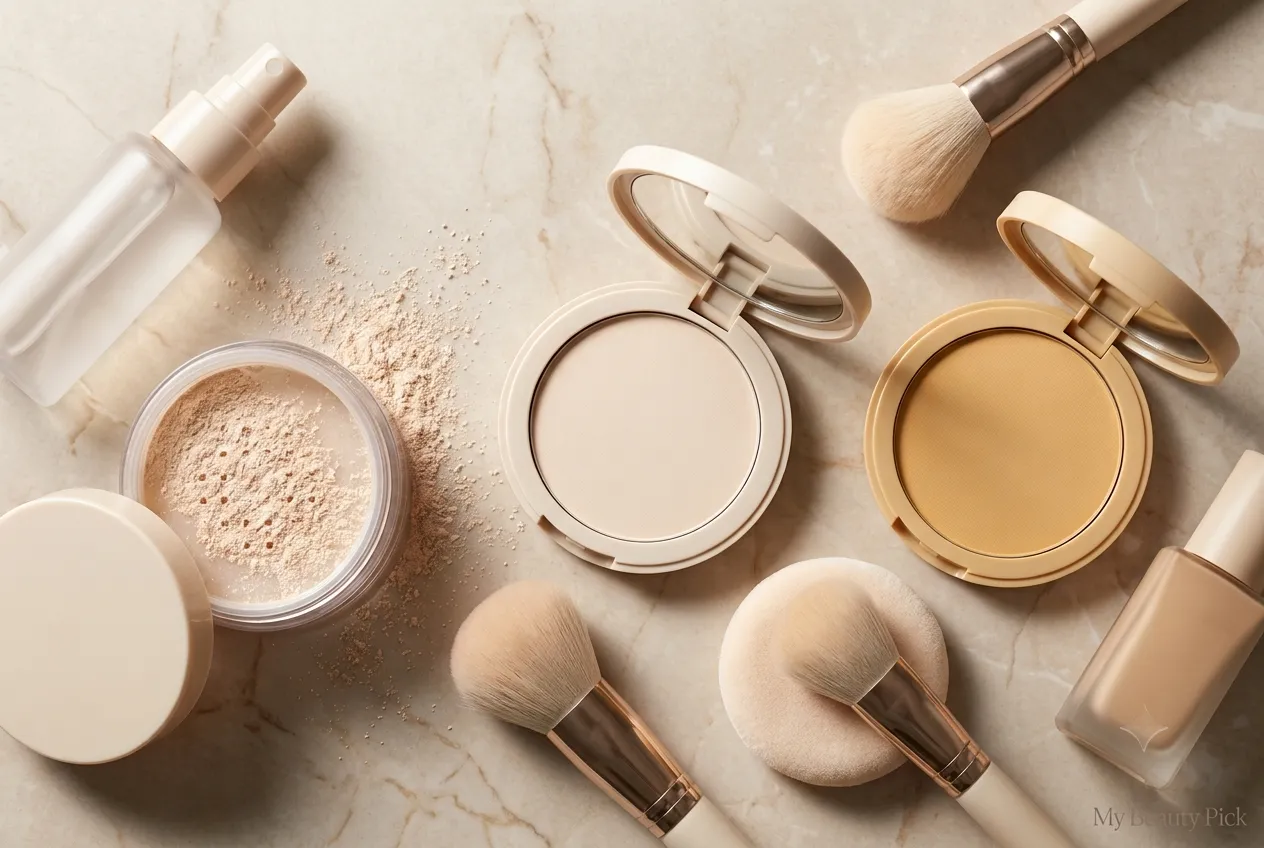
Finely-milled loose translucent or banana powder pressed on the T-zone works best for setting liquid foundation. Loose powder gives better hold than pressed on oily skin. For tan and warm skin, banana powder is essential — white translucent leaves ashiness. For dry skin, a light pressed powder on the T-zone only, or setting spray instead of powder.
Can you use powder foundation as setting powder?
Yes, but with a trade-off: powder foundation adds pigment, which can shift the shade slightly. For home use, translucent powder is cleaner. For touch-ups, powder foundation in your matching shade works adequately. Avoid using a powder foundation in a different shade from your liquid foundation as a setting step — the undertone difference will show.
Should you use banana powder on tan skin?
Yes — banana powder is the correct setting powder for tan and warm complexions. White translucent powders leave a grey or ashy cast on tan and deeper skin, particularly in flash photography. Banana powder’s yellow-beige pigment complements warm skin tones without creating visible ashiness or flashback.
How much setting powder should you apply?
Less than most people use. Press a small amount on the T-zone only for most skin types. On oily skin, a second light press adds hold without looking over-powdered. Heavy powder emphasises texture, settles into fine lines, and removes the natural warmth from warm complexions. Setting spray on the non-T-zone areas achieves finish quality without over-powdering.