

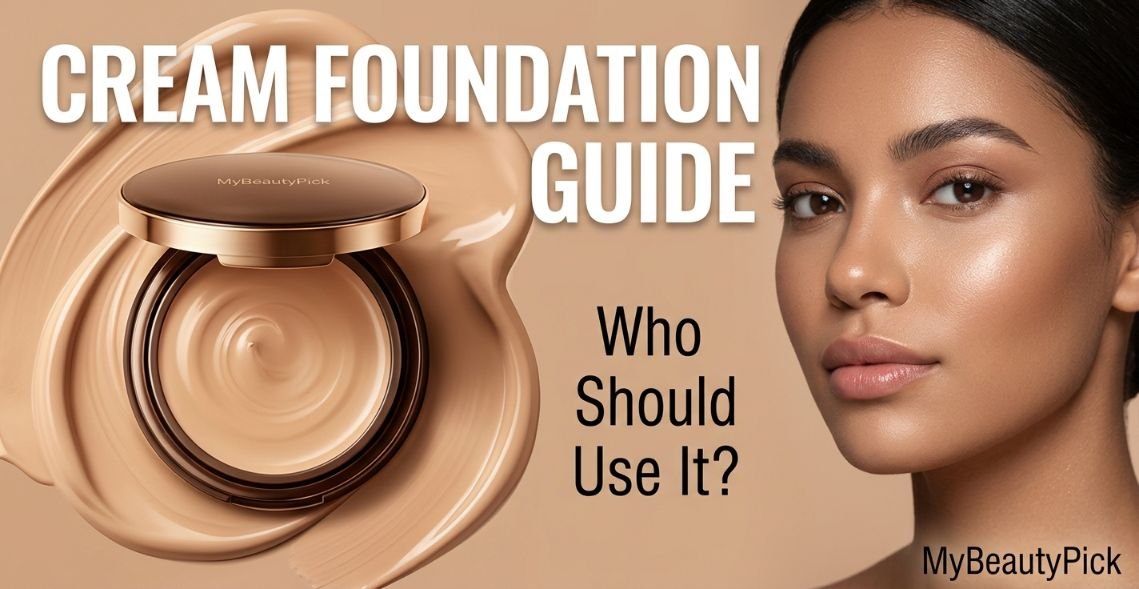
Cream foundation is the format that professional makeup artists have relied on for decades, and with good reason. A well-formulated cream foundation gives full coverage in a formula that stays workable long enough to blend precisely, sits on the skin without looking applied, and photographs better than most liquid full-coverage alternatives. The format isn’t common in everyday skincare-era beauty conversations, but for anyone who needs significant coverage, it deserves serious attention.
- Cream foundation uses a thicker, wax or oil-in-water based formula that provides full coverage in a thinner application than comparable liquid formulas.
- Finger warmth is one of the most effective application tools for cream foundation — the heat genuinely melts the formula into the skin in a way brushes and sponges can’t fully replicate.
- Cream foundation suits normal to dry skin and mature skin best. Oily skin can wear it with thorough primer and powder setting, but needs more maintenance than with a long-wear liquid.
- Cream palettes allow custom shade mixing — the primary professional advantage of cream over liquid foundation.
- On tan skin, cream foundation’s higher pigment concentration means undertone matching is critical — there’s less natural skin tone breaking through to soften an imprecise shade choice.
What Is Cream Foundation?
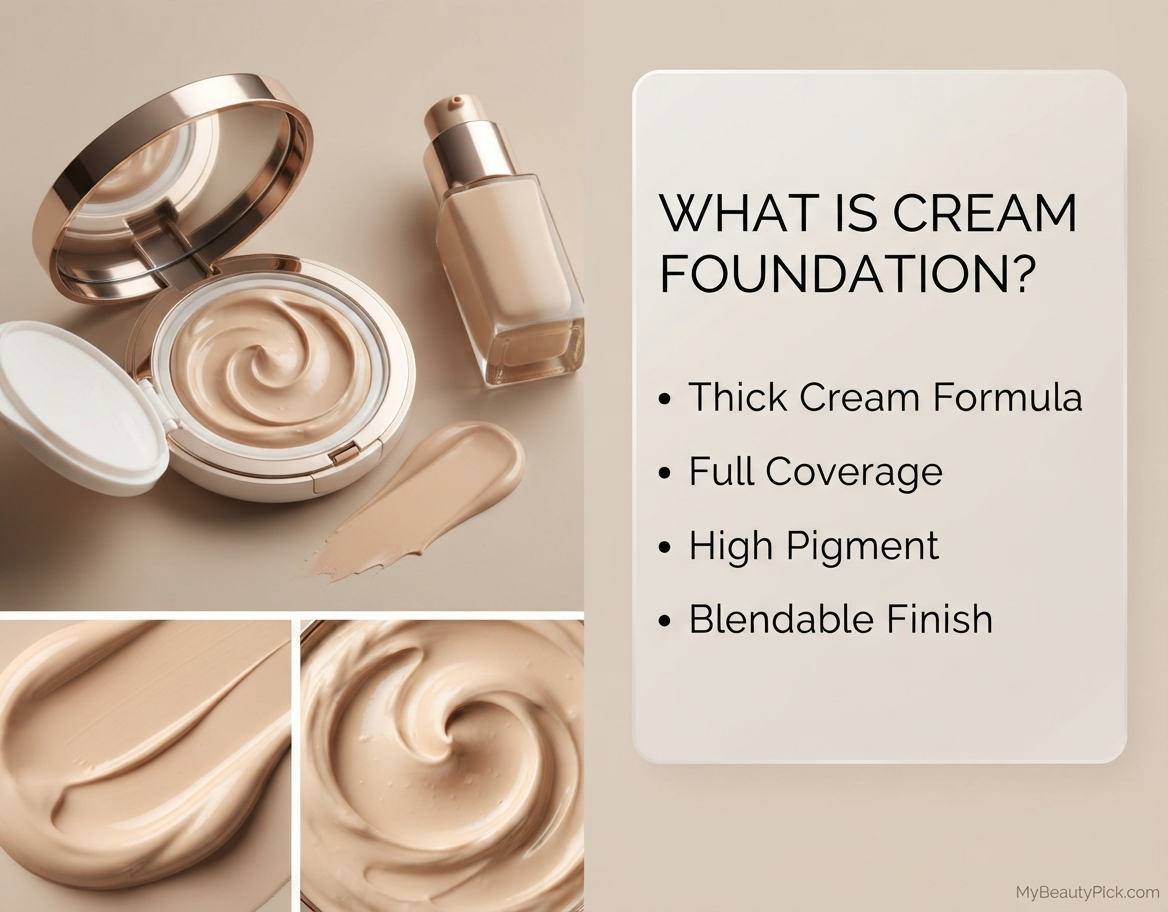
Cream foundation is a base formula with a thick, dense, creamy consistency — thicker than liquid but not as solid as concealer or stick foundation. The texture is typically an oil-in-water or wax-based emulsion, which gives it both the creaminess that makes it blendable and the high pigment concentration that makes it effective at coverage.
The key practical differences from liquid foundation: cream foundation has more working time before setting (which allows more blending), higher pigment concentration (which means less product achieves more coverage), and a finish that reads as very even, skin-like skin when applied correctly. Applied incorrectly — too much product, not enough blending, no setting — it reads as obviously applied and can look heavy.
Cream foundation is the professional standard for theatre, film, and broadcast makeup, where camera-ready full coverage with a natural appearance is the brief. In consumer beauty, it’s most relevant for special occasions, professional photography, and anyone whose skin concerns require a level of coverage that liquid formulas struggle to achieve in a single layer.
Cream Foundation vs Liquid Foundation
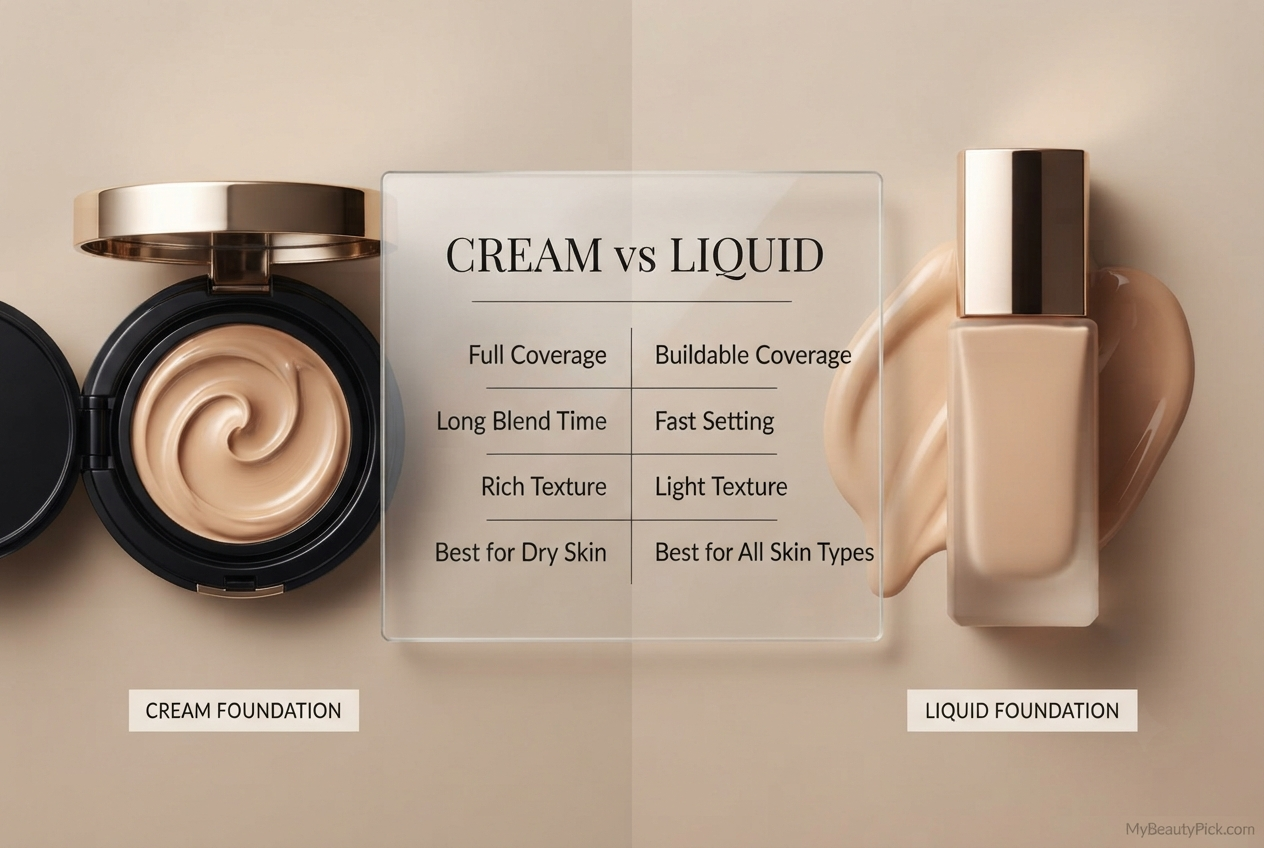
Cream Foundation
- Thicker, denser texture
- Full coverage typically achievable in one thin layer
- Longer blending window before setting
- Finger warmth is an effective application tool
- Higher pigment concentration
- Custom shade mixing possible in palette format
- Best for normal, dry, mature skin
- Needs thorough setting on oily skin
- Can feel heavier on hot days
Liquid Foundation
- Thinner, more fluid texture
- Coverage ranges from sheer to full by formula
- Sets faster — less blending time
- Brush or sponge application primarily
- Variable pigment concentration by formula
- Individual bottles — no mixing
- Suits all skin types in appropriate formulas
- Long-wear formulas better for oily skin
- More options for lightweight summer wear
Who Cream Foundation Works Best For
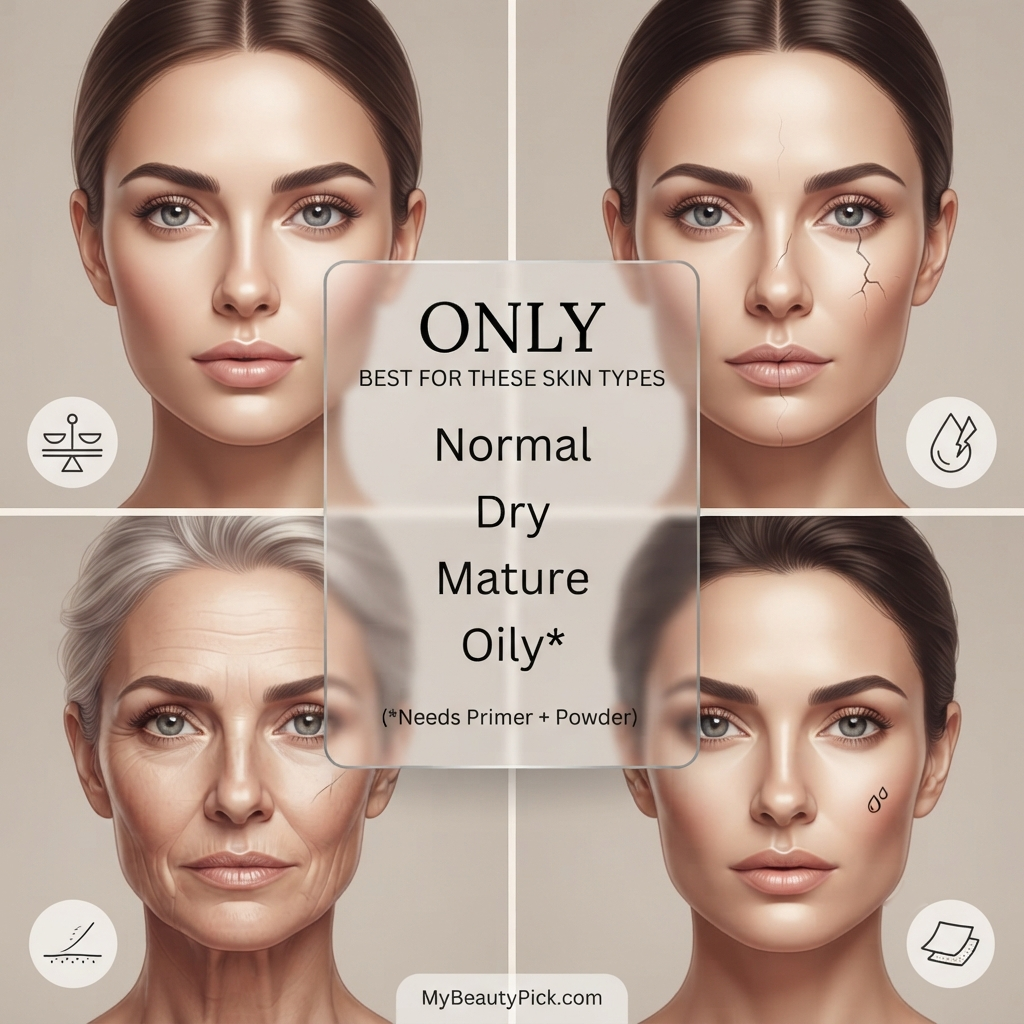
Normal Skin
Cream foundation suits normal skin well across all occasions. The formula gives full coverage without being heavy, blends easily with fingers or a brush, and the natural finish reads as polished skin. A light primer underneath and setting spray over the top gives good hold through a full day.
Dry and Mature Skin
Cream foundation is particularly well-suited here. The richer formula sits more comfortably on dry skin than thin liquid formulas, and the full coverage with a natural finish doesn’t settle into fine lines the way heavy matte liquid foundations can when applied thickly. On mature skin, the warmth of finger application specifically helps melt the formula into the skin rather than sitting on top of it — reducing the cakey appearance that powder or thick liquid formulas create on lined skin.
Oily Skin
Workable but requires more preparation than on other skin types. A mattifying primer is non-negotiable. Setting with pressed powder immediately after application — and blotting more frequently during the day — is necessary to maintain the look. The higher oil content in cream formulas is a specific challenge for already-oily skin. For very oily skin, a long-wear liquid matte formula with the right primer typically holds longer and requires less maintenance.
Acne-Prone Skin
Depends entirely on the specific formula. Some cream foundations are non-comedogenic and fragrance-free and work well for acne-prone skin. Others use wax or oil-based formulas that clog pores. Check non-comedogenic status specifically for any cream foundation before using it on acne-prone skin. The high coverage of cream foundation is often genuinely useful for acne scarring and post-inflammatory hyperpigmentation — the format can be appropriate if the specific formula is right.
What Is a Cream Foundation Palette?
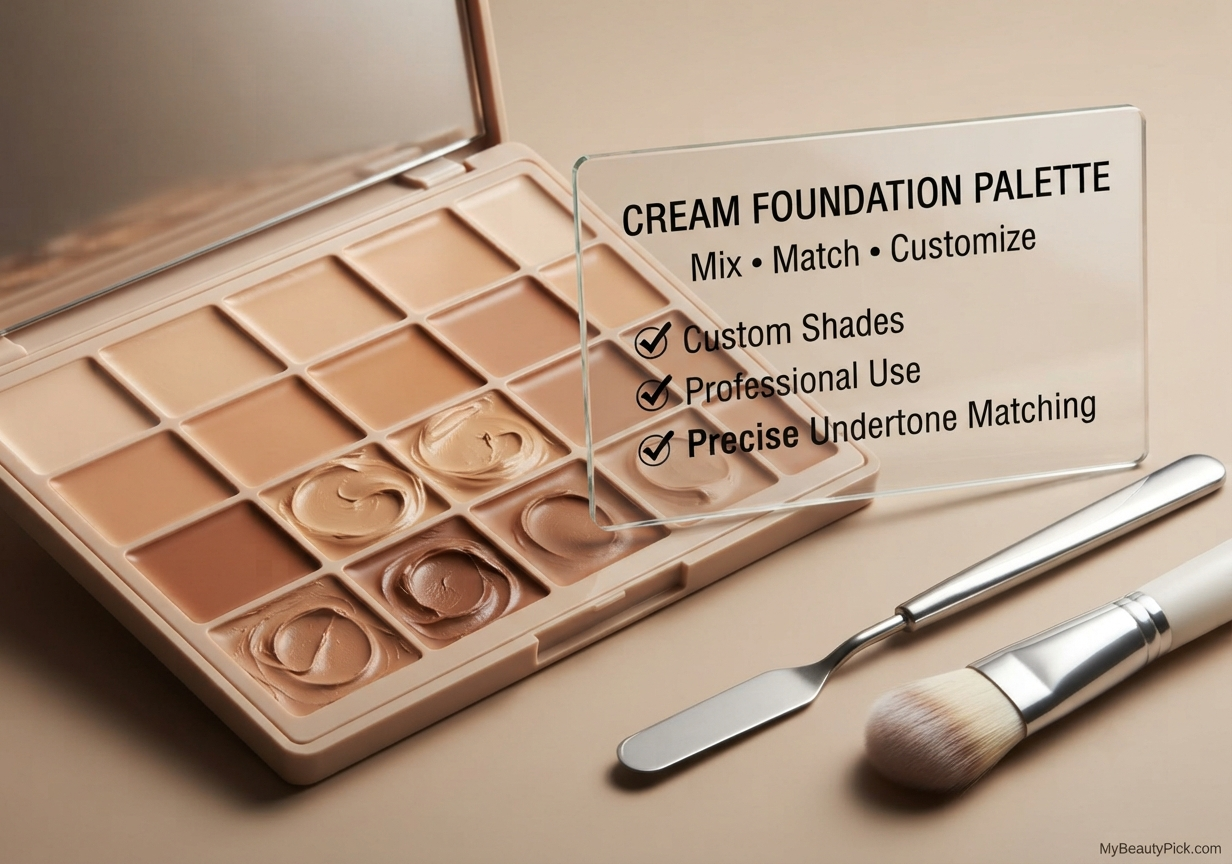
A cream foundation palette contains multiple cream shades in a single compact. Each shade is a full cream foundation formula — not a tint or colour corrector — and they can be mixed with each other to create custom shades, adjust undertone, or build transitional shades between standard options.
Professional makeup artists use palettes for precisely this reason: a model with warm-tan undertones in a studio on a tan skin model might need a shade that sits between two standard options, or a shade with more warmth than the neutral options and more coverage than the warm-tinted options. The palette allows this without purchasing multiple individual products.
For consumer use, cream palettes are most useful for anyone between shade ranges in standard foundations, or who wants to customise undertone more precisely than single-product shade ranges allow.
Best Cream Foundation Picks
Make Up For Ever Ultra HD Invisible Cover Cream Foundation
MUFE’s HD Invisible Cover is the cream foundation most frequently in professional and bridal kits for a reason. The formula provides full coverage with a finish that reads as skin rather than product — the “invisible” in the name is reasonably accurate at close range. The HD pigment concentration means it photographs exceptionally cleanly, and the cream texture blends smoothly with either fingers or a flat brush.
On tan skin, the warm shade options in the range hold their undertone well under studio and event lighting. The formula is waterproof in character — it resists touch and needs an oil cleanser to remove properly, which is also the feature that makes it appropriate for long events.
- Full coverage with invisible finish
- HD formula — photographs cleanly
- Blends smoothly with fingers or brush
- Waterproof character
- Needs oil cleanser to remove
- Not for oily skin without thorough primer
- Premium price
Bobbi Brown Skin Full Coverage Cream Foundation
Bobbi Brown’s skin philosophy — looking like better skin, not like makeup — translates well to cream foundation. The full coverage reads as very even, healthy skin rather than applied coverage, which is the specific quality that makes cream foundation attractive at events and for photography. The 40-shade range is broad for a cream formula, with precise undertone matching particularly strong in the warm and neutral-warm tan range.
The formula is comfortable on dry and normal skin and blends with a warmth-activated quality — fingertips are the preferred application. The limitation is coverage durability on oily skin, where the formula starts to move within 4–5 hours without a primer and powder system supporting it.
- Natural-skin finish despite full coverage
- 40 shades with precise warm-undertone options
- Comfortable on dry and normal skin
- Warms and blends with fingertip application
- Needs primer + powder on oily skin
- Not the longest-wearing formula on its own
- Requires oil cleanser for full removal
RCMA Foundation Palette
The RCMA palette is the professional standard for cream foundation mixing. Used in film, television, theatre, and editorial photography for decades, the formula is straightforward — very high pigment concentration in a neutral wax base, available in individual pans that can be organised in a custom palette. The coverage is maximum, the pigment concentration is genuine, and the shades mix with each other predictably.
The limitation for consumer use: the formula requires a setting powder over the top to hold and to remove shine, and the wax base is not appropriate for acne-prone skin. It’s a professional tool that works best with professional-level technique knowledge. For everyday use, a consumer-facing cream foundation gives better results with less risk of heavy or cakey application.
- Maximum coverage — the professional standard
- Shades mix precisely and predictably
- Very high pigment concentration
- Customisable palette configuration
- Requires setting powder — not standalone
- Wax base is not for acne-prone skin
- Needs professional application technique
- Requires thorough oil-cleanser removal
How to Apply Cream Foundation
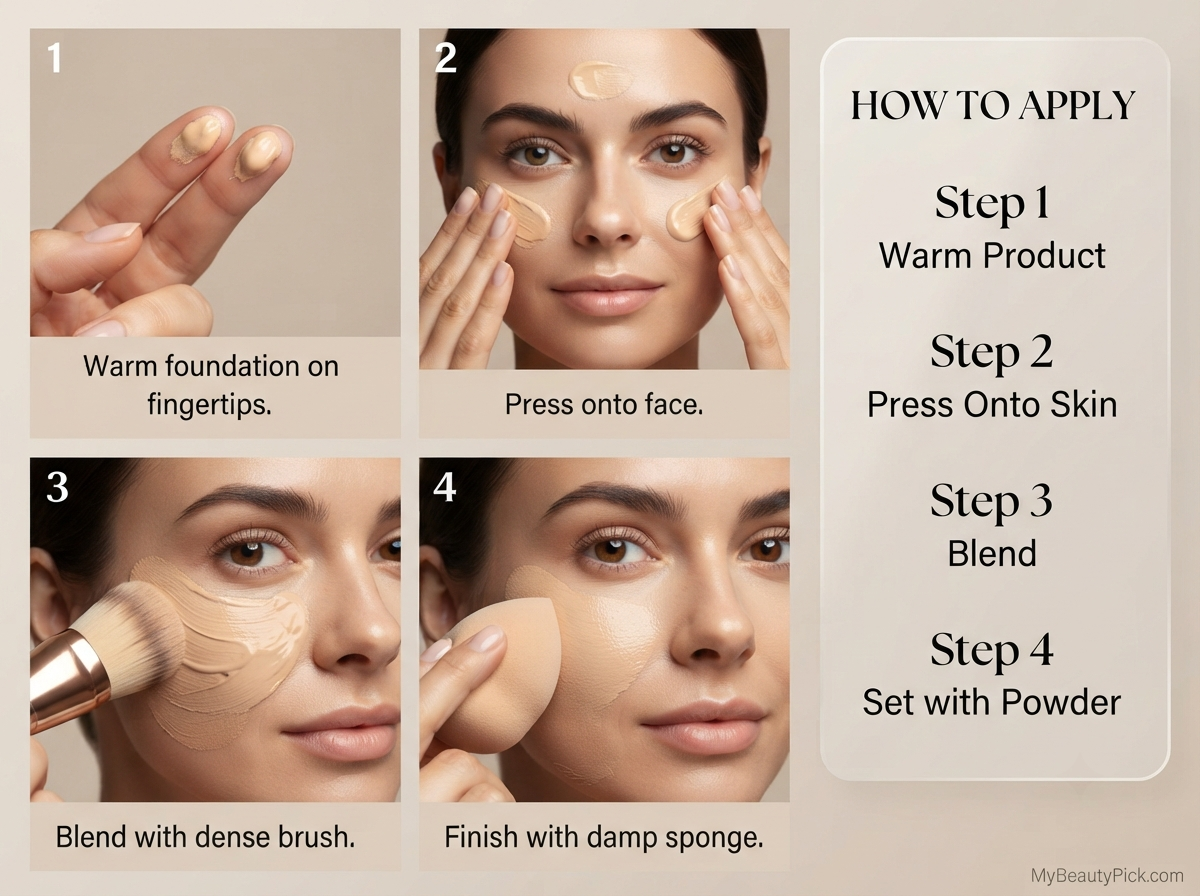
Cream foundation application technique determines whether the result looks like skin or like a mask. The key differences from liquid application:
- Warm the product first. Dispense a small amount onto the back of your hand and press with your fingertip for 10–15 seconds. The warmth softens the formula and allows it to spread more easily. A cold cream formula applied directly to the face drags and requires too much manipulation to blend evenly.
- Apply with fingertips in pressing motions. Fingertip warmth is genuinely useful for cream foundation in a way it isn’t for most liquid formulas. Press the warmed formula onto the skin in sections, using a pressing rather than a swiping motion, and blend edges with circular fingertip movements.
- Dense flat brush for more precise coverage. A flat foundation brush is effective for targeted placement — around the nose, chin corners, and hairline edge — where finger application is less controlled.
- Damp sponge for final blending. After finger application, a lightly damp sponge pressed gently over the face softens any visible edges and creates a more unified, skin-like finish.
- Set with banana powder on T-zone immediately. Cream foundation needs powder to set and stay. Press banana powder (not white translucent, which reads ashy on tan skin) onto the T-zone within 60 seconds of application. On dry skin, set with setting spray only on the cheeks.
On warm melanin-rich skin, the finish quality of cream foundation in warm lighting — event lighting, warm indoor light, natural golden-hour photography — is among the most beautiful available. The formula’s natural finish with full coverage creates a depth and warmth to the skin that reads as genuinely healthy and dimensional in photographs. The condition: the shade match needs to be precise, because at full cream coverage, there’s very little of the skin’s own undertone breaking through to soften a slightly off shade.
Frequently Asked Questions
What is cream foundation?
Cream foundation is a thicker-textured base formula that typically provides full coverage with a natural, skin-like finish. Unlike liquid foundation which is water-based and thinner, cream foundation uses an oil-in-water or wax-based emulsion that gives it a dense, creamy consistency. It’s applied by warming between the fingers or with a dense brush. Cream foundations are particularly popular in professional makeup for their blendability, longer working time, and high pigment concentration that covers well in a thin layer.
What is the difference between cream and liquid foundation?
Cream foundation is thicker and denser than liquid, provides fuller coverage from less product, and requires warmth from fingers or a dense brush to blend effectively. Liquid foundation is thinner and more fluid, easier to apply evenly in thin layers, and available in a wider range of coverage levels. Cream foundation on dry or normal skin gives a very natural full-coverage finish; on oily skin, it needs more primer and powder support to hold. Liquid foundation has more formula variety to suit all skin types and conditions.
Who should use cream foundation?
Cream foundation works best for normal to dry skin, mature skin that benefits from the formula’s moisture-rich character, and anyone needing full coverage for significant skin concerns at events or for photography. Oily skin can wear cream foundation with a mattifying primer underneath and pressed powder setting, but needs more maintenance than with a long-wear liquid formula. Very oily skin typically performs better with a liquid long-wear alternative.
What is a cream foundation palette?
A cream foundation palette contains multiple cream foundation shades in a single compact, allowing custom shade mixing for precise undertone matching or to create transitional shades between standard options. Professional makeup artists use palettes to match foundation precisely without maintaining multiple individual products. RCMA and Ben Nye are the professional standards. Consumer-facing palettes offer similar mixing capability at a more accessible level.
How do you apply cream foundation?
Warm a small amount between your fingertips for 10–15 seconds before applying. Press the warmed formula onto the skin in sections using pressing rather than swiping motions, then blend edges with circular fingertip movements. A flat brush works for precise placement. Finish with a damp sponge pressed gently over the face to soften edges. Set with banana powder on the T-zone immediately after application and setting spray on the cheeks on dry skin.