

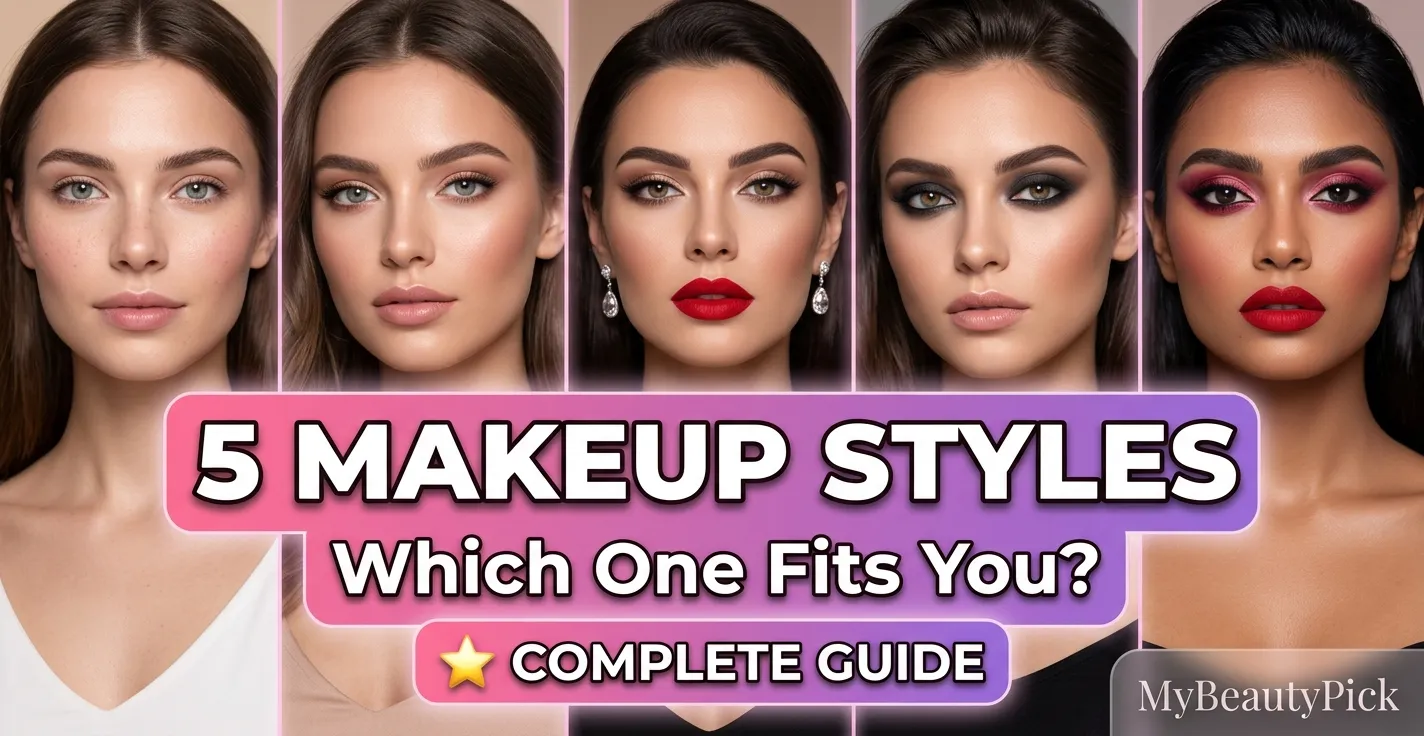
Natural, soft glam, classic glam, smoky, bold — these are the five core makeup styles that almost every look you see, save, or attempt falls into. They’re not rigid categories with strict rules, but they each have a distinct aesthetic logic, a specific product approach, and an occasion context. Understanding what defines each one — and how they differ from each other — gives you a framework for choosing your look intentionally rather than by accident.
- Natural: skin-enhancing, minimal product, one or two steps. The goal is better skin, not visible makeup.
- Soft glam: elevated without drama — defined eye, satin lip, polished skin. The most versatile style.
- Classic glam: precision and impact — full coverage base, winged liner, full lashes, statement lip.
- Smoky: depth and drama — the eye is the statement; everything else is secondary.
- Bold: one dominant colour element, deliberate colour theory, confident execution.
The 5 Makeup Styles: What Makes Each One Distinct
The clearest way to understand these five styles is by their defining characteristic — the single element that makes each style what it is:
| Style | Defining Element | Complexity | Occasions |
|---|---|---|---|
| Natural | Skin-like finish with minimal visible makeup | Low | Daily, work, casual, errands |
| Soft Glam | Polished warmth — defined eye, glowing skin, satin lip | Medium | Work events, dates, weddings, brunch |
| Classic Glam | Precision and impact — full base, liner, lashes, statement lip | Medium-High | Formal events, evenings, celebrations |
| Smoky | Deep, blended eye as the focal point | High | Evenings, events, nights out |
| Bold | One dominant colour statement — eye, lip, or cheek | Variable | Creative, events, editorial, fashion-forward occasions |
Style 1: Natural Makeup
Natural makeup — also called no-makeup makeup — is not about wearing less. It’s about choosing products and applying them in a way that enhances rather than covers, so the end result reads as excellent skin rather than excellent makeup application. The standard for success: someone looking at you closely should wonder if you’re wearing anything at all.
The Natural Makeup Product Approach
- Base: skin tint or tinted moisturiser, not foundation. Light coverage that reads like skin.
- Colour: cream blush in warm peach or coral. Pressed lightly onto the cheek.
- Eyes: mascara only. Possibly a clear brow gel.
- Lips: tinted lip balm in a warm nude or sheer pink. No visible lipstick.
- Setting: no powder, or a very fine translucent powder on the T-zone only. Setting spray.
Who Natural Makeup Works Best For
Natural makeup is universally wearable, but it requires genuinely good skin prep to succeed. If the skin underneath is dehydrated, textured, or uneven, a skin tint won’t conceal it — it will sit unevenly and the “natural” look reads as unfinished rather than effortless. Invest in skincare if natural makeup is your primary style.
Style 2: Soft Glam Makeup
Soft glam occupies the most useful space in makeup — elevated but not dramatic, polished but not costume-like. It’s defined eyes, glowing skin, and a satin lip. Every element is finished and considered, but nothing dominates. You look like you made an effort without the effort being the story.
The Soft Glam Product Approach
- Base: medium-coverage foundation in satin or natural finish. Full skin-prep routine.
- Eyes: warm eyeshadow with a shimmer lid (copper, bronze, champagne), matte transition in the crease, defined lower lash line. No heavy liner wing.
- Brows: filled and defined but not sculpted. Feathery strokes.
- Lashes: two coats volumising mascara. Individual clusters optional for events.
- Cheek: warm blush on the cheekbone, gentle bronzer for warmth.
- Lips: satin or gloss in warm nude, terracotta, or warm rose.
Who Soft Glam Works Best For
Soft glam is the most occasion-flexible of all five styles. It scales from a professional meeting to a wedding without changing structure — only the intensity adjusts. For tan and warm skin tones, the warm eyeshadow palette (copper, bronze, chocolate brown) is significantly more harmonious than the cool-toned palettes many soft glam tutorials use.
Style 3: Classic Glam Makeup
Classic glam is where makeup becomes deliberate and complete. Every element is finished: full-coverage base, structured or winged liner, full lashes, and a statement lip. The defining quality is precision — every product is applied with intention and holds throughout the event. Classic glam is what you wear when the makeup is part of the occasion, not just preparation for it.
The Classic Glam Product Approach
- Base: full-coverage, long-wear foundation. Primer before, powder to set, setting spray to finish.
- Concealer: targeted under-eye and spot concealing. Not all-over.
- Contour: structured, visible sculpting under the cheekbone and at the temples.
- Eyes: tight-lined upper waterline, gel liner wing (black or dark brown), full strip lashes or dense clusters.
- Lips: statement colour with lip liner. Matte or satin formula for longevity.
Who Classic Glam Works Best For
Classic glam works for any skin tone, but formula and shade selection is critical. On tan skin, the most common issue is foundation undertone — a pink-biased foundation in classic glam is highly visible because the coverage is higher and more uniform. The statement lip must be undertone-matched: warm red (orange or brick base) rather than blue-red on warm tan skin.
Style 4: Smoky Eye Makeup
The smoky eye is defined by one thing: the eye is the statement. Everything else on the face — the base, the lip, the cheek — recedes and supports. The eye look itself is built from blended, graduated depth — dark at the outer corner, building through crease shades, landing on a shimmer or metallic lid. The defining quality is graduation without hard edges.
The Smoky Makeup Product Approach
- Base: medium-to-full coverage, polished but not the focus.
- Eyes: three-shade system (transition, lid, depth). The classic approach uses neutrals to black; the warm approach uses bronze, copper, and espresso for tan skin.
- Lower lash line: smudged shadow or liner that mirrors the upper eye depth.
- Lashes: full volume lashes — strip or dense clusters.
- Lip: always muted — warm nude, terracotta, or soft caramel. Never bold.
- Cheek: kept simple — warm blush only, no heavy highlight that competes.
Who Smoky Eye Works Best For
The smoky eye has different requirements for different skin tones. On tan and warm skin, cool grey and charcoal shades create an ashy, disconnected effect. The warm smoky eye — copper shimmer lid, warm taupe crease, espresso outer corner — is the version that genuinely enhances rather than fights against warm melanin-rich skin.
Style 5: Bold Makeup
Bold makeup has one rule that overrides everything else: one dominant element per look. Bold eye or bold lip or bold cheek — not all three simultaneously. The boldness gets its power from a clear focal point. When everything competes for attention, nothing is truly bold — it just reads as overdone.
The Bold Makeup Product Approach
- Determine the bold element first: graphic liner, vivid eyeshadow, statement lip, or blush draping.
- Build the rest of the face in support: neutral, polished base; the opposing element (eye or lip) kept muted.
- Colour theory matters: bold colours must have a relationship to the skin tone — either harmonising (warm red on warm skin) or deliberately contrasting (electric blue on warm tan skin).
- Base: neutral and polished — bold makeup needs a clean canvas, not a competing heavy contour.
Who Bold Makeup Works Best For
Bold makeup works for every skin tone, but the specific colours that create impact without clashing differ. On tan and warm skin, the bold colours with the most visual power: warm red, terracotta, burnt orange, forest green, electric blue, deep plum. Silver and cool lavender can clash with warm skin’s undertones and read as disconnected rather than bold.
How to Choose Your Makeup Style
The right makeup style for any given day or occasion is determined by three questions:
- What is the occasion? Natural and soft glam for everyday and professional settings. Classic glam and smoky for formal events and celebrations. Bold for creative, fashion-forward, or intentional statement occasions.
- How much time do I have? Natural: 5–10 minutes. Soft glam: 15–25 minutes. Classic glam: 25–45 minutes. Smoky: 20–35 minutes (blending takes time). Bold: variable — bold liner takes minutes; colour eyeshadow takes 20+.
- What do I want the focal point to be? Skin: natural. Eye definition and glow: soft glam. Precision and overall impact: classic glam. Eye depth and drama: smoky. Colour statement: bold.
Most people find two or three of these five styles become their rotation — the natural for daily wear, the soft glam for most occasions, and one of the more intensive styles for events. Trying to be fluent in all five simultaneously spreads practice too thin. Master natural and soft glam first — those two styles handle 80% of occasions well. Then add smoky or classic glam as your third style for event wear.
Frequently Asked Questions
What is the difference between soft glam and classic glam?
Soft glam is elevated and polished but not dramatic — medium-coverage base, warm eyeshadow with shimmer, mascara or subtle lashes, and a satin neutral-warm lip. Classic glam transforms and makes a statement — full-coverage base, structured or winged liner, full false lashes, and a bold statement lip. Soft glam is wearable for professional settings and daytime events; classic glam is reserved for formal occasions and evenings where the makeup is part of the dress-up. Soft glam says “I put in effort”; classic glam says “I dressed up.”
What is natural makeup?
Natural makeup (also called no-makeup makeup) is a style that uses minimal products applied in ways that enhance skin without looking like applied makeup. The result reads as excellent skin rather than visible coverage. Typically uses a skin tint or tinted moisturiser, cream blush, mascara, tinted lip balm, and no setting powder. The goal is that someone looking closely at you would wonder if you’re wearing anything — not that they can clearly see makeup but appreciate how light it is.
Can a smoky eye be done in natural shades?
Yes — and for tan and warm skin, a warm smoky eye in natural earth tones (copper shimmer lid, warm taupe transition, espresso outer corner) often looks more sophisticated and flattering than the classic cool-grey charcoal approach. The graduate, blended structure of a smoky eye doesn’t require black or dark charcoal — depth and drama can come from warm brown-espresso shades that work with warm skin undertones rather than creating the ashy disconnection that cool grey shades cause on warm complexions.
What is bold makeup?
Bold makeup is defined by one dominant colour element: a graphic liner, vivid eyeshadow, statement lip, or saturated blush. The defining rule is one focal point — not multiple competing bold elements simultaneously. Everything else in the look is muted and supportive. The boldness works because of this hierarchy: one element at maximum intensity with everything else at minimum. Bold makeup without a clear focal point reads as overdone rather than intentionally bold.