

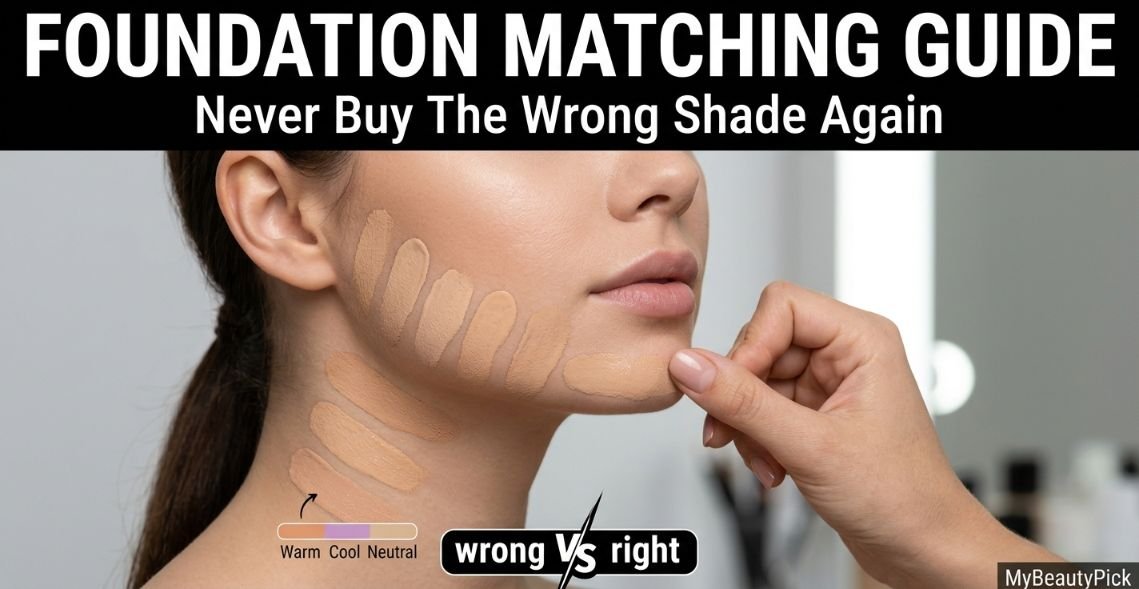
Most shade-matching disasters have nothing to do with depth. Someone walks in convinced they need a darker foundation when really they need a warmer one, or vice versa. After two decades of color matching faces for a living, the question I hear most isn’t “what shade am I,” it’s “why does every foundation I buy look slightly wrong once I get it home.”
To find your foundation shade and undertone, you need three things to line up: your skin depth, which is how light or deep your complexion sits; your undertone, which is the warm, cool, neutral, or olive hue underneath it; and a formula and finish that actually suits your skin type. Get any one of the three wrong and the foundation reads as slightly off, even if the bottle looked perfect at the counter.
You’ve probably lived one of these already. A shade that looked flawless under store lighting turned grey or pink the second you stepped outside. An online order that matched the swatch photo arrived looking orange on your actual face. Or you have deeper, melanin-rich skin and most “universal” shade guides simply don’t map onto your undertone at all. This guide walks through every step: understanding skin tone versus undertone, identifying your depth, testing for warm, cool, neutral, and olive, swatching correctly in person, matching shades online, and adjusting for your specific skin tone, whether that’s fair, medium, tan, or deep, including the specific undertone patterns common in South Asian and other melanin-rich complexions.
Key Takeaway
A perfect match needs three things together: correct depth, correct undertone, and the right formula and finish for your skin type
No single undertone test is reliable on its own; combine at least two or three before you trust the result
Always swatch on your cheek and jawline in daylight, never on the back of your hand
Your undertone stays fixed year-round, but your surface depth shifts with sun exposure and season
Medium, tan, and olive-leaning skin tones are the most likely to be pushed toward the wrong undertone by mainstream shade ranges
Skin Tone vs. Undertone: The Distinction That Fixes Most Mismatches
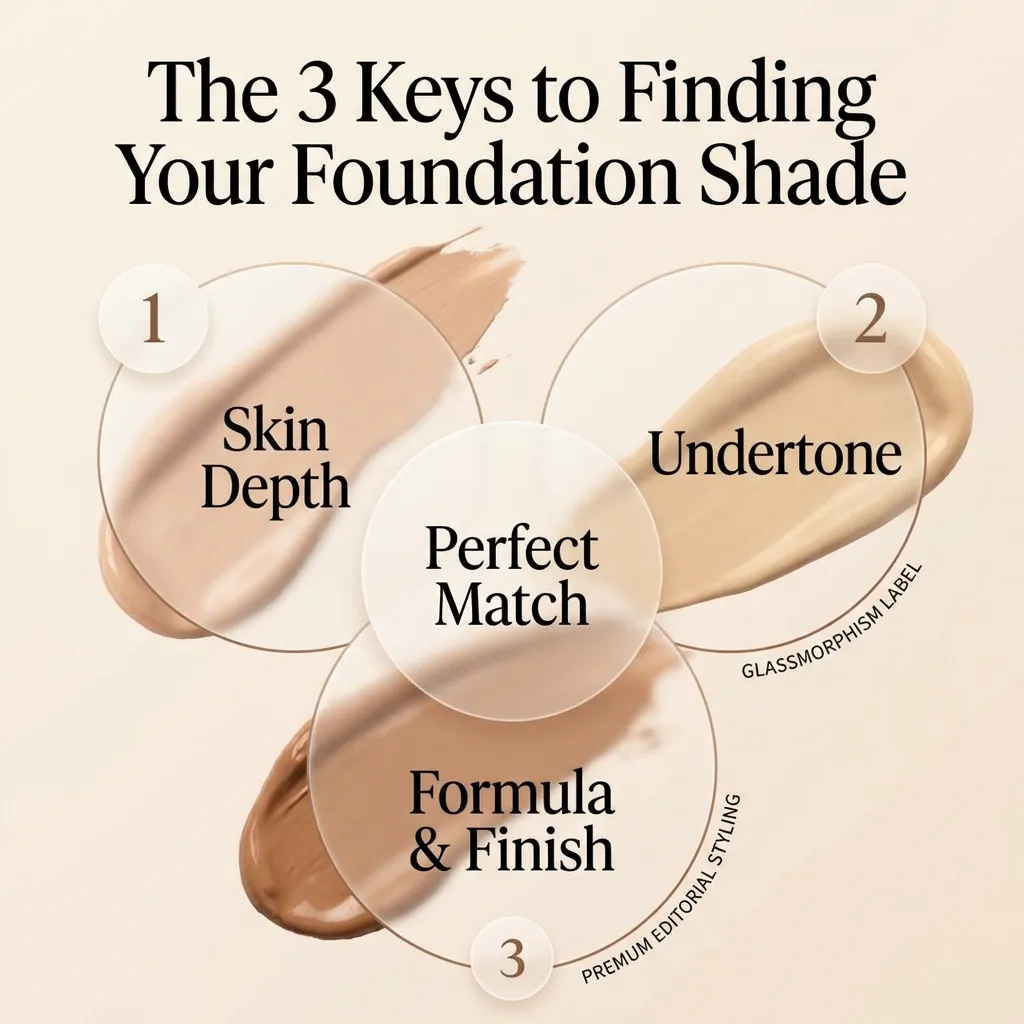
Skin tone, or skin depth, is what you see when you look in the mirror. It’s how light or deep your complexion is, and it changes with sun exposure, season, and skincare. Undertone sits beneath that surface color and stays constant no matter how tan or pale you get. This is the single distinction almost every client misses, and it’s the reason two people with the exact same depth can need completely different foundation families.
Once you separate the two, undertone breaks into four practical categories:
- Warm undertones lean golden, peachy, or yellow. Skin often looks naturally sun-kissed even without a tan.
- Cool undertones lean pink, red, or blue. Skin tends to flush pink and can burn more easily in the sun.
- Neutral undertones sit evenly between warm and cool, without a strong pull in either direction.
- Olive undertones carry a muted, greenish or grayish-gold cast. This is common across South Asian, Mediterranean, and Middle Eastern complexions, and it doesn’t fit cleanly into warm, cool, or neutral.
If you want a deeper breakdown of this exact distinction with more visual examples, skin tone vs. undertone: what’s the difference covers it in full.
Step 1: Identify Your Skin Tone Depth
Depth is best judged on bare, makeup-free skin in natural daylight, never under store fluorescent or warm yellow bulbs, which both distort how light or deep your skin actually looks. Most foundation ranges group depth into fair, light, light-medium, medium, tan, deep, and rich deep, sometimes mapped to a numbered system like 1 through 10.
Look at your bare cheek, jawline, and neck together in daylight, and compare against a brand’s shade chart if you have one handy. Your hand is not a reliable reference point here; hand skin is frequently a different depth and texture than your face entirely.
MUA Tip
If you sit between two depths, choose the one closer to your neck rather than your face. Facial skin is more prone to sun exposure and can run slightly deeper or more uneven than the rest of your complexion, and a foundation matched to an isolated sunny patch will create a visible line everywhere else.
For deeper or tan-leaning complexions specifically, foundation shade guide for tan skin and foundation for dark skin tones break down depth families in more detail than a general guide can.
Step 2: Find Your Undertone (Tests and What Each One Actually Tells You)
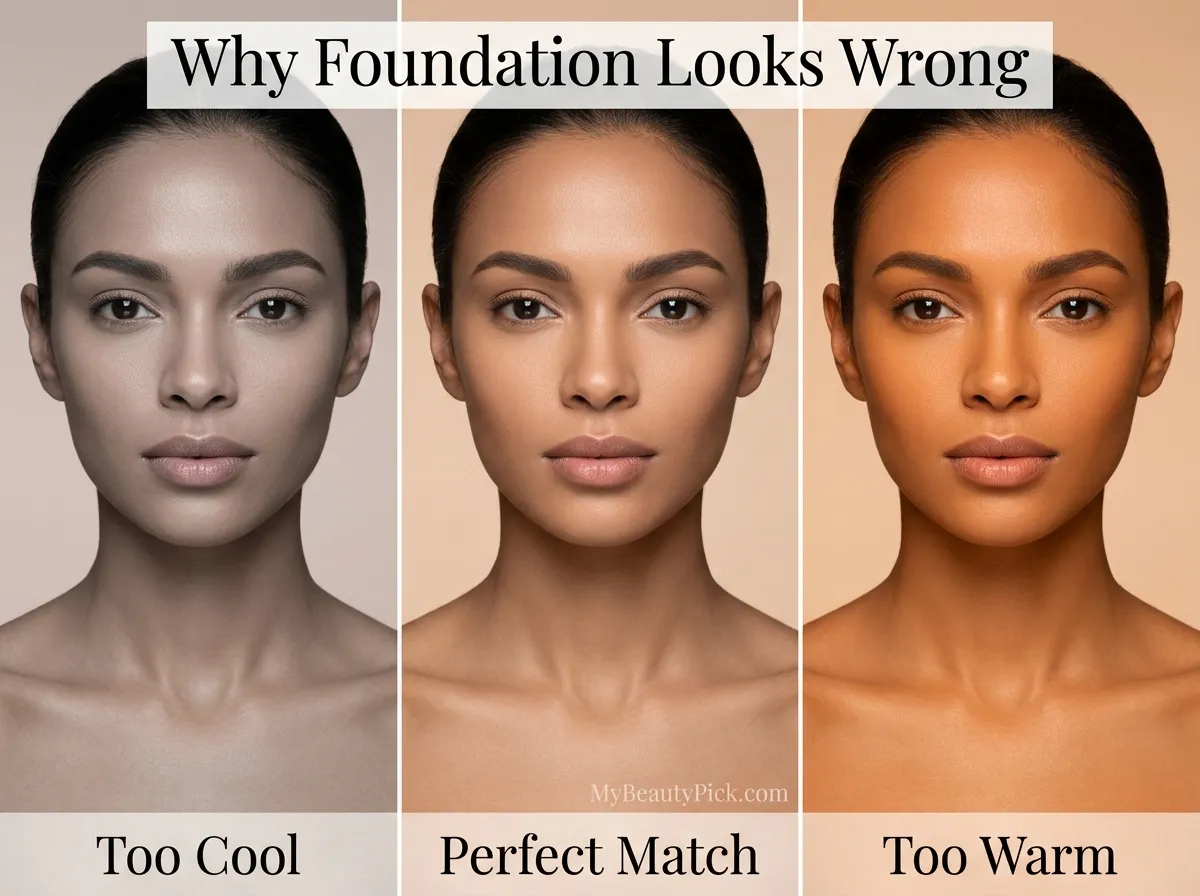
No single test below is fully reliable by itself. Run at least two or three and look for where they agree before you trust a conclusion.
The Vein Test
Check the veins on the inside of your wrist in natural light. Green usually points to warm, blue or purple usually points to cool, and a mix that’s hard to call often points to neutral or olive. This test becomes less reliable on deeper or richly tanned skin, where veins can look uniformly dark regardless of true undertone, so treat it as a starting clue rather than a verdict.
The Jewelry Test
Gold jewelry looking more flattering typically points to warm. Silver looking better typically points to cool. If both look equally good on you, that’s often a sign of neutral or olive. Personal styling preference can muddy this test, so don’t lean on it alone.
The White vs. Off-White Fabric Test
Hold stark white fabric next to your face, then hold ivory or cream fabric next to it. Skin that looks brighter and healthier against white usually leans cool. Skin that looks better against cream or ivory usually leans warm. Both looking fine is a sign of neutral. Room lighting can skew this one more than people expect, so check near a window if possible.
The Natural Flush Test
Look at the color your cheeks turn after exercise, or gently pinch them and watch the flush. A pink or red flush points to cool. A peachy or golden flush points to warm. This is a supporting clue, not a standalone answer.
The Foundation Swatch Test
This is the most accurate of all the tests because it measures the actual interaction between pigment and skin rather than an indirect clue. Swatch one clearly warm shade and one clearly cool shade from your cheekbone down to your jawline, and watch which one disappears rather than sitting on the surface. If both look close but neither is quite right, that’s a strong sign you’re neutral or olive.
Olive Undertone Indicators
Olive skin gives itself away through elimination as much as through any single test. Warm and golden shades often look too yellow or slightly orange. Pink-based cool shades tend to look grey or ashy almost immediately. If both categories miss and a foundation described as “olive” or “neutral-olive” is the one that finally disappears into your skin, that confirms it. This pattern shows up often in South Asian, Mediterranean, and Middle Eastern skin tones, where undertone can carry warm, gold, and green notes all at once rather than sitting neatly in one lane.
A common scenario: medium to tan skin that consistently looks flat or slightly grey in shades labeled “cool” or “neutral,” even when the depth itself is correct. Switching to a shade labeled olive or warm-olive, rather than warm alone, is frequently what resolves it, since standard warm formulas can still skew too peachy for a true olive base.
| Undertone | Common label | Typical shade names |
|---|---|---|
| Cool | C | Porcelain, rose, sable, cocoa |
| Warm | W | Golden, tan, caramel, chestnut, honey |
| Neutral | N | Ivory, buff, nude, praline |
| Olive | Olive, O, sometimes folded into N or W | Golden olive, neutral olive, warm olive |
Step 3: How to Swatch and Match Foundation In-Store
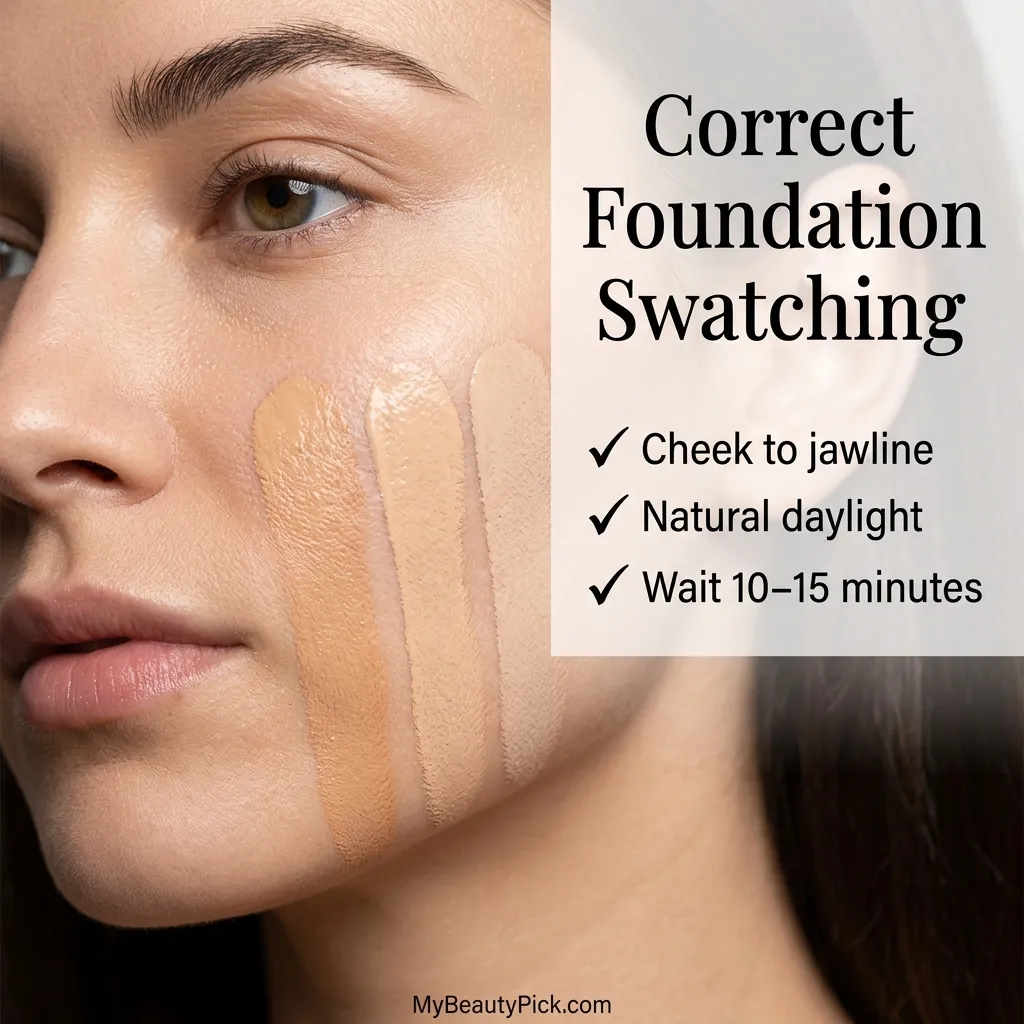
- Shop in daytime if you can, and stand near a window or doorway for natural light before you commit to anything.
- Pick three shades that look close to your skin: one you suspect is right, one slightly warmer, one slightly cooler or more neutral.
- Swatch from your cheekbone down to your jawline, never on the back of your hand.
- Let each swatch sit for a full minute, ideally closer to ten to fifteen minutes if you have the time, so any oxidation has a chance to show up before you judge it.
- Step into daylight and look for the stripe that disappears into both your cheek and your jaw at once, without a visible line at the edge.
- If you’re stuck between two shades, test both on your forehead too, and pick the one that blends across all three zones rather than just one.
- Ask a counter consultant to double-check your undertone if one is available. A second trained eye is a useful confirmation, not a replacement for your own swatch test.
Signs your swatch is wrong
Looks dull or grey on skin: the undertone is too cool for you.
Looks orange or too warm: the undertone runs too warm, or the shade itself sits too deep.
Looks like a flat mask sitting on top of skin: this is usually a depth or finish problem rather than an undertone problem, often from a heavy full-coverage formula applied too thickly.
Once your shade is confirmed, technique still matters. how to apply liquid foundation and foundation brush vs. sponge cover the application side, including buffing and stippling techniques with a damp sponge or flat-top kabuki that affect how true-to-shade the final finish looks.
Step 4: How to Match Foundation Shades Online
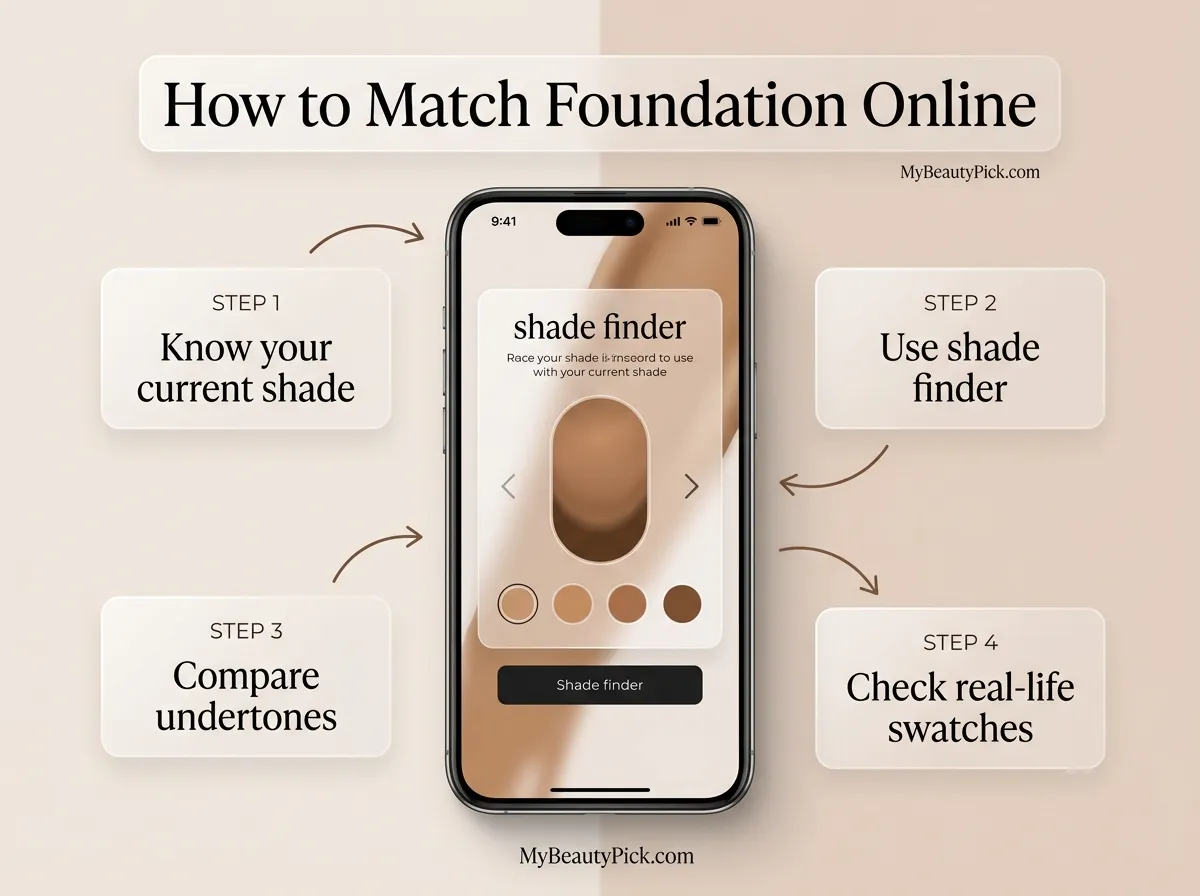
Online shopping adds a layer of guesswork, especially if your local market doesn’t stock every shade a brand makes. A few strategies make this far more reliable:
- Use brand shade finder tools. Most major brands now offer a selfie-scan or short quiz that narrows down depth, undertone, and finish preference. Treat the result as a strong starting point rather than a guaranteed final answer, since lighting and camera quality can shift the reading.
- Use shade comparison tools. If you already know your shade in one brand, a comparison tool can translate it to an equivalent shade in another, which is faster than testing from zero every time.
- Read the undertone label, not just the depth name. A shade marked W, C, N, or a dedicated olive label tells you more than a name like “medium” or “tan” ever will.
- Check swatch photos on multiple skin tones. Look specifically for reviews or photos on medium, tan, and olive-leaning skin if that’s closer to your own, since brand marketing photos often skew toward one narrow range.
- Order two adjacent shades when the budget allows. Testing side by side at home, in your own daylight, removes almost all of the guesswork a single online order carries.
If you’re shopping from Bangladesh or another market where imported shade ranges don’t always reach local counters or marketplaces in full, online matching carries more weight than it would somewhere with easy in-person testing. Lean harder on undertone labels and multi-skin-tone swatch photos in that case, since you may not get a chance to test in person before buying.
Undertone and Shade Tips by Skin Tone
Fair and Light Skin
The most common problem here is a foundation that turns too pink or too yellow within an hour of wear. Favor balanced neutral shades over anything with a strong warm or cool pull, and always confirm the swatch in daylight rather than indoor lighting, where fair skin’s undertone is especially easy to misread.
Medium and Tan Skin, Including South Asian Skin Tones
The most common problem is foundation that looks grey or ashy, particularly with cool-leaning shades that fight the skin’s natural warmth. Warm or olive-labeled foundations tend to work better here than pink-based cool shades. This skin tone range is also where the olive undertone category matters most, since many medium and tan complexions carry gold, green, and warm notes together rather than sitting in a single clean lane.
Deep and Melanin-Rich Skin
The most common problem is a shade range that skips undertones entirely at the deeper end, leaving skin looking reddish or muddy rather than true to complexion. Look for brands that offer genuine undertone variety at deep and rich-deep depths, not just more numbers within a single undertone family. Test around the forehead and mouth area as well as the cheek, since deeper skin can show more variation across the face than lighter skin does.
South Asian, Middle Eastern, and Mediterranean complexions in particular often carry a mix of olive, golden, and neutral qualities at once. Mixing two adjacent shades or committing to an undertone-specific line built for these complexions frequently works better than forcing a fit within a standard warm-cool-neutral system. My guides on undertones for tan skin and how to read a foundation shade chart for tan skin go deeper into this specific matching process.
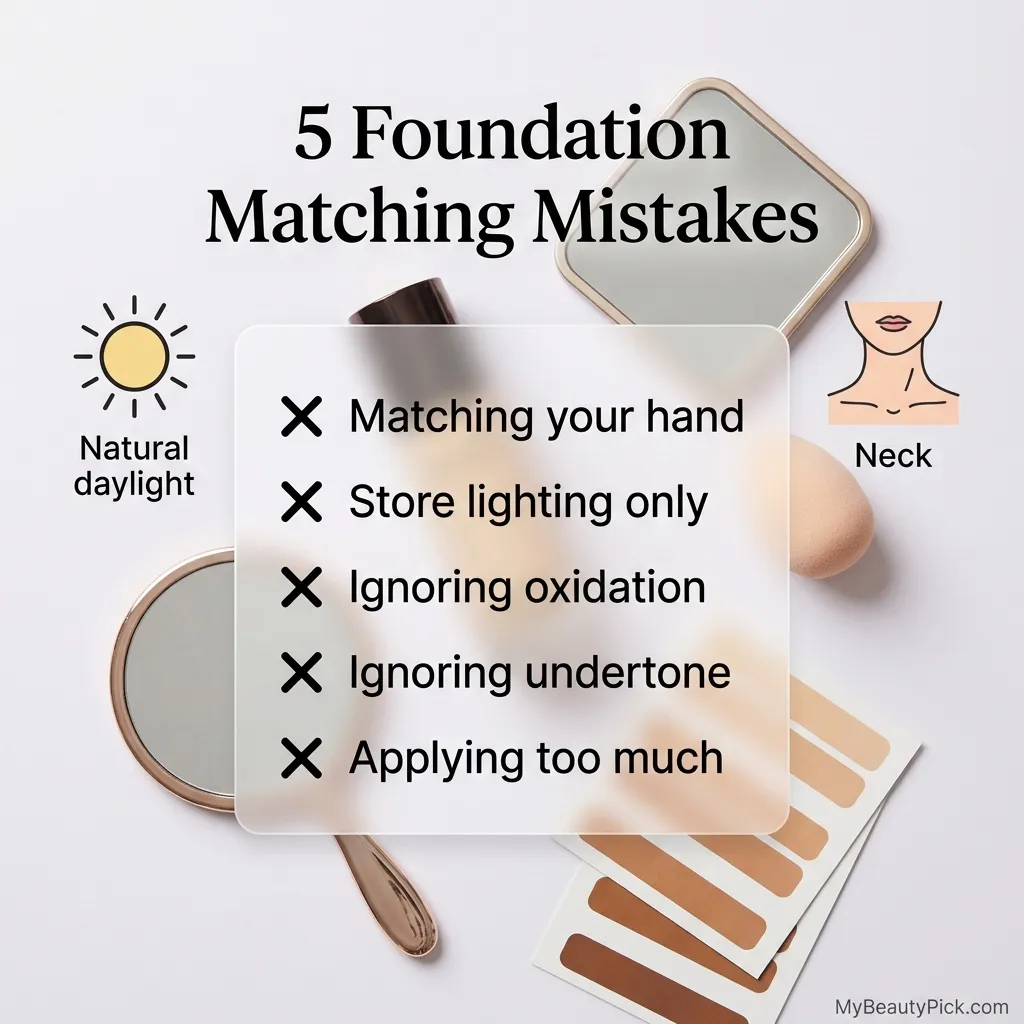
Common Foundation Matching Mistakes and How to Fix Them
How Formula, Coverage, and Finish Affect the Match
Even the correct shade and undertone can look wrong in the wrong formula. Sheer to medium coverage tends to blend more forgivingly even when a shade is slightly off, since it lets more of your real skin show through. Full coverage needs a far more exact match, because it sits more opaquely on top of the skin and shows any mismatch clearly.
Finish matters just as much. Matte finishes can look flat and make a slight undertone mismatch more obvious, while a natural or slightly dewy finish reflects light closer to how bare skin does, which softens small imperfections in the match. Skin type factors in too: a formula that clings to dry patches or breaks up on oily T-zone areas will distort how the shade reads by midday, even if the bottle itself was correct.
- Oily skin: long-wear, semi-matte formulas that control shine without looking cakey. See foundation for oily skin.
- Dry skin: hydrating, luminous finishes that won’t cling to flaky patches. See foundation for dry skin.
- Combination skin: flexible, natural-finish formulas that balance both zones. See foundation for combination skin.
Ingredients play a supporting role too. Formulas built with hyaluronic acid or glycerin tend to sit better on drier skin, while silica and kaolin clay help control oil without disrupting the shade’s true color. Iron oxide pigments are the main driver of how noticeably a formula oxidizes, which is worth knowing if you’ve been burned by a shade darkening on you before.
Seasonal and Lifestyle Changes That Affect Your Match
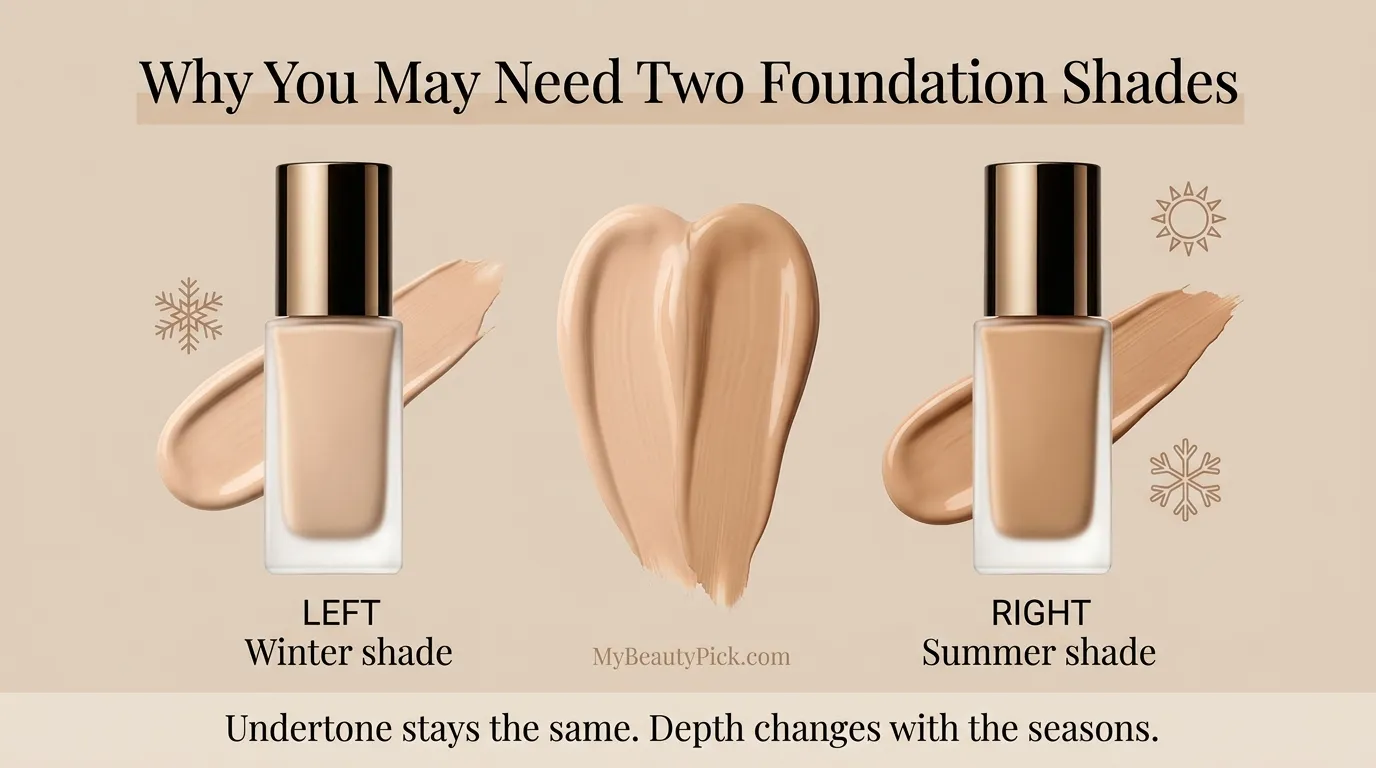
Skin tends to deepen in summer and lighten back in winter, but undertone itself typically stays consistent through those shifts. Sunscreen habits, skin treatments, and time spent outdoors all affect depth over the course of a year, which is why the same undertone can still need two different shade depths depending on the season.
The simplest fix is keeping two shades within the same undertone family, one for cooler months and one a touch deeper for summer, and mixing them during transitional weeks. Recheck your match any time your concealer or bronzer starts behaving differently than usual, or when your neck no longer blends with your face the way it used to. My guide on adjusting your foundation shade for tan skin in summer covers this shift step by step.
Quick Foundation Matching Cheatsheet
- Identify your skin depth in daylight, using your cheek, jawline, and neck together
- Run two or three undertone tests: veins, jewelry, white fabric, natural flush, or a direct swatch
- Swatch three shades from cheekbone to jawline, never on your hand
- Wait ten to fifteen minutes for oxidation before judging a swatch
- Confirm the match in natural daylight, not store or indoor lighting
- For online shopping, use shade finder tools, comparison charts, and undertone labels together
- Match the formula and finish to your skin type before finalizing your purchase
FAQ
How do I know what color foundation to use?
Identify your skin depth first, then confirm your undertone using at least two tests such as the vein test and a direct swatch. Swatch two or three shades on your jawline in daylight and choose the one that disappears into your skin rather than sitting on top of it.
What’s the difference between skin tone and undertone?
Skin tone, or depth, is how light or dark your complexion is, and it changes with sun exposure and season. Undertone is the warm, cool, neutral, or olive hue beneath the surface, and it stays fixed regardless of tanning.
How do I know if I have an olive undertone?
If warm shades look too yellow or orange on you and cool shades look grey or ashy, olive is likely your undertone. It’s especially common in South Asian, Mediterranean, and Middle Eastern skin tones and often needs a dedicated olive or warm-olive labeled shade rather than a standard warm option.
Why does my foundation look different online than it did on my skin?
Camera lighting, screen calibration, and photo editing can all shift how a shade appears online. Use undertone labels and multi-skin-tone swatch photos rather than relying on a single product image, and consider ordering two adjacent shades to compare at home.
Can my undertone change over time?
No. Your undertone stays the same throughout your life. What changes is your surface skin depth, which shifts with sun exposure, season, and skincare.
Why does foundation turn orange or grey after a few hours?
This is usually oxidation, where the formula reacts with your skin’s natural oils and darkens or warms over time. It can also happen when the undertone itself doesn’t match, which becomes visible once the initial application settles.
Should I match foundation to my face or my neck?
Match to both together. A shade that suits your cheek but creates a visible line at your neck or jaw is not your correct match, regardless of how close it looked in isolation.
Do I need more than one foundation shade?
If your skin deepens noticeably in summer, keeping a cooler-months shade and a slightly deeper summer shade within the same undertone prevents having to find an entirely new match every season.
What does the letter on my foundation bottle mean?
Most brands mark shades with a letter tied to undertone: W for warm, C for cool, N for neutral, and increasingly a separate olive designation. The number after the letter refers to depth, not undertone.
How is matching different for deep or melanin-rich skin?
Many mainstream shade ranges thin out at the deeper end and skip undertone variety, which leads to shades reading red or muddy. Look for brands with genuine undertone range at deep depths, and test across your forehead and mouth area in addition to your cheek.
Put this into practice
Testing beats guessing every time. Run two or three undertone tests this week, swatch on your jawline in daylight, and give the shade ten minutes before you decide. If you want a faster starting point, our Undertone Finder and Foundation Shade Finder tools can narrow the field before you swatch in person.