
Take the Quiz and Find Out
What Makeup Suits My Face?
Most makeup advice is built around a template, not your face. Here’s how to find out what actually suits yours — in two minutes.
By the MyBeautyPick Editorial Team · Updated July 2, 2026
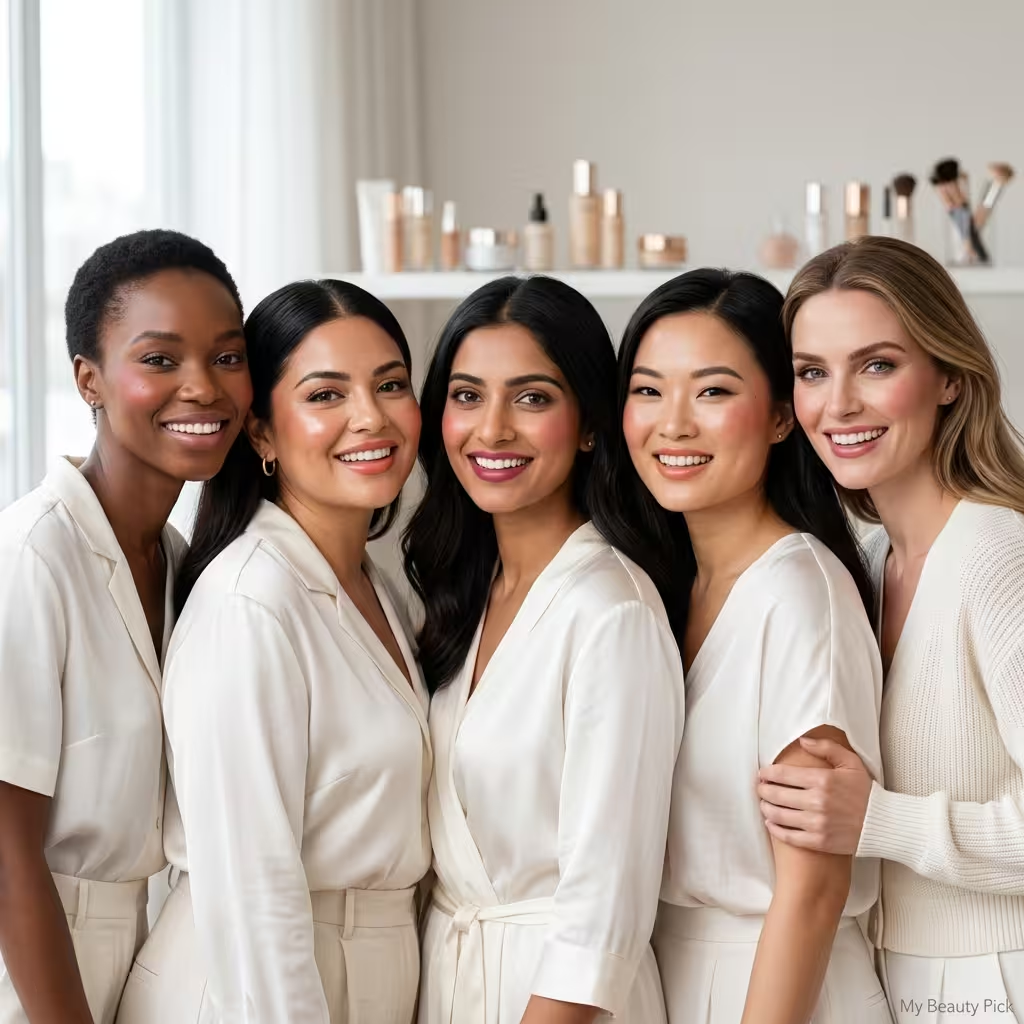
You’ve watched the tutorials. You’ve followed the steps exactly. You bought the same products. And somehow the result looks nothing like it did on screen.
The reason isn’t skill — it’s that most makeup content isn’t built around your specific features. What works on one face shape, skin tone, and eye shape can look completely wrong on another. Knowing what makeup suits your face starts with understanding five things: your face shape, skin undertone, eye shape, skin type, and personal style. Get those five right, and every product decision becomes easier.
Take the quiz below for your personalised result in under two minutes. Then read the guide to understand why each variable matters — and what to actually do with your result.
What Makeup Suits My Face? — Free Quiz
8 questions · 2 minutes · Personalised result
Question 1 of 8What best describes the shape of your face?
Please select an option to continue.
Question 2 of 8How would you describe your skin tone?
Please select an option to continue.
Question 3 of 8What undertone best describes your skin?
Please select an option to continue.
Question 4 of 8Which best describes your eye shape?
Please select an option to continue.
Question 5 of 8What does your skin feel like by midday without products?
Please select an option to continue.
Question 6 of 8What is your natural or current hair colour?
Please select an option to continue.
Question 7 of 8Which best describes your ideal everyday look?
Please select an option to continue.
Question 8 of 8When do you most often wear makeup?
Please select an option to continue.
Why These 5 Things Determine What Makeup Suits Your Face
The quiz isn’t random — each question targets a specific variable that changes what technique or product will flatter you. Most face shape guides stop at one variable. That’s why they only partially help.
Two people with the same oval face shape but different undertones and eye shapes will have completely different ideal makeup looks. The five variables work together, not in isolation. Here’s what each one controls.
How Your Face Shape Determines Contour, Blush, and Brow Shape
Face shape is the most commonly referenced variable — but it’s also the most misapplied. It doesn’t tell you what colours to wear or what style to choose. It tells you specifically where to place contour, blush, and highlight, and what brow shape creates the most balanced proportions.
Oval Face
Oval is the most balanced shape — most techniques work without adjustment. Rather than spending effort on face shape corrections, use eye shape as your primary technique guide. Light contouring under the cheekbones adds definition; blush swept slightly upward toward the temple suits well. Avoid very flat brows which can make an oval face look long — a soft arch maintains proportion.
Round Face
The goal is adding length and definition to reduce the appearance of width. Contour along the temples, under the cheekbones, and along the jawline. Blush swept diagonally upward toward the temples — not placed on the apples, which adds width. A higher brow arch with some angle creates lift. For eyes, elongating shapes like a subtle wing or outer-corner eyeshadow emphasis add horizontal length.
Square Face
The goal is softening angular edges — particularly the jawline and forehead corners. Contour at the corners of the forehead and along the jawline rounds the angles. Soft circular blush on the apples of the cheeks blended outward adds warmth without sharpness. Rounded eyeshadow blending and a soft brow arch complement the softening approach. Avoid very sharp angular brows or very matte flat base makeup, both of which emphasise angularity.
Heart Face
The goal is balancing a wider forehead with a narrower chin. Contour the outer temples to reduce forehead width and use a light highlight on the chin to bring it forward. Blush placed below the cheekbone and swept toward the ear pulls focus away from the forehead. Keep brows at a lower, softer arch — very high arches emphasise the already-prominent forehead. Lower-lash emphasis in eye makeup creates balance.
Diamond Face
Prominent cheekbones are the defining feature — the goal is softening them while adding width to the narrow forehead and chin. Contour along the cheekbones rather than below them. Blush placed horizontally across the cheeks rather than swept upward reduces cheekbone prominence. Soft rounded brows avoid emphasising the narrow forehead. Winged or elongated eye shapes add horizontal width at eye level.
Oblong / Rectangle Face
The goal is adding width and reducing length. Contour horizontally below the chin and across the hairline — never vertically, which adds more length. Blush swept horizontally across the cheeks, never dragged upward. Very flat brows with minimal arch shorten the face visually. Wide, rounded eyeshadow shapes over elongated liner styles for the same reason.
How Skin Tone and Undertone Determine Your Best Shades
Skin tone tells you how light or dark your shade picks should be. Undertone tells you which version of every colour actually works on you. Getting the undertone wrong is why lipstick looks muddy, eyeshadow looks grey, and blush looks wrong even when the depth is correct.
Why Undertone Matters More Than Skin Tone for Colour Selection
Two people with identical skin depth but different undertones need completely different blush shades. The warm-undertoned person’s perfect blush looks muddy on cool-undertoned skin. The cool-undertoned person’s berry lipstick looks grey and cold on warm skin. Undertone determines harmony; skin tone determines saturation.
Warm Undertone Makeup
Foundation with a golden, honey, or caramel base. Blush in peach, coral, terracotta, or warm rose. Eyeshadow in browns, coppers, bronzes, warm taupes, olive, and forest green. Lip colours in warm nudes, brick, terracotta, and warm reds with an orange or brown base. Highlighter in gold, champagne, or bronze — silver and icy tones look cold against warm skin.
Cool Undertone Makeup
Foundation with a pink, rosy, or neutral-cool base. Blush in dusty rose, cool pink, mauve, or berry. Eyeshadow in mauve, plum, cool taupe, grey, navy, and slate blue. Lip colours in berry, plum, cool red, and blue-based pink. Highlighter in silver, icy pink, or pearl.
Neutral Undertone Makeup
The most flexible — both warm and cool shades work. The failure zone is extreme ends: heavily orange-toned products or intensely blue-pink ones. The middle ground — nude-brown, dusty rose, warm mauve, soft coral — suits neutral undertones reliably across all product categories.
Notes for Tan and Medium Skin Tones
Tan skin needs richer, more saturated product versions in every category. Sheer blush disappears. Pale “nude” lipsticks read ashy. Light highlighters vanish. Choose the same undertone family but at a higher saturation — terracotta over peach, warm chocolate over light beige, gold over champagne. Blush especially needs pigment to register on medium and tan skin.
How Your Eye Shape Determines Liner and Eyeshadow Technique
Eye shape is the most overlooked quiz variable — and the one that causes the most makeup mistakes. Most tutorials are built around almond eyes. The same winged liner that opens almond eyes can make hooded eyes look smaller and monolid eyes look heavy. Knowing your eye shape prevents the single most common application error.
Almond Eyes
The most versatile shape — nearly all techniques work. Use face shape and occasion to guide choices rather than eye shape restrictions. Both winged liner and smudged liner suit almond eyes. Both lifted and rounded eyeshadow blending works. The flexibility here means you can follow most tutorials without modification.
Round Eyes
Extend liner slightly past the outer corner in a gentle wing to add length. Focus eyeshadow on the outer corner and blend outward rather than wide across the lid. Avoid very dark lower lash line liner which makes round eyes look more wide-open and startled. Outer-corner emphasis over inner-corner emphasis creates the most balanced result.
Hooded Eyes
Apply eyeshadow transition colour above where the crease actually sits — the hood covers any shadow placed at the true crease when eyes are open. Apply liner on the upper lash line with eyes open to see actual placement. Shimmer on the lid alone often disappears under the hood when open — concentrate it at the centre. Lower lash line detail stays visible when eyes are open and adds definition effectively.
Monolid Eyes
Build colour from the lash line upward in a gradient rather than aiming for a crease that isn’t there. Tightlining (liner on the upper waterline) is particularly effective for adding definition at the root. Graphic liner and smudged liner styles suit monolid eyes exceptionally well — both work with the eye’s natural shape rather than trying to create a crease.
Downturned Eyes
Flick liner upward at the outer corner — never following the natural downward angle, which emphasises the droop. Focus eyeshadow on the outer upper lid with an upward rather than outward sweep. A slightly lifted brow tail also helps counter the downward outer-eye impression. Avoid heavy lower liner at the outer corner which pulls the eye down further.
Upturned Eyes
Balance the naturally lifted outer corners by focusing more liner on the lower lash line. Upper liner can follow the natural upward lift. Rounded eyeshadow blending rather than aggressively upswept shapes prevents the look from reading too feline. The natural lift is a genuine asset — the goal is balance, not minimising it.
How Skin Type Affects Which Foundation Formula Works for You
Skin type doesn’t determine colour — it determines formula. The wrong formula on your skin type is the reason even a perfectly shade-matched foundation can look patchy, slide off, or emphasise dryness by midday.
| Skin Type | Best Foundation Formula | Setting Approach | Avoid |
|---|---|---|---|
| Oily | Silicone-based, long-wear, oil-free | Matte setting powder + oil-control setting spray | Dewy or hydrating formulas — migrate faster |
| Dry | Serum-based, hydrating, dewy-finish | Minimal powder (under-eye only); setting spray | Matte formulas and heavy setting powders — emphasise dryness |
| Combination | Lightweight satin — zone-apply where needed | Powder on T-zone only; setting spray overall | Uniform heavy application — oily areas over-set, dry areas patch |
| Normal | Any formula — choose by desired finish | Flexible — match to occasion and coverage goal | Nothing specific — skin type isn’t the limiting factor here |
The 5 Makeup Styles — What Each One Looks Like in Practice
Your quiz result tells you which style category fits your features and preferences. Here’s what each one actually involves — the specific products, the techniques that define it, and the most common mistake people make with each.
Natural Glow
The goal is skin that looks healthy and rested — not bare and unmade. A tinted moisturiser or lightweight skin tint, cream blush pressed with the fingers, clear brow gel, one coat of mascara, and tinted lip balm. Everything is light and applied quickly. The most common mistake: skipping colour entirely. Natural makeup still needs blush and a lip product — without them, the result reads flat rather than effortless.
Soft Glam
Elevated but wearable — the most popular result across all face shape and style combinations. Medium-coverage foundation, subtle contouring, a warm eyeshadow blend (matte in the crease, shimmer on the lid), defined brows, mascara, and a satin or glossy lip. Blending is everything here — no harsh lines, only gradual transitions. The most common mistake: going too heavy on coverage. Soft glam is about skin that looks good, not covered.
Classic Glam
Precision-first and high-impact. Full-coverage foundation set with powder, defined brows, winged liner, full or false lashes, and a statement lip — red, berry, or a deep undertone-matched nude. The sequence matters: primer, foundation, powder, setting spray in order. Everything is set and stays put. The most common mistake: attempting classic glam without proper base prep. A flawless liner on a patchy base is still an unfinished look.
Smoky / Dramatic Eye
The eye is the entire look and everything supports it. A deep eyeshadow blended well past the crease, smudged liner on both upper and lower lash lines, full lashes, and a nude or muted lip. The smoke is not dark colour — it’s the gradation from dark to medium to light, blended seamlessly. The most common mistake: matching a dark eye with a dark lip. One feature leads; everything else supports it.
Bold / Artistic
No single formula — graphic liner, colour eyeshadow, unexpected lip shades, unconventional blush placement, monochromatic looks. Any of these or combinations. The defining characteristic is intentionality — every element chosen deliberately. The most common mistake: doing everything bold at once without a focal point. Even the most artistic looks have one element the eye goes to first. Everything else exists to support it, not compete with it.
How to Use Your Quiz Result — 3 Practical Steps
Step 1 — Identify the 3 Products Your Result Actually Needs
Every makeup style has 3 core products that define it. Everything beyond those three is optional enhancement. Natural Glow: tinted moisturiser, cream blush, mascara. Soft Glam: medium-coverage foundation, warm eyeshadow palette, satin lip colour. Classic Glam: full-coverage foundation, winged liner, statement lipstick. Smoky: deep eyeshadow palette, smudge liner, volumising mascara. Bold: your chosen statement product, setting spray, a supporting base.
Buy those three first. Build from there once you know what you’re working with.
Step 2 — Match Products to Your Undertone
The style tells you what to buy. Your undertone tells you which version. Warm undertone + Soft Glam = terracotta blush, copper eyeshadow, warm nude lip. Cool undertone + Soft Glam = dusty rose blush, mauve eyeshadow, berry-nude lip. Neutral + Soft Glam = warm rose blush, taupe eyeshadow, neutral-nude lip. This applies across all five styles — the style sets the category, undertone narrows the shade selection within it.
Step 3 — Adapt the Intensity for Your Occasion
Your quiz style result is your baseline — occasion adjusts the intensity, not the style itself. Everyday wear: the lightest version of your result with fewer products and faster application. Work: moderate intensity — defined but not distracting. Events and photography: full intensity, plus check formula choices for flash photography if you’ll be photographed.
Frequently Asked Questions
How do I find what makeup suits my face?
Can I wear any makeup style regardless of my face shape?
What makeup suits a round face?
What makeup suits a square face?
Does skin tone affect what makeup styles suit me?
What is the most flattering makeup style for beginners?
How often should I retake this quiz?
The Bottom Line
No single variable tells you what makeup suits your face. It’s the combination — face shape directing technique, undertone directing colour, eye shape directing liner and shadow placement, skin type directing formula, and personal style directing everything else — that creates a result that actually looks like it was made for you.
The quiz gives you a starting point. The guide explains the reasoning. And the five variables together give you a framework you can apply to every product decision, not just the ones covered in a single quiz result.
Figuring out what makeup suits your face isn’t a one-time answer — it’s a set of tools you keep using as your features, preferences, and routines evolve. Start with your result, understand why it fits, and build from there.
More from MyBeautyPick
- Undertones Explained: Warm vs. Neutral vs. Cool for Tan Complexions
- How to Find Your Foundation Shade for Tan Skin
- Concealer Guide for Tan Skin
- Best Foundation Shades for Warm Undertones
- Blush, Bronzer & Highlight Shades for Tan Skin
- Full Makeup Routine for Tan Skin
- How to Prep Tan Skin for a Flawless Foundation Finish
- Why Foundation Oxidizes on Tan Skin