

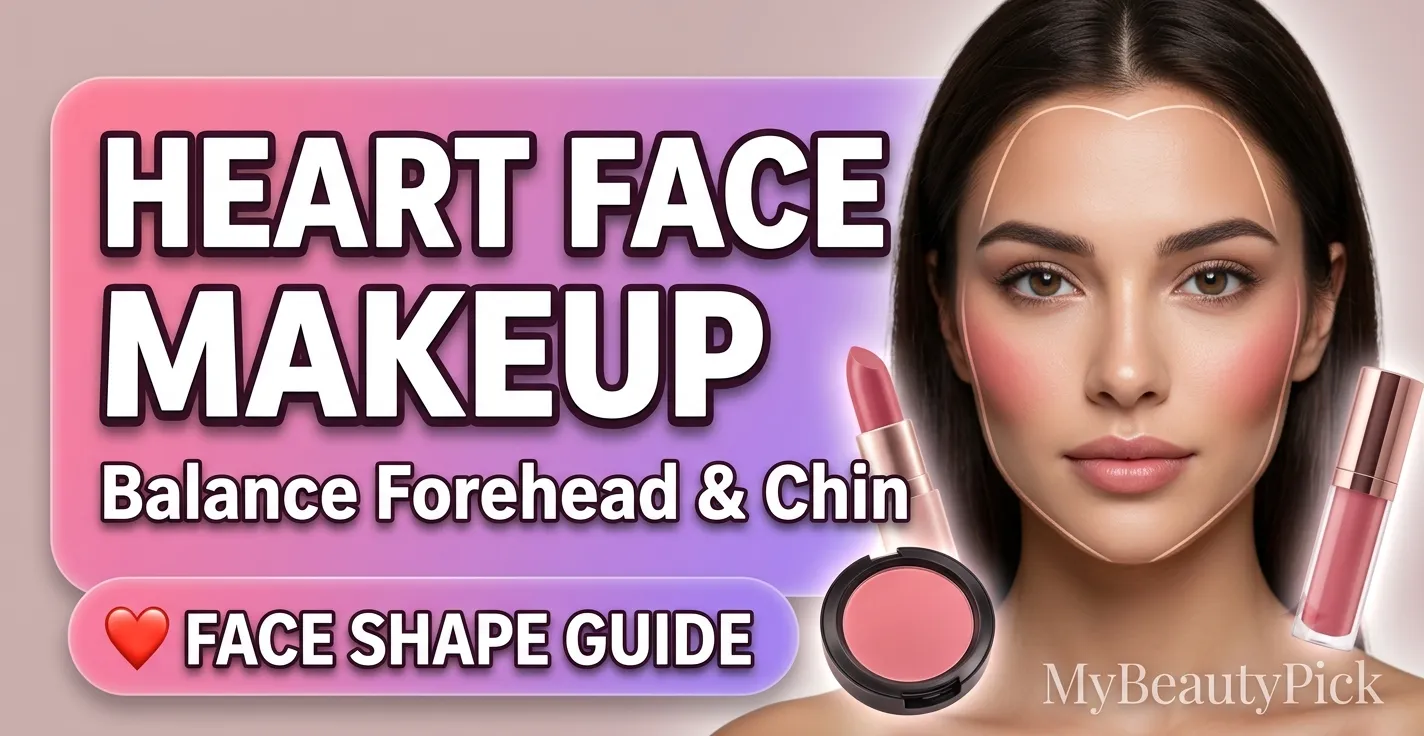
A heart-shaped face is widest at the forehead, tapers through the cheekbones, and comes to a narrow pointed chin. The most common makeup advice for heart faces is simply “soften the forehead” — but the full picture is more specific than that. The real challenge is adding visual weight to the narrow lower face while reducing the visual prominence of the wide upper face, so the proportions read as balanced rather than top-heavy.
- A heart face is widest at the forehead, narrowing to a pointed chin — the upper face carries the most visual weight.
- Contour the outer forehead and temples to reduce upper face width. Never contour the jaw or chin.
- Blush placed lower on the cheek, angled downward toward the chin, draws the eye down and adds weight to the lower face.
- A fuller, bolder lip is the single most effective technique for heart face balance — it creates a strong lower-face focal point.
- A soft chin-tip highlight adds visual width to the narrowest point of the face.
How to Identify a Heart Face Shape
Pull your hair back and look straight into a mirror in natural light. A heart face shows: the forehead is clearly the widest point, the face narrows at the cheekbones, and tapers to a narrow or pointed chin. There may be a widow’s peak hairline. The chin is the narrowest point of the face — noticeably more narrow than the forehead width.
Heart is often confused with oval. The distinction: an oval face has a wider mid-face at the cheekbones and the jaw tapers gradually below that. A heart face is specifically widest at the forehead — the narrowing happens above the cheekbones, not below them.
Contour Placement for Heart Face
The primary objective is reducing the visual prominence of the upper face — the outer forehead and temples — without adding any shadow to the already-narrow lower face.
Forehead and Temple Contour
Apply contour along the outer hairline on both sides of the forehead, at the temples, blending inward and upward into the hairline. This visually reduces the width of the upper face. Keep the centre of the forehead free of highlight — adding highlight to the centre forehead widens it further. The temple contour is the most impactful placement for heart faces and has the clearest effect on proportions.
Never contour the jaw or chin on a heart face. The chin is already the narrowest point — any shadow there makes it appear more fragile and pointed. Under-cheekbone contour should also be minimal or skipped — the cheekbones on a heart face are already reasonably defined, and heavy contour below them can over-sharpen the face.
Blush Placement for Heart Face
Blush placement for a heart face is the single biggest departure from standard guidance. Most blush advice says “sweep upward toward the temple” — for a heart face, this is the wrong direction. Upward-sweeping blush adds more visual weight to the already-heavy upper face.
The correct placement: apply blush lower on the cheek than standard and angle it downward and inward toward the chin rather than upward toward the temple. This draws the eye down toward the lower face and adds warmth and visual weight where it is most needed.
Specific technique: apply to the apple of the cheek and blend gently downward and inward. The colour should be warmest at the apple and fade downward. This placement feels counterintuitive but creates a visible lower-face focal point that genuinely balances the wide-forehead-narrow-chin proportions.
Eye Makeup Techniques for Heart Face
Eye makeup should add definition without dramatically widening the already-wide upper face. The key is moderation: well-blended eyeshadow and moderate liner rather than dramatically extended wings that add horizontal width at the forehead level.
Liner
A gentle upswept liner works well — but avoid very dramatically extended wings that stretch far outward beyond the eye, which adds more horizontal width to the forehead zone. A wing that extends more upward than outward lifts the eye without significantly widening the upper face. Tightlining of the upper waterline is always appropriate.
Lower Lash Line
Defining the lower lash line adds visual weight to the eye area and draws attention slightly downward from the forehead. A soft smudged lower lash line is particularly appropriate for heart faces — it creates lower-eye definition that actively balances the upper-face prominence.
Brow Shape for Heart Face
Brows on a heart face need to frame the eye without adding more visual weight to the forehead. This means: not overly thick or boldly defined brows that immediately draw attention to the forehead; and not very high arches that add vertical height above the forehead.
The most flattering brow: a naturally shaped, medium-full brow with a gentle arch. Defined and groomed but not dramatically bold or sharply peaked. The brow should frame the eye rather than dominate the forehead.
Lip Shape and Colour for Heart Face
The lip is the single most effective tool for heart face balance. A fuller, more defined lip draws the eye to the lower face and adds visual weight to the narrowest part of the face structure.
A bold or well-defined lip is more flattering on a heart face than a minimal one. The statement lip provides a strong lower focal point that actively balances the wide forehead — it shifts the visual weight from top to bottom. This is why heart faces are particularly suited to bold lip colours.
A slightly fuller lower lip with a defined cupid’s bow visually widens the chin area, adding proportion where it is needed. A thin, minimally defined lip emphasises the chin’s narrowness rather than counteracting it.
For heart faces on tan skin: a warm red or terracotta bold lip is one of the most effective face-balancing techniques available. The bold colour draws the eye immediately to the lower face, the warmth complements tan undertones, and the fuller lip shape adds visual width to the narrow chin area. The combination of strong lower focal point and lower-face visual weight is exactly what heart face balance requires.
Highlight Placement for Heart Face
| Area | Technique | Effect on Heart Face |
|---|---|---|
| Centre forehead | Avoid highlight — keep neutral | Prevents widening the already-wide upper face |
| Temple and outer forehead | Contour | Visually reduces upper face width |
| Cheekbone tip | Small precise highlight | Adds warmth and definition without widening |
| Chin tip | Soft highlight | Adds visual width to the narrow chin — key technique for heart faces |
| Jaw corners and jawline | No contour | Contouring here further narrows an already-narrow lower face |
Complete Look Guide: Heart Face
Everyday Look
- Natural or satin-finish foundation
- Temple contour blended into hairline
- Blush low on cheek, angled downward toward chin
- Mascara, gentle brows, moderate liner
- Defined satin lip in warm nude or rose
- Soft chin-tip highlight
Event Look
- Full-coverage long-wear foundation
- Defined temple contour, thoroughly blended
- Blush low on apple, angled downward
- Soft glam eye — blended, not dramatically extended
- Bold statement lip: warm red, terracotta, or deep plum
- Chin-tip highlight
Mistakes to Avoid with Heart Face Makeup
-
✗Sweeping blush upward toward the templeThis adds more visual weight to the already-heavy upper face. Blush on a heart face must angle downward toward the chin, not upward.
-
✗Contouring the jaw or chinThe chin is already narrow. Any contour there makes it appear more fragile and pointed. All contour on a heart face goes at the upper face.
-
✗Very thick or dramatically arched browsHeavy brows draw immediate attention to the forehead — increasing visual weight where the face is already heaviest.
-
✗A minimal or very thin lipA thin lip fails to provide the lower-face focal point that balances the wide forehead. A fuller, more defined lip is more flattering on a heart face in every context.
Frequently Asked Questions
What makeup techniques flatter a heart-shaped face?
The most effective techniques: contour the outer temples and forehead hairline to reduce upper face width; place blush lower on the cheek and angle it downward toward the chin; add a fuller, bolder lip to create a strong lower-face focal point; and place soft highlight on the chin tip to add visual width to the narrowest point. Together these shift visual balance from the wide upper face to the narrower lower face, creating more proportionate overall appearance.
Where should blush go on a heart-shaped face?
Lower on the cheek than standard placement, angled downward and inward toward the chin rather than upward toward the temple. Apply to the apple of the cheek and blend gently downward. This draws the eye down to the lower face and adds warmth and visual weight where the face needs it most. The standard upward-sweeping blush direction adds visual emphasis to the already-wide upper face — the opposite of what heart face balance requires.
How do I balance a wide forehead with makeup?
The most effective approaches: contour the outer temples and forehead hairline to visually reduce the upper face width; keep the centre forehead free of highlight; place blush low on the cheek angled downward; add a bold or well-defined lip that creates a strong lower-face focal point; and place a soft highlight on the chin tip to add visual width to the narrow lower face. Together these draw the eye downward and create the impression of more balanced proportions.
What lip shape suits a heart-shaped face?
A fuller, more defined lip is most flattering. It draws the eye to the lower face and adds visual weight to the narrowest part of the face. A slightly fuller lower lip with a defined cupid’s bow also adds visual width to the chin area. Heart faces wear bold lip colours particularly well for this reason — the bold lip creates exactly the lower-face emphasis the face shape needs for balance.