

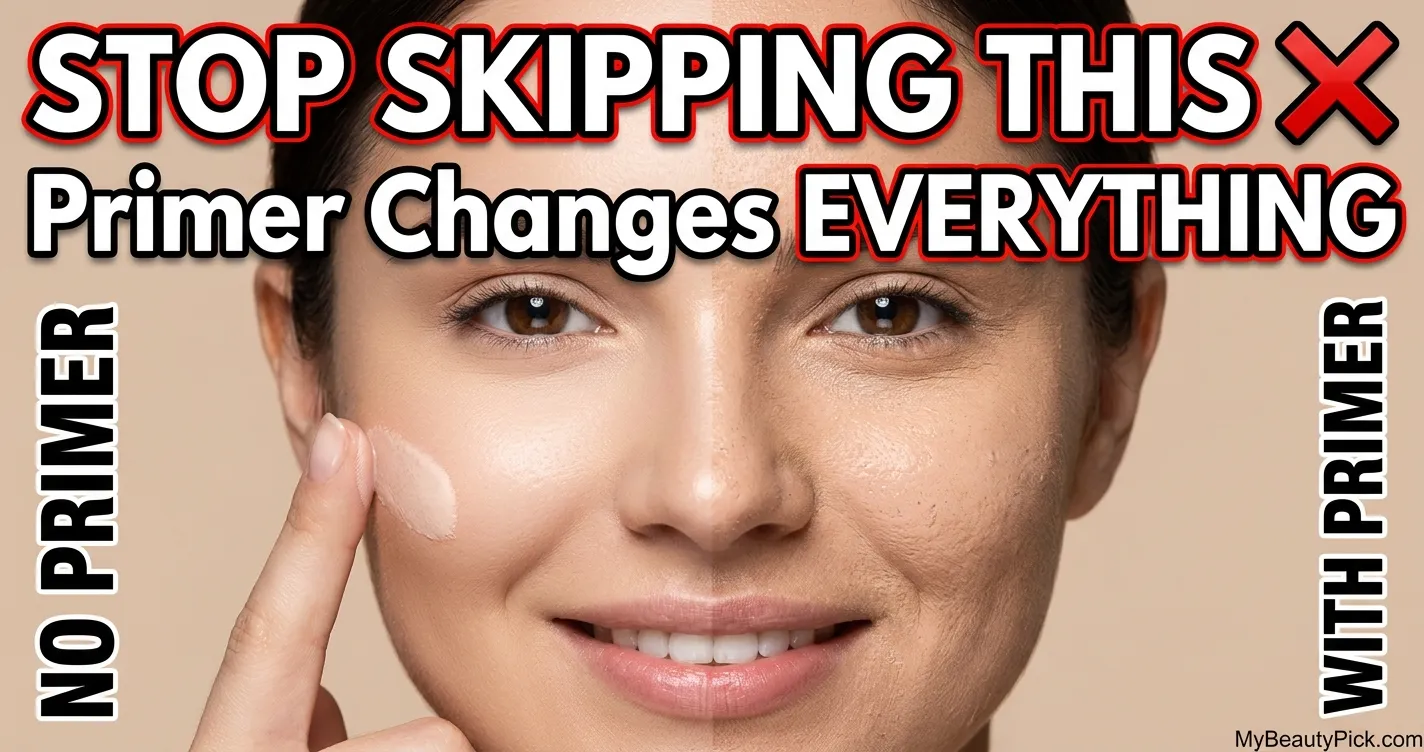
Primer is the most consistently skipped step in a makeup routine, and consistently the one that changes results more than any other single product. It is not glamorous, it does not show in photos, and it takes up a minute of time that most people would rather spend on foundation or eye makeup. But ask any professional makeup artist what separates a base that holds for twelve hours from one that slides by hour four, and primer comes up every single time.
Here is what most primer content gets wrong: it treats primer as a single category. It is not. A silicone-based pore-blurring primer and a hyaluronic acid hydrating primer are completely different products with completely different mechanisms, and applying the wrong one to your skin type creates worse results than no primer at all. This guide breaks down exactly what primer does, which type belongs on your skin, what ingredients to look for, the best picks tested across price points, and what no other primer guide covers — how primer behaves differently on tan, brown, and melanin-rich skin.
What Does a Face Primer Actually Do?
A face primer creates a prepared surface between your skin and makeup. It smooths texture, fills or blurs pores, controls oil or adds hydration depending on the formula, and gives foundation a uniform layer to grip. The right primer extends foundation wear by two to four hours and significantly reduces oxidation, fading, and midday separation.
Think of your skin like a freshly painted wall. Even with a good paint, applying it directly to bare plaster gives you an uneven, absorbent surface where the paint sinks in and dries patchy. Primer fills in the texture, seals the surface, and gives the paint something consistent to grip. Foundation behaves identically — without a consistent surface to adhere to, it fills in pores unevenly, slides off oily zones, grips dry patches, and breaks down at different rates across the face.
The specific benefits of primer depend entirely on which type you choose:
- Physical pore filling: Silicone ingredients like dimethicone physically bridge pore openings — the product sits across the pore rather than dropping in, creating a smoother surface for foundation
- Optical blurring: Silica scatters light, creating a soft-focus effect that makes pores and fine lines appear less visible without physically filling them
- Oil control: Mattifying primers absorb sebum at the skin surface, slowing the sebum-meets-foundation reaction that causes oxidation and midday shine
- Hydration: Humectant-rich primers add a water layer that prevents foundation gripping onto dry patches and cracking at expression lines
- Foundation grip: Grip primers create a slightly tacky surface that gives foundation something to adhere to — particularly valuable for longwear and transfer-resistant results
- Color correction: Tinted primers neutralize specific discolorations before foundation — green for redness, peach or orange for dark circles, purple for dullness
- Oxidation protection: The barrier primer creates between skin oils and foundation significantly slows the oxidation process — essential for tan and brown skin where oil-triggered color shift is most visible
Primer cannot fix underlying skincare problems. Severely dehydrated skin needs hyaluronic acid and moisturizer in the skincare routine, not a hydrating primer on top. Congested or acne-prone skin needs a consistent skincare regimen, not a primer to mask it. Primer is a surface preparation tool — it works best when the skin underneath is already healthy and well-maintained.
Do You Actually Need a Face Primer?
Yes, in most situations — but not all. Primer adds measurable benefit for events, long days, humid climates, oily skin, and photography. For a 10-minute light makeup look or bare skin days, it is not necessary. The question is not whether primer works, but whether your specific situation needs what primer does.
Primer is worth using when:
- You need makeup to last more than six hours
- You are wearing makeup in humid weather, heat, or during physical activity
- You have oily or combination skin and experience midday foundation breakdown
- Photography is involved — especially flash photography
- You have visible pores or texture that foundation alone is not smoothing
- Your foundation consistently oxidizes (shifts orange or grey) within the first hour
- You have dry skin where foundation grabs onto patches and looks uneven
Primer is less critical when you are wearing a skin tint or light BB cream for a quick errand, you have naturally balanced skin that holds makeup well without it, or you are going for a no-makeup look where even light foundation is the maximum coverage.
The 5 Types of Face Primer: What Each One Actually Does
Primer is not one product. These five types behave completely differently on skin, and choosing the wrong category is why primer gets a reputation for not working.
| Primer Type | Base | Best Skin Type | What It Does | Avoid If |
|---|---|---|---|---|
| Silicone / Pore-Blurring | Dimethicone, cyclopentasiloxane | Oily, combination, textured skin | Physically fills pores, smooth canvas, long wear extension, oil control | Using water-based foundation (causes pilling); severe acne (can trap oil) |
| Hydrating | Water, glycerin, hyaluronic acid | Dry, dehydrated, sensitive, mature skin | Adds moisture layer, prevents foundation gripping dry patches, plumps skin surface | Very oily T-zone without mattifying in that zone; using with silicone-only foundation |
| Mattifying | Silica, kaolin clay, water or silicone base | Oily, combination, acne-prone skin | Absorbs sebum, controls shine, reduces oil migration into pores and foundation | Dry skin (over-drying, emphasizes flakiness); combination-dry (use only on T-zone) |
| Grip / Tacky | Gel-water hybrid with polymers | All types wanting maximum longwear | Creates slightly sticky surface for foundation adhesion — foundation does not slide | Sensitive or severely congested skin; applying too much (very sticky feel all day) |
| Color Correcting | Silicone or water base with color pigments | Specific concerns — redness, dullness, dark spots | Green neutralizes redness and rosacea; peach/orange neutralizes dark circles; purple adds brightness to dull skin | Anyone without the specific concern — color-correcting primers on the wrong skin type cause ashiness, warmth, or greenness |
Silicone vs Water Based Primer: The Compatibility Rule Nobody Talks About
Silicone primers physically fill pores and create a smooth blurring surface. Water-based primers hydrate and create a breathable, lightweight prep layer. The rule: match your primer base to your foundation base. Silicone primer under a water-based foundation causes pilling and separation within minutes of application.
Silicone-Based Primers: What They Are and How They Work
Silicone primers are identified by their key ingredients — look for dimethicone, cyclopentasiloxane, trimethylsiloxysilicate, or dimethicone crosspolymer near the top of the ingredient list. The texture is distinctively silky and velvety — it glides across skin and leaves a smooth, slightly slick finish that does not fully absorb.
What silicone does mechanically: it forms a semi-occlusive film across the skin surface. This film is what fills pore openings — the silicone bridges across rather than filling down into the pore. It creates a uniformly smooth surface for foundation to sit across, reduces the friction between skin and foundation during blending, and forms a barrier between skin oils and the foundation above it that significantly slows oxidation.
- Best pore-blurring effect of any primer type
- Creates longest-lasting foundation adhesion
- Water-repellent — holds up against humidity and sweat
- Slows oxidation by creating oil barrier
- Works for most skin types in controlled amounts
- Particularly beneficial for oily and combination skin
- Can cause pilling if used with water-based foundation
- May trap sebum and bacteria if not removed thoroughly
- Some people with acne-prone skin experience breakouts — individual sensitivity varies
- Can feel heavy or suffocating on very sensitive skin
- Over-application causes slipping — less is always more
Water-Based Primers: What They Are and How They Work
Water-based primers list water (aqua) as the first ingredient. They often contain glycerin, hyaluronic acid, niacinamide, aloe, or skincare actives alongside their priming function. The texture is lighter — gel-like or serum-like — and they absorb into the skin rather than sitting on top of it.
Water-based primers work differently from silicone — they hydrate and prepare rather than physically fill. They create a more breathable prep layer that works particularly well for dry, dehydrated, sensitive, and acne-prone skin where the occlusive silicone film would be problematic. The foundation grip they provide is less physical than silicone but still meaningful — hydrated skin holds foundation more evenly than dehydrated skin does.
The Base Compatibility Rule
Water-based products sit on top of silicone-based products rather than bonding to them. If you apply a silicone primer and then a water-based foundation on top, the foundation will bead, separate, and pill within minutes. Match like with like: silicone primer with silicone or long-wear foundation, water-based primer with water-based or BB cream foundation. When in doubt, apply a small test stripe on your jaw and wait 90 seconds before blending. If it pills, you have a compatibility mismatch.
| Primer Base | Foundation Base | Result |
|---|---|---|
| Silicone | Silicone / long-wear | Excellent — smooth, lasting, no pilling |
| Water | Water / BB cream / skin tint | Excellent — breathable, hydrated, even application |
| Silicone | Water-based | Pilling — foundation beads on silicone film |
| Water | Silicone / long-wear | Usually fine — silicone foundation can sit over water base |
| Grip primer | Most formulas | Usually compatible — sticky surface grips both bases |
Key Ingredients in Face Primer: What to Look For and What to Avoid
| Ingredient | Type | What It Does | Best For |
|---|---|---|---|
| Dimethicone | Silicone | Fills pores, creates smooth film, water-repellent barrier | Pore blurring, oily skin, long wear |
| Cyclopentasiloxane | Volatile silicone | Lightweight silicone that evaporates, leaves dimethicone behind — improves texture without heaviness | Oily skin, combination skin |
| Silica | Mineral | Optical soft-focus blurring — scatters light to minimize pore visibility | Textured skin, pore minimizing, matte finish |
| Hyaluronic acid | Humectant | Draws and holds water in the skin — plumps surface before foundation | Dry, dehydrated, mature skin |
| Glycerin | Humectant | Attracts moisture to skin surface, keeps formula flexible | Dry, combination, sensitive skin |
| Niacinamide | Active ingredient | Regulates sebum production, reduces pore size over time, calms inflammation | Oily, combination, acne-prone skin |
| Kaolin clay | Mineral absorber | Absorbs excess oil at skin surface, controls shine | Oily, very oily skin — avoid on dry skin |
| Squalane | Lightweight oil | Mimics skin’s natural sebum, adds slip without greasiness | Dry, mature, sensitive skin |
| Salicylic acid | BHA exfoliant | Unclogs pores, reduces blackheads, prevents congestion buildup under primer | Acne-prone, oily, congested skin |
| Peptides | Skincare active | Support collagen, improve skin elasticity — longer-term skin improvement alongside coverage | Mature skin, skin health focus |
| Titanium dioxide / Zinc oxide (high concentration) | Physical SPF | Sun protection — but causes white flashback in photography on tan and dark skin | Daytime wear only — avoid for photography on tan and dark skin |
Best Primer for Every Skin Type: Tested Picks by Category
Best Primer for Oily Skin
Oily skin needs a primer that controls oil production at the surface, creates a barrier between sebum and foundation, and keeps the formula in place through the hours when sebum breaks down binder ingredients and causes sliding, fading, and oxidation. Silicone and mattifying formulas do this best. Hydrating primers on oily skin accelerate the breakdown and should be avoided on oil-prone zones.
A gel-based grip primer with a water-first formula containing hyaluronic acid and niacinamide. The slightly tacky texture grips foundation and keeps it in place for extended wear without the heavy silicone feel that some oily-skin formulas produce.
The niacinamide content actively regulates sebum production rather than just sitting on top of oil — over time, regular use reduces the oil that causes foundation breakdown. The grip mechanism means foundation stays where you apply it rather than migrating into pores. One of the most recommended oily-skin primers across beauty communities globally for its performance at its price point.
A silicone-based pore primer that has been a professional standard for blurring and oil control since its launch. The lightweight silicone formula sits across pore openings and controls shine throughout the day without the heavy or suffocating feel of older generation silicone primers.
The silicone matrix creates a reliable barrier between skin oils and foundation, slowing the oxidation and formula breakdown that oily skin causes. The blurring effect minimizes the appearance of pores that oil-prone skin tends to have more visibly. One of the most consistently tested and praised primers in this category across beauty editorial and professional makeup artist recommendations.
A full matte primer that provides the most comprehensive oil control in this category. Specifically formulated for oily skin that wants zero shine throughout the day — not soft-matte, but genuinely flat matte that holds through heat and humidity.
The formulation is built around high-performance oil control ingredients rather than a standard silicone base — which gives it better performance in very humid or hot conditions than most silicone-only primers. Pairs well with matte foundations for the most oil-resistant full-day wear. Not recommended for combination-dry skin as the matte finish can emphasize dry areas.
A professional-grade oil-control primer designed for 12-hour performance. Used consistently by makeup artists on clients with very oily skin for long events, weddings, and editorial work where midday touch-ups are not an option.
The 12-hour performance claim is borne out in professional use across different climate conditions. Works particularly well paired with MAC Studio Fix Fluid Foundation — the two formulas are designed for compatibility and the combination holds better on oily skin than most other primer-foundation pairings at this level.
Best Primer for Dry Skin
Dry skin needs the opposite of what oily skin needs. Where oily skin benefits from oil-absorbing mattifying ingredients, dry skin needs oil-replenishing humectants and emollients that give the skin surface the moisture and slip it lacks naturally. The most common dry-skin primer mistake is using a silicone-heavy formula that grips onto dry patches rather than gliding over them — the correct choice is a hydrating primer that meets the skin where it is, not one that compresses the dryness further.
A water-gel formula with hyaluronic acid, niacinamide, and blue agave extract that creates a sticky but hydrating grip for foundation. One of the most recommended primers for dry skin across beauty editorial testing because it genuinely addresses dehydration while extending wear.
The blue agave extract provides genuine moisture binding that hyaluronic acid alone cannot — it draws water into the skin and holds it there through foundation application and wear. The grip mechanism holds foundation without the mechanical grip of silicone that can exacerbate dry patches. The dewy finish adds the luminosity that dry skin naturally lacks.
A moisturizer-primer hybrid that sits between a rich face cream and a primer. The vitamin complex (B, C, E) provides antioxidant protection while the rich texture creates a hydrated, smooth surface for foundation. One of the most recommended options for genuinely dry skin that needs moisture as much as primer function.
Unlike most primers that function as a separate step after moisturizer, this replaces the moisturizer step entirely for dry skin — saving a step while delivering more effective preparation than most moisturizer-plus-primer combinations. The skin looks visibly plumped and luminous before foundation, and foundation applied over it glides rather than grips.
The primer version of the iconic Luminous Silk Foundation, with the same Micro-fil technology that creates a luminous, skin-like finish. Specifically formulated for dry skin that wants a glowing base without the heavy cream primer texture.
The illuminating quality of the Micro-fil technology adds the dimension and glow that dry skin naturally lacks — dry skin often looks flat and dull, and this primer counteracts that before foundation even goes on. The hydrating formula creates a plumped, smooth surface. Particularly effective on tan skin for its warm luminosity rather than silvery or cool glow.
Best Primer for Large Pores
Pore-minimizing primers need to do two things: physically fill pore openings so foundation sits across them rather than dropping into them, and create an oil-absorbing environment that prevents sebum from moving foundation into pores throughout the day. Silicone-based formulas with high dimethicone concentration are the most effective for this specific concern.
The liquid version of e.l.f.’s viral Poreless Putty Primer, with a lighter texture that delivers the same pore-smoothing results. The silicone-rich formula creates a velvety surface that bridges pore openings and keeps them visually minimized throughout the day.
The dimethicone concentration is high enough to physically fill medium and large pores without the greasy weight of older silicone primers. The liquid texture means it spreads more evenly than putty formulas, with less risk of over-application in areas with smaller pores. At its price point, one of the strongest performers for pore minimization that regular editorial testing confirms.
An oil-free blurring primer with soft-focus silica and mattifying silicone. Laura Mercier’s primer range is one of the most professionally trusted in the makeup industry, and the Blurring version specifically performs for visible pores and textured skin without the heavy finish of older pore-filling formulas.
The combination of physical pore-filling (silicone) and optical blurring (silica) addresses pore visibility from two directions simultaneously. The silica scatters light away from pore openings, making them appear smaller even in areas where the formula cannot fully fill them. Lightweight enough to wear without feeling like a separate heavy product layer under foundation.
For more on managing large pores under foundation — including which foundation formulas work best and how to apply without causing settling — our guide on best foundation for large pores and textured skin covers the complete routine.
Best Primer for Combination Skin
Combination skin does not need one primer — it needs a zone-based approach. The T-zone (forehead, nose, chin) behaves like oily skin and needs oil control. The cheeks and outer face often behave like dry or normal skin and need hydration rather than mattifying. Applying a single mattifying primer across the full face on combination skin over-dries the cheeks while under-controlling the T-zone.
Use a mattifying or silicone primer on the T-zone only — forehead, nose, and chin — where oil is produced. Apply a hydrating primer to the cheeks and outer face where the skin is drier. This gives each zone the specific preparation it needs rather than compromising everywhere. Two primers used correctly outperform one multi-tasking primer applied uniformly on combination skin.
A hybrid formula that provides oil control on the T-zone while delivering enough hydration to avoid over-drying the cheeks. Works as a single-primer solution for combination skin when zone-based application is not practical.
The formula balances oil-control with hydration more effectively than most single-use primers — it does not tip into either extreme. SPF-free formulation means no flashback risk in photography on tan or dark skin. Pairs naturally with Fenty Pro Filt’r Foundation for a tested, compatible formula pairing.
Best Primer for Mature Skin
Mature skin has two primary needs from primer: hydration to counteract the reduced oil and moisture production that comes with age, and a light blurring effect for fine lines without the silicone that can settle into deeper wrinkles and emphasize them rather than filling them. The most common mature skin primer mistake is using a thick silicone formula that sinks into lines and sets in a way that makes them more visible, not less.
A minimalist moisturizer-primer hybrid with hyaluronic acid, niacinamide, and ceramides. Designed to streamline the skincare-to-makeup transition by combining the moisturizing and priming steps without creating a heavy product layer underneath foundation.
The ceramide content specifically addresses the compromised skin barrier that contributes to dryness and sensitivity in mature skin. The priming function is gentle — it creates a smooth, hydrated surface for foundation without the rigid silicone layer that can sit in fine lines. Foundation applied over it moves with facial expressions rather than cracking at smile lines or under the eyes.
A liquid illuminating filter that works as primer, highlighter, or foundation mix-in. The light-diffusing technology creates a soft-focus blurring effect on fine lines that reads as natural glow rather than product layering on mature skin.
The light-diffusing pigments scatter light away from fine lines and texture — an optical correction rather than a physical one that means the formula stays on top of the skin rather than sinking into lines. The luminous result specifically counteracts the flatness and dullness that mature skin tends toward. Available in multiple shades including warm and golden options that suit tan and medium mature skin tones.
Best Primer for Acne-Prone Skin
Acne-prone skin needs primers that do not clog pores, and ideally that actively address the skin concerns underneath makeup rather than just sitting on top of them. Water-based, non-comedogenic formulas with skincare actives like niacinamide and salicylic acid are the best choice. Heavy silicone primers on acne-prone skin can trap sebum and bacteria beneath them, potentially worsening breakouts — though individual sensitivity varies and some acne-prone skin handles silicone without issue.
A lightweight, non-comedogenic formula that has been recommended for acne-prone skin for over a decade. The simple, clean ingredient list minimizes the risk of irritation or pore-clogging while still providing a smooth priming base for foundation.
Non-comedogenic certification means the formula has been tested to avoid blocking pores — significant for skin that already produces excess sebum. The lightweight feel does not add the heavy product layer sensation that can be problematic for sensitive acne-prone skin. Oil-controlling without being aggressively drying, which is important because over-drying acne-prone skin can trigger compensatory oil production.
For foundation picks specifically formulated for acne-prone skin, our guide on best foundation for acne-prone skin covers non-comedogenic formulas by coverage level.
Best Primer for Sensitive Skin
A serum-primer-SPF hybrid with niacinamide, hyaluronic acid, and plant-derived actives. For sensitive skin that wants minimal steps and minimal ingredients, this combines three products into one. Fragrance-free, reef-safe, and formulated with clean ingredients.
The minimal ingredient philosophy reduces the number of potential irritants. Chemical SPF avoids the heavy mineral ingredients that can sit uncomfortably on reactive skin — though note that on tan skin the SPF remains chemical (avobenzone) which does not cause flashback. The serum texture absorbs without creating a heavy layer that traps heat or triggers sensitivity.
Best Primer for Tan and Brown Skin: What the SERP Gets Wrong
Every major primer guide on the SERP is written for a general audience with no acknowledgment that primer behaves differently on tan and brown skin. These are the specific rules that apply to melanin-rich complexions — and why some standard primer recommendations actively cause problems on tan skin.
Dimethicone primer is a double benefit for tan skin. On tan and oily skin, sebum is the primary trigger for foundation oxidation — the chemical reaction between skin oils, skin pH, and iron oxide pigments that causes foundation to shift orange or grey. A silicone primer creates a physical barrier between skin oils and the foundation above it, which directly slows this reaction. For tan skin that oxidizes, primer is not optional — it is the most effective single intervention available. Our article on why foundation oxidizes on tan skin explains the full chemistry.
SPF primers and flashback on tan skin. Primers containing physical SPF (titanium dioxide or zinc oxide) cause white or grey flashback in flash photography on tan and dark skin. The contrast between the reflective layer and the natural skin depth is more visible on tan skin than on lighter tones. For any event involving photography, choose an SPF-free primer and apply chemical SPF in your skincare routine instead. This is non-negotiable for events, weddings, or any situation where photographs will be taken.
Color-correcting primers and tan skin. Green color-correcting primers work for redness on tan skin. Purple or lavender “brightening” primers designed to neutralize yellow dullness can look ashy or grey on warm tan undertones — skip these. Peach or orange-toned correctors are useful for under-eye darkness on tan skin but should not be used as a full-face primer.
Illuminating primers and tan skin. Choose warm gold or champagne-toned illuminating primers rather than silver, white, or icy tones. Silver and icy illuminating primers can read as grey or chalky against warm or golden tan skin undertones. Charlotte Tilbury Hollywood Flawless Filter in shade 3 Medium and Armani Luminous Silk Hydrating Primer are the most consistently recommended illuminating primer options for tan skin.
e.l.f. Power Grip and Milk Hydro Grip on tan skin. Both are water-based grip primers that work exceptionally well on tan skin — the niacinamide in both formulas helps regulate the sebum production that drives oxidation, and the grip mechanism extends foundation wear on the high-sebum skin common in tan complexions. Neither contains physical SPF, making them photography-safe on tan skin.
For the full prep routine for tan skin before foundation — including the order of skincare, primer, and foundation steps — our guide on how to prep tan skin for a flawless foundation finish covers each step in detail. Understanding your undertone also affects which primer type serves you best — our guide to undertones for tan skin walks through the identification process.
How to Apply Face Primer Correctly: Step by Step
The most common reason primer fails is incorrect application — too much product, applied too soon after skincare, or applied with the wrong technique for the formula type. These steps apply regardless of which primer you choose.
Cleanser, toner if you use one, serum, moisturizer, and SPF all go before primer. Primer is the first makeup step, not the last skincare step. Applying primer to bare skin without moisturizer underneath leaves dry skin dehydrated beneath the primer layer, which causes foundation to look patchy regardless of the primer choice.
Applying silicone primer over wet moisturizer causes pilling. The moisturizer needs to be absorbed into the skin before primer creates its surface layer. For dry skin using a rich cream, wait 3 to 5 minutes. For lightweight gel moisturizers, 60 to 90 seconds is usually sufficient. If you are rushing, blot the face gently with a clean tissue to remove any unabsorbed surface moisture before primer.
A single pea-size amount is enough for the entire face with most primers. The single most common primer application mistake is using too much product. Over-application of silicone primer creates a thick, slippery layer that foundation slides off rather than adhering to. Over-application of hydrating primer creates a wet surface that delays foundation setting. Start with a pea-size, spread it, and only add more if genuinely needed for specific areas.
For silicone-based primers specifically, warming the product between your fingertips for 2 to 3 seconds makes it more fluid and easier to press into skin without dragging. Cold silicone primer applied directly from the tube does not blend as smoothly and can pull at dry patches.
Pressing or stippling primer into the skin deposits it across the surface and into pore openings. Sweeping moves it across the surface without the same penetration into texture. For pore-blurring silicone primers, pressing in a circular motion across the nose and cheeks is the most effective technique. For hydrating grip primers, pressing gently with fingertips across the full face is more effective than using a brush.
For oily skin, primer on the T-zone is more effective than primer spread thinly across the full face. For large pores, concentrate primer on the nose and cheeks where pores are most visible. For dry skin, apply across the cheeks and forehead where dryness is most prominent. Full-face primer application is only necessary when you need uniform preparation — for full-coverage or long-wear looks.
Silicone primer needs time to partially set before foundation goes on top. If you apply foundation immediately, the primer is still mobile and the two products will mix rather than sit in their intended separate layers. Sixty to ninety seconds is enough — the primer will feel slightly less slick and the surface will have a more uniform texture. Hydrating grip primers need less time — 30 to 60 seconds is sufficient.
Spray setting spray onto your damp beauty sponge before applying foundation over primer. This gives the sponge a hydrated base so it deposits foundation rather than absorbing it, and the setting spray helps foundation and primer bond together as a unified layer. The result is foundation that looks more skin-like and holds significantly longer — particularly effective on tan and oily skin where primer-foundation bonding is most important.
Common Primer Mistakes and How to Fix Them
- Use a pea-size amount — primer is concentrated
- Wait 60 to 90 seconds after primer before foundation
- Match primer base to foundation base
- Apply moisturizer first and let it absorb fully
- Use zone-based application on combination skin
- Press primer into skin rather than sweeping
- Check compatibility with one stripe test before full application
- Using too much — creates slippery, pill-prone surface
- Applying foundation immediately — primer has not set
- Silicone primer with water-based foundation — pilling
- Primer over wet moisturizer — pills and slides
- Mattifying primer full-face on combination-dry skin — over-dries cheeks
- SPF primer before flash photography on tan or dark skin — white cast
- Purple brightening primer on warm tan undertone — grey cast
Can You Use Primer Without Foundation?
Yes. Many primers work as standalone products for no-makeup days — they even out skin texture, add subtle glow, and give skin a healthy, refined appearance without any foundation on top. Illuminating primers and hydrating grip primers work particularly well on their own. The Charlotte Tilbury Hollywood Flawless Filter is one of the most popular single-product face preparations used without foundation.
Primer used without foundation is actually one of the most effective approaches for a genuine no-makeup makeup look. The skin surface is smoothed and slightly evened in tone, pores are minimized, and the face has a polished appearance without any visible product. Add a tinted lip balm and mascara, and the result looks like very good skin rather than “wearing makeup.”
Quick Reference: Best Primer by Skin Type and Concern
| Skin Type / Concern | Primer Type | Best Drugstore | Best Mid-Range | Best Luxury |
|---|---|---|---|---|
| Oily skin | Silicone / mattifying | e.l.f. Liquid Poreless Putty | Benefit POREfessional / Milk Pore Eclipse | MAC Studio Fix Mattifine |
| Dry skin | Hydrating / illuminating | Revlon PhotoReady Primer | Milk Hydro Grip | Bobbi Brown Vitamin Enriched Face Base |
| Large pores | High-dimethicone silicone | e.l.f. Liquid Poreless Putty | Benefit POREfessional | Laura Mercier Pure Canvas Blurring |
| Combination skin | Zone-based: matte T-zone, hydrating cheeks | e.l.f. Power Grip (full face) | Fenty Pro Filt’r Hydrating Primer | NARS Radiance Primer SPF 35 |
| Mature skin | Hydrating, light blurring | L’Oreal Age Perfect Blurring Primer | Merit Great Skin Priming Moisturizer | Charlotte Tilbury Hollywood Flawless Filter / Bobbi Brown VE Face Base |
| Acne-prone skin | Water-based, non-comedogenic | bareMinerals Prime Time Original | e.l.f. Power Grip / Milk Hydro Grip | bareMinerals Prime Time (also mid-range) |
| Sensitive skin | Fragrance-free, minimal ingredients | bareMinerals Prime Time | ILIA Super Serum Skin Tint SPF 40 | Tatcha The Liquid Silk Primer |
| Tan / Brown skin | Dimethicone (oxidation barrier), no physical SPF | e.l.f. Power Grip | Milk Hydro Grip / Fenty Pro Filt’r Hydrating | Armani Luminous Silk Hydrating Primer |
Frequently Asked Questions
A face primer creates a prepared surface between your skin and makeup. It smooths texture, fills or blurs pores depending on the formula type, controls oil or adds hydration, and gives foundation a uniform layer to grip. The right primer extends foundation wear by two to four hours, reduces oxidation on tan and oily skin, prevents foundation gripping dry patches, and keeps base makeup in place through heat, humidity, and long days.
You need primer when you need your makeup to last significantly longer than it does without it, when you have oily skin where foundation slides or oxidizes by midday, when you have dry skin where foundation grabs onto patches, when photography is involved, or when you are wearing makeup in heat or humidity. For a quick light-coverage look on an average day, primer is less critical. The benefit is real and measurable in the right situations — it is not essential for every makeup application.
Silicone primers physically fill pore openings and create a smooth blurring surface — identified by dimethicone or cyclopentasiloxane near the top of the ingredient list. They are best for oily, combination, and textured skin and must be paired with silicone or long-wear foundations to avoid pilling. Water-based primers hydrate and create a breathable prep layer — best for dry, sensitive, and acne-prone skin. They pair best with water-based or BB cream foundations.
Moisturizer goes before primer. The routine order is: cleanser, toner, serum, moisturizer, SPF, then primer. Primer is the first makeup step, not the last skincare step. Applying primer before moisturizer prevents the moisturizer from properly absorbing and can cause the primer to pill when moisturizer is applied on top. Allow moisturizer to fully absorb — at least 2 minutes — before applying primer.
Silicone-based primers need 60 to 90 seconds to partially set before foundation is applied. Applying foundation too soon means the primer is still mobile and both products mix rather than forming separate layers. Water-based grip primers need 30 to 60 seconds. The primer should feel slightly less slick and more uniform in texture before foundation goes on. In practice, the time spent getting your foundation out and warming the sponge is usually sufficient.
Yes. Illuminating primers, hydrating grip primers, and moisturizer-primer hybrids all work as standalone products on bare-skin or no-makeup days. They smooth texture, add glow, and give skin a polished appearance without foundation on top. Charlotte Tilbury Hollywood Flawless Filter, Bobbi Brown Vitamin Enriched Face Base, and Milk Makeup Hydro Grip are among the most popular primers used alone for a natural, no-makeup look.
No — primer is not inherently bad for skin. The potential concerns are specific: heavy silicone primers can trap sebum and bacteria if not removed properly with thorough double-cleansing, which can worsen breakouts for acne-prone skin. Fragrance or alcohol in certain formulas can irritate sensitive skin. Choosing the right formula type for your skin and removing it thoroughly removes these concerns. Non-comedogenic, fragrance-free formulas are the safest options for reactive or acne-prone skin.
Some silicone primers can contribute to breakouts on acne-prone skin by creating an occlusive layer that traps oil and bacteria. However, this is individual — many acne-prone people use silicone primers without any breakout reaction. The risk is reduced by choosing non-comedogenic formulas, using the minimum amount, and removing makeup thoroughly with double-cleansing. If breakouts worsen after starting a silicone primer, switch to a water-based non-comedogenic formula.
A pea-size amount — approximately 0.5 to 1 ml — is enough for the entire face with most primers. Over-application is the single most common primer mistake. Too much silicone primer creates a slippery layer that foundation slides off and creates a cakey layered look. Too much hydrating primer delays foundation setting and can cause it to pill. Start with a pea-size, apply it, and add only a small additional amount to specific areas if genuinely needed.
A grip primer has a slightly tacky, sticky texture that gives foundation maximum adhesion — it creates a surface foundation physically grips onto rather than sitting across. e.l.f. Power Grip and Milk Hydro Grip are the most popular examples. You benefit from a grip primer if your foundation consistently slides, transfers, or fades faster than expected, and if you need maximum longwear. The tacky feel diminishes once foundation is applied. For tan skin, grip primers are particularly useful because they extend wear on high-sebum skin where foundation migration into pores is a frequent problem.
A dimethicone-containing silicone primer creates a physical barrier between skin oils and foundation, which directly slows the oxidation process. e.l.f. Power Grip Primer, Milk Makeup Hydro Grip, Benefit POREfessional, and Fenty Beauty Pro Filt’r Hydrating Primer are the most consistently recommended for tan skin. Avoid primers with physical SPF (titanium dioxide or zinc oxide) if photography is involved, as they cause white flashback on tan skin. For full details on foundation oxidation on tan skin, our article covers the science and all the prevention methods.
Choosing the right primer is the first step — the second is understanding how foundation behaves on your specific skin type and tone. If you are navigating foundation selection for tan or melanin-rich skin, our foundation shade guide for tan skin and our breakdown of undertones for tan skin cover the full matching process. If foundation oxidation or midday fading is your primary concern even after trying primer, our article on why melanin levels affect how foundation wears explains the deeper skin biology behind it.