

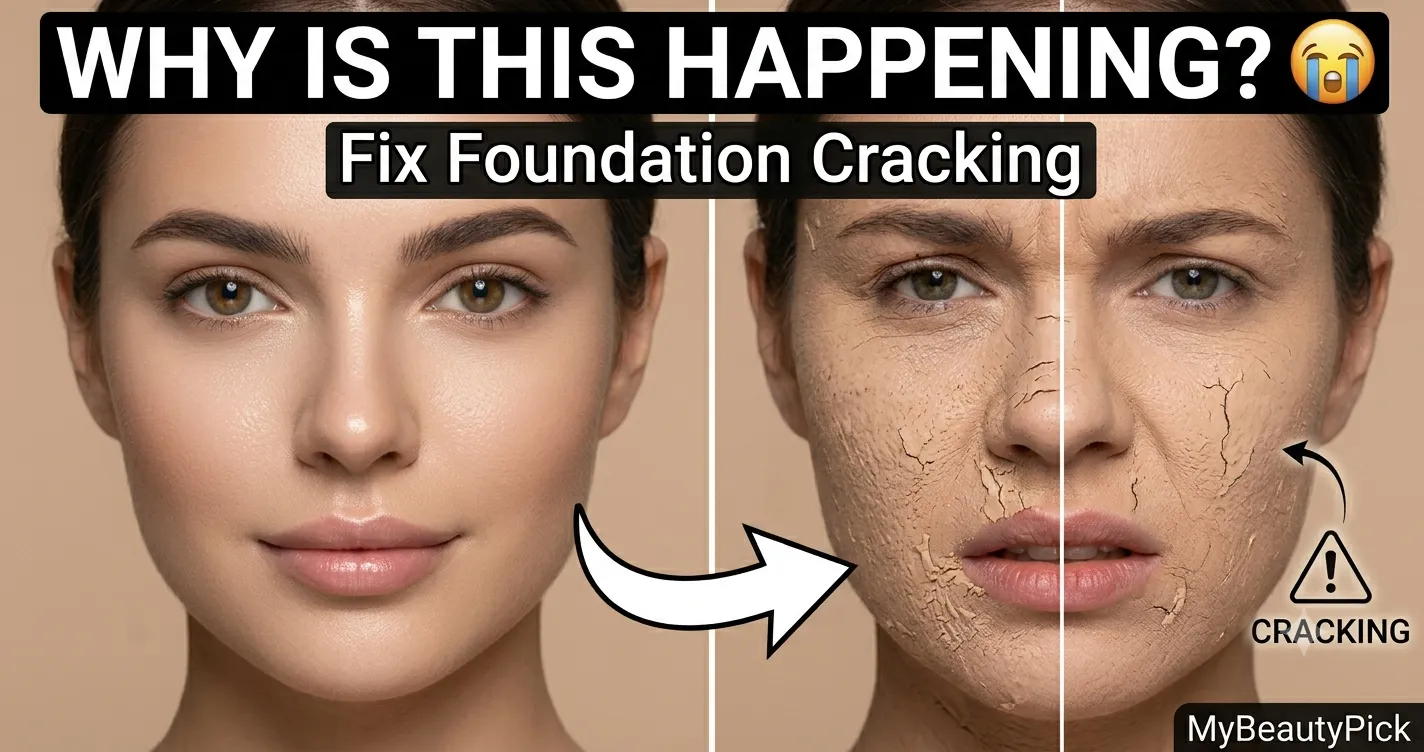
Foundation cracking is nearly always a skin prep or formula problem, not an application problem. If you’ve ever patted your face dry after an hour and found fine lines filled with product or dry patches breaking through the coverage, you already know how frustrating this is. The good news is that every single cause has a fix — and most of them take less than two minutes to change.
- Foundation cracking mid-wear usually means dry skin underneath, too much product, or powder applied before the base has set.
- Foundation going patchy right at application points to dehydrated skin, mismatched formula bases, or unabsorbed moisturiser.
- Matte formulas on dry skin are one of the most common causes — the formula grabs onto dry texture and amplifies it.
- The fix is almost always in the prep, not the product. Same foundation, different skin prep, different result.
Why Foundation Cracks: The Most Common Causes
Foundation cracking and foundation going patchy are slightly different problems, though they often come from the same root causes. Cracking tends to happen mid-wear — the formula splits or breaks apart as it dries. Patchiness shows up at or just after application, where the coverage is uneven from the start. Here’s what’s actually causing each.
Dry or dehydrated skin underneath
This is the most common cause of both cracking and patchy foundation. Foundation needs a smooth, hydrated surface to sit on. When the skin is dry or dehydrated, the formula clings to rough or flaky patches and skips over smoother areas, creating an uneven result right from the start. As the day goes on and the skin dries further, the formula breaks apart at those dry points.
Dry skin and dehydrated skin are different. Dry skin lacks oil. Dehydrated skin lacks water — and it can happen to any skin type, including oily. If your T-zone is shiny but your cheeks feel tight and your foundation cracks, dehydration is likely the cause rather than your skin type overall.
FixAdd a hydrating serum with hyaluronic acid or glycerin to your routine before moisturiser. Let both absorb fully — at least five minutes — before foundation. On very dry patches, press a tiny amount of facial oil into the skin and wait before applying.
Foundation applied over unabsorbed moisturiser
This is the one people rarely identify because it seems counterintuitive. You’ve moisturised — so why is the foundation breaking down? Because moisturiser that’s still sitting on the surface of the skin creates a slick barrier. Foundation can’t adhere properly to it. Instead of bonding with the skin, it slides around and eventually separates or cracks.
The gap most people skip is the wait. Five minutes minimum between moisturiser and foundation. Ten if your moisturiser is rich or oil-based.
FixIf you’re genuinely short on time, press a clean single-ply tissue gently to the face before foundation. This removes the surface layer of unabsorbed product without stripping the skin underneath.
Using a matte formula on dry skin
Matte foundations contain silica and oil-absorbing ingredients specifically designed to soak up sebum. On dry skin, they do exactly the same thing — they pull moisture from the skin surface. The result is a formula that clutches onto dry texture, sits flat on dehydrated areas, and starts to crack within a few hours as the skin’s moisture evaporates further under the product.
If your foundation goes from fine to cracked between the second and fourth hour of wear, a matte formula on dry or dehydrated skin is almost certainly the cause.
FixSwitch to a hydrating liquid or satin-finish foundation. Set with setting spray only on the T-zone — not powder all over. Keep the cheeks free of powder entirely.
Too much product applied at once
Foundation layered on too thickly creates a surface that’s heavy and inflexible. As the skin moves throughout the day, a thick product layer can’t flex with it. It starts to crease in expression lines, crack around the nose, and peel slightly at the edges of dry patches.
One pass is usually enough for medium coverage. A second targeted pass where you need it is fine. Covering the whole face twice in full coverage creates more problems than it solves.
FixUse a smaller amount than you think you need. Start in the centre of the face where coverage matters most and blend outward, letting the product thin naturally at the edges.
Powder applied too early or too heavily
Setting powder locks in what’s already there. If the foundation hasn’t fully set before the powder goes on, you’re sealing in movement — and when that movement continues under the powder, the whole surface cracks. Heavy all-over powder on dry skin is particularly problematic; it sits on top of the formula rather than melting into it, and eventually the two layers separate.
FixWait 60–90 seconds after foundation before setting powder. Use powder on the T-zone only if you have dry or normal skin. On oily skin, use a thin even layer. If you’re using a beauty sponge, dampen it slightly — damp application of powder gives a more skin-like set than pressing dry powder.
Mismatched formula bases: water over silicone
Water-based products and silicone-based products don’t bind well. If your primer is silicone-based and your foundation is water-based (or vice versa), the two formulas resist each other rather than blending. The visible result is patchiness, uneven coverage, and sometimes a pilling or separating texture on the skin.
FixCheck the first five ingredients of both your primer and foundation. If one starts with water (aqua) and the other starts with cyclopentasiloxane or dimethicone, you have a mismatch. Either switch to a compatible primer or skip primer altogether and rely on skincare prep instead.
Skin texture and buildup
Leftover SPF, residual skincare, and product buildup from the previous day create a textured, uneven surface that foundation clings to unevenly. Even thorough single cleansing sometimes leaves enough residue to affect foundation application. This is particularly common around the nose, where texture and product buildup concentrate.
FixDouble cleanse. A first cleanse with a balm or oil removes SPF and makeup residue fully. A second cleanse with a gel or cream cleanser clears the remaining film. Your skin should feel clean but not stripped.
How to Fix Foundation That’s Already Cracking Mid-Day
Don’t reach for more foundation. Adding product on top of cracked foundation builds more layers and makes it worse. Here’s what to do instead:
- Setting spray first. One or two spritzes of a hydrating setting spray and let it settle for 20 seconds. This rehydrates the formula and softens the cracked edges without disturbing the coverage underneath.
- Damp sponge, light pressure. After the setting spray has settled, press a lightly damp sponge over the cracked areas with gentle stippling motions. This blends the softened product back into the skin. Don’t rub — rubbing removes foundation from dry patches entirely.
- Fingertip press on specific dry patches. For localised dry patches around the nose or cheeks, the warmth of a clean fingertip melts the product into the skin more effectively than a sponge. Press and release, don’t drag.
- Blotting paper before any touch-up. If the cracking is happening in an oily area, blot first to remove excess sebum before doing anything else. Adding moisture on top of active oil pushes the product around rather than resetting it.
Foundation Cracking by Skin Type: Quick Reference
| Skin Type | Most Likely Cause | Formula to Use | Avoid |
|---|---|---|---|
| Dry | Matte formula, not enough hydration prep | Hydrating liquid, satin finish | Matte foundations, heavy powder |
| Dehydrated oily | Unabsorbed moisturiser, overloaded layers | Lightweight satin, water-based formula | Silicone primer under water-based foundation |
| Combination | Powder too heavy on dry areas | Satin or natural finish | All-over powder, thick coverage on cheeks |
| Normal | Too much product in one layer | Any satin or natural finish | Overloading product — apply thin and build |
| Mature | Formula settling into fine lines and cracking | Hydrating serum foundation | Matte, powder, or full-coverage formulas |
One of the fastest ways to diagnose a cracking problem is to check whether it happens right at application or a few hours in. Immediate patchiness is almost always a skin prep or formula mismatch issue. Mid-day cracking is almost always product over-application, powder timing, or skin dehydration that develops as the day goes on. The timing tells you where to start fixing it.
When the Problem Is the Foundation, Not the Prep
Occasionally the formula itself is the issue rather than how you’re applying it. Some foundations have poor film-forming ingredients or are formulated too thick for everyday skin movement. A few specific signs it’s the formula:
- The foundation cracks within 30 minutes even on well-prepped skin
- It pills on the surface rather than blending in
- It feels tight immediately after application on any skin type
- It cracks at the jawline and hairline even when not layered heavily
If you recognise those signs, look at switching to a different base. Hydrating formulas with glycerin, hyaluronic acid, or squalane in the first few ingredients tend to sit more comfortably and last longer without cracking on most skin types. Foundation choices for dry skin and combination skin picks are worth reading if you need specific formula guidance.
Reaching for SPF-heavy foundation or primers with titanium dioxide on dry skin. These ingredients sit on the surface rather than absorbing, which creates an additional layer that the foundation has to compete with. On dry skin, this combination is one of the fastest routes to cracking and patchiness. Use SPF in skincare, not in your base makeup layers.
Frequently Asked Questions
Why does my foundation crack throughout the day?
Foundation cracks mid-wear mainly because of dry skin underneath, a matte formula applied over unabsorbed moisturiser, or too much product applied in one go. Setting with powder over a dewy base before it has dried is another common cause. Address the skin prep and reduce product layers first before switching formulas.
Why is my foundation patchy after application?
Patchy foundation right after application usually points to dry patches on the skin surface, a formula that’s too thick for your skin type, or mismatched bases (water over silicone). Exfoliate gently, let moisturiser absorb fully before applying foundation, and try a lighter formula.
Can too much moisturiser make foundation crack?
Yes. Foundation applied over moisturiser that hasn’t been absorbed slides rather than adheres, and can separate and crack within hours. Wait at least 5 minutes after moisturiser before applying foundation. If you’re using a rich cream, press a clean tissue to the face first to remove surface excess.
What foundation is best for cracking and dry skin?
A hydrating liquid foundation with glycerin or hyaluronic acid in the formula works best on skin that cracks or goes patchy. Avoid matte or high-silica formulas on dry skin. Set with setting spray rather than powder, and skip powder on the cheeks entirely.
How do I fix foundation that’s already cracked?
Don’t add more foundation. Spritz a hydrating setting spray or press a lightly damp sponge over the cracked area to rehydrate and blend the existing product. If there are dry flakes, gently press them down with a clean fingertip. Avoid rubbing — it makes cracking worse and disturbs coverage underneath.